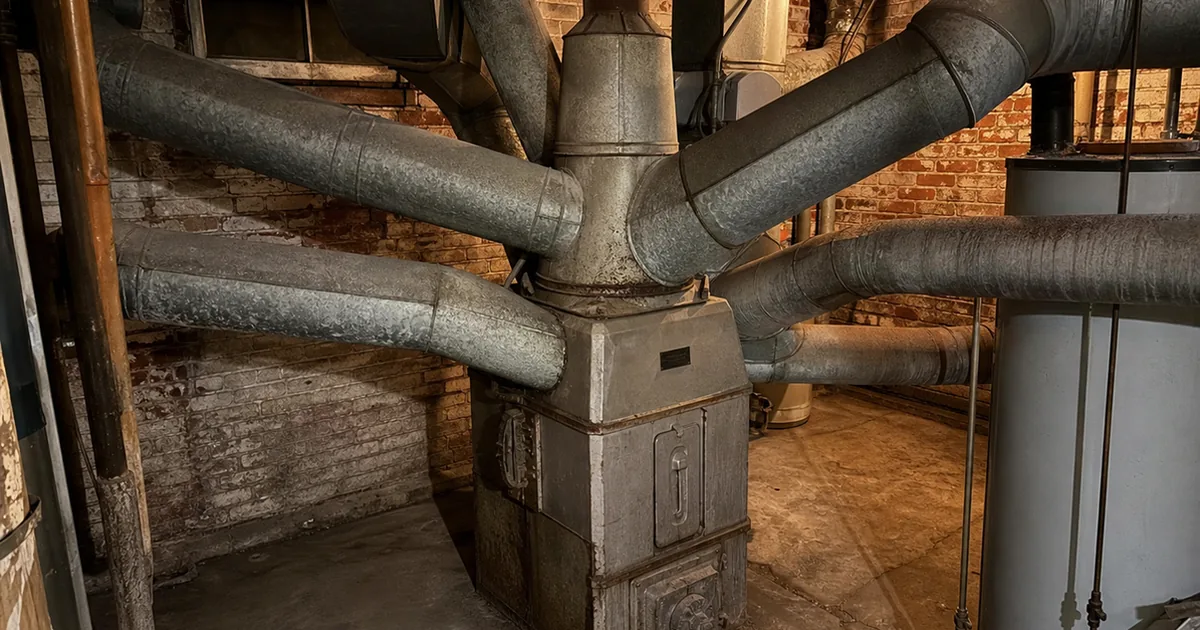
The house was a charmer: a 1931 Craftsman bungalow in one of Alhambra’s historic tracts, coved ceilings, original built-ins, hardwood floors under the rugs. The buyers were thrilled. Then the inspector went into the basement and found the heart of the heating system: a massive old gravity furnace with thick round ducts radiating off the top of it in every direction, the kind people call an octopus furnace. It was original to the house, nearly a hundred years old, and still running.
We are keeping the address private and the details composite, because in Alhambra’s older neighborhoods this is common. A lot of these bungalows are still heated the way they were in the 1930s. The house was lovely. The furnace was a question that needed answering before anyone signed.
Here is how that one resolved, and what it should change about how you handle an older Alhambra home.
Schedule an Alhambra inspection · Same-day report · Pay-at-closing available
Why this matters for the agent
Alhambra’s identity is its housing: a deep stock of Craftsman bungalows, Spanish cottages, and 1920s-1930s homes across dozens of historic neighborhoods. Many of these homes have never had their heating fully modernized, and the original gravity furnace is one of the most overlooked systems in the house. It is not a cosmetic issue. An aging furnace is a carbon-monoxide safety question, a comfort and capacity question, and a real replacement cost, and it tends to surface late when a buyer is already attached to the home.

The risk for the agent is that the furnace runs, the house is warm, and everyone assumes it is fine. An old gravity furnace can heat a house right up until the day its heat exchanger cracks and starts putting combustion gases into the living space. A buyer who understands the heating system going in can plan and negotiate. A buyer who discovers a failed, unsafe furnace the first cold week after closing feels misled. The difference is whether someone evaluated the furnace, and that starts with the inspection.
What a gravity furnace actually is
A gravity furnace is an early central-heating design. A burner in the basement heats air, and because warm air rises, that air flows up through large ducts to floor registers without a blower fan, then cool air sinks back down to the furnace. The big round ducts fanning out from the top are why it is nicknamed an octopus furnace. It was a real advance in its day and many have run for decades.
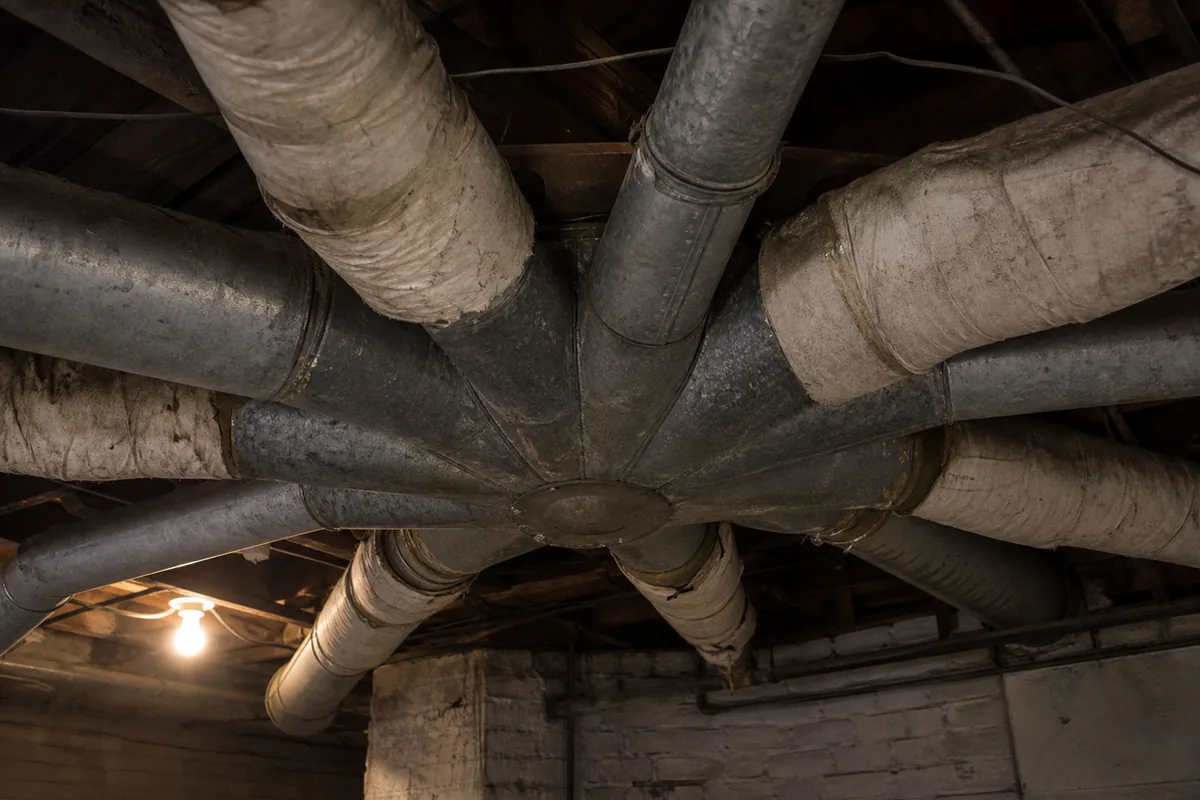
The problem is age and design. These furnaces are often original to a pre-1940 home, which puts them far past any normal service life. They are inefficient, they have none of the modern safety controls a current furnace has, and the heat exchanger, the metal wall that separates the combustion gases from the air you breathe, is the part that fails with age. On top of that, the ducts and the furnace jacket on these old systems were frequently insulated with asbestos-containing material, which becomes its own handling question during any replacement.
Why it fails (the part most agents skip)
The reason this gets missed is that the furnace works. It lights, it makes heat, the house is comfortable, so buyers and sellers assume the system is fine. But a working old furnace and a safe old furnace are not the same thing.
The failure that matters most is a cracked heat exchanger. As the metal heats and cools over decades, it eventually cracks, and a cracked heat exchanger can leak carbon monoxide into the home’s air. Carbon monoxide is colorless and odorless, which is exactly why this is dangerous: the house feels normal while the problem is present. A cracked heat exchanger cannot be reliably confirmed by a quick look; it usually takes a heating technician’s combustion analysis to verify. When a heat exchanger has failed on a furnace this old, the practical answer is almost always replacement, because the part is at the end of its life and so is everything around it.
A related but distinct carbon-monoxide question is whether a natural-draft appliance’s flue gas is actually leaving the house at all, covered in our Norwalk backdrafting and combustion air guide, which applies to any natural-draft furnace or water heater, not just a gravity system this old.
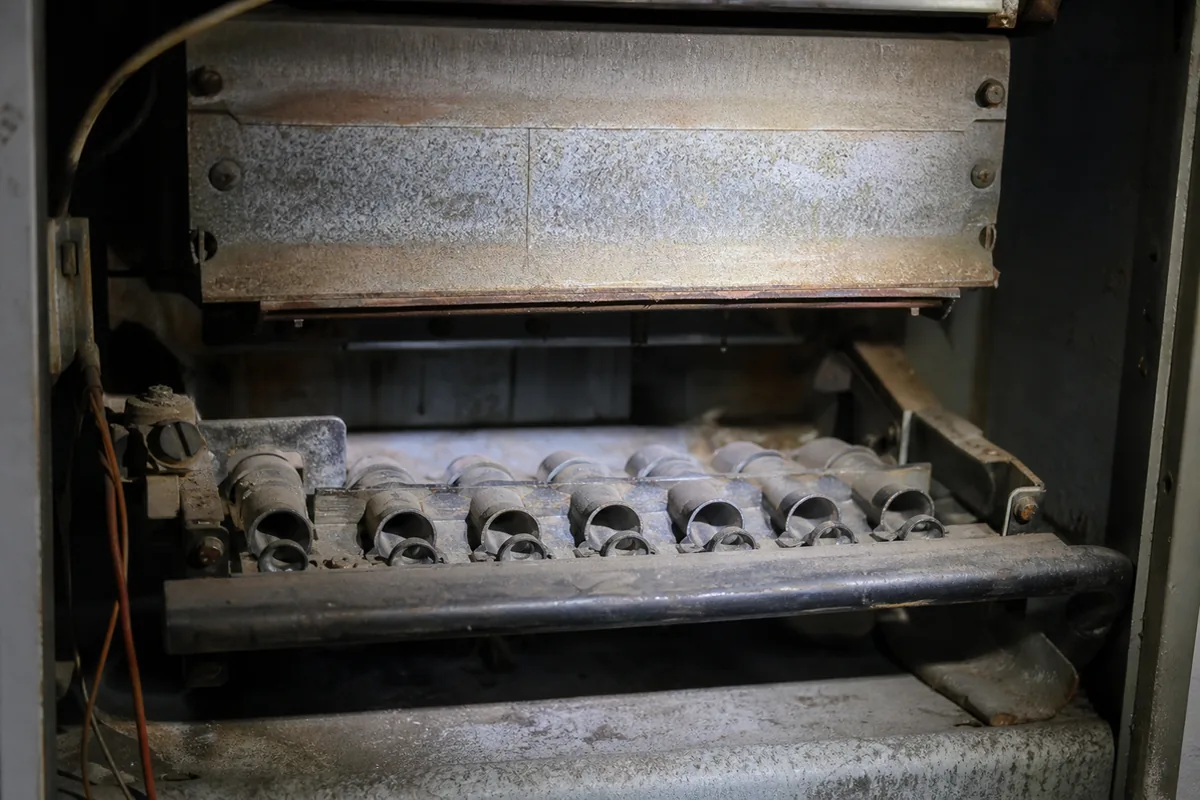
The second issue is everything that travels with the furnace: no central air, undersized or asbestos-wrapped ducting, and a system that simply does not match how a modern household lives. None of this is visible at a showing. All of it is findable in an inspection.
What agents should tell every buyer
Tell them that on an older Alhambra home, the heating system deserves real attention, not a glance. Framed up front, an old furnace is just part of buying a 1930s house. Discovered late, it becomes an emergency in the first cold snap.
Tell them this is a safety item first. A cracked heat exchanger is a carbon-monoxide risk, and the responsible move on a suspect old furnace is to have a heating contractor evaluate it before relying on it, and to make sure working carbon-monoxide alarms are in place. This is not alarmism; it is the standard precaution for an aging combustion appliance.
Tell them the cost is real but knowable. Replacing a failed furnace, and often adding central air the home never had, is a planned project a contractor can quote. A cracked heat exchanger on an old furnace typically points to full replacement rather than repair, and the number depends on the system and whether asbestos-containing duct material has to be handled. The point is that it is a defined line item, not an open-ended fear. For how a parallel older-home system plays out in escrow, our undersized electrical service guide walks through the same kind of conversation.
Red flags during showings
You can spot the candidates before the inspector ever runs the system.
Find the furnace. A large old unit in the basement or a central closet with big round ducts radiating from the top is a gravity octopus furnace by definition. A modern compact furnace with a blower and standard rectangular ducting is a good sign the system was updated.
Look at how the house is heated and cooled. Floor registers and no central air, window air-conditioning units, and a single old wall thermostat all point to an original heating system that was never modernized.
Look for white or gray wrapped insulation on the old ducts and furnace jacket, which can indicate asbestos-containing material that will need proper handling at replacement.
Note the smells and the soot. A persistent odor when the heat runs, soot or scorching around registers or the furnace, and a pilot or burner that looks rough are all reasons to make sure the inspection and a heating contractor look closely.
The negotiation playbook
When an inspection flags an aging gravity furnace, there are four ways the deal tends to go.
The first path is the specialist evaluation before any number. Because the inspection can identify an old, suspect furnace but a cracked heat exchanger needs a heating technician’s combustion analysis to confirm, the right first move is often a short extension for that evaluation. It tells everyone whether they are negotiating a replacement or a serviceable system.
The second path is the seller replacement. If the furnace is confirmed unsafe, asking the seller to replace it before closing is reasonable, particularly because a carbon-monoxide risk is a health-and-safety issue, not a preference. A contractor’s scope defines the job.
The third path is the credit. If the buyer would rather choose their own system, especially if they want to add central air the home never had, a price reduction or closing credit sized to a contractor’s quote lets them control the work after closing.
The fourth path is proceeding with eyes open. If the evaluation shows the furnace is old but currently serviceable, some buyers plan replacement as a near-term project and move forward, with carbon-monoxide alarms in place in the meantime. That is a sound choice when it is informed, which is the whole reason to catch it during the inspection.
How the inspection actually catches it
A real inspection of an older Alhambra home treats the heating system as a system, not a thermostat test. We identify the furnace type and age, run it where it is safe to, and look for the signs that point to a failing or unsafe unit: scorching and soot, a rough burner or pilot, deterioration, and suspect duct insulation. We use thermal imaging to read how the system is actually performing and to spot anomalies, as our infrared scanning guide explains. Critically, we are clear about the limits: a cracked heat exchanger is confirmed by a heating contractor’s combustion analysis, and we flag plainly when a furnace is old enough and suspect enough that the buyer should get that evaluation before relying on it. We tie it to the rest of what an older home needs, the electrical, the plumbing, and the foundation, so the heating finding arrives as a defined item with a path. See what every inspection includes.
Quick FAQ for agents
Is an old gravity furnace actually unsafe? It can be. The main risk is a cracked heat exchanger leaking carbon monoxide, which is colorless and odorless. A working furnace is not necessarily a safe one. We flag a suspect unit and recommend a heating contractor’s combustion analysis.
Can the inspection confirm a cracked heat exchanger? Not definitively. We identify the age, condition, and warning signs and recommend a heating technician’s combustion analysis to confirm. That is the standard for these old units.
What does replacement cost? It depends on the system and whether central air is added and whether asbestos-containing duct material must be handled. A heating contractor quotes the real number; a failed heat exchanger on a furnace this old usually means replacement rather than repair.
Is the ductwork a separate issue? It can be. Old gravity-system ducts and the furnace jacket were often insulated with asbestos-containing material, which becomes a handling question at replacement. We flag suspect materials for testing.
How long does it take to inspect? The heating evaluation is part of a normal two-to-four-hour inspection. The report comes the same day, with any recommendation to bring in a heating contractor clearly flagged.
The honest summary for agents
Alhambra’s old bungalows are full of charm, and a lot of them are still heated by the furnace they were born with. A gravity octopus furnace can run for decades and then become a carbon-monoxide risk the moment its heat exchanger cracks, with no smell and no warning. Your value as the agent is making sure the heating system gets a real look and the right framing: a known safety-and-cost item with a clear path, not a surprise that arrives on the first cold night after closing. That is what turned a beautiful 1931 bungalow into a seller-funded furnace replacement and a buyer who moved in warm, safe, and unsurprised.
If you have an older Alhambra home in escrow, we can evaluate the heating system and the rest of the home and give you the report that makes the next conversation an easy one. For the separately licensed report that covers what the same old wood framing can be hiding, see our Monrovia termite report guide.
Schedule an Alhambra Inspection → · Call 1-888-88-INSP-9 Houses of this vintage raise the pre-1978 paint question too, and the federal dust numbers changed in January 2026. See the new dust-lead reportable and action levels.