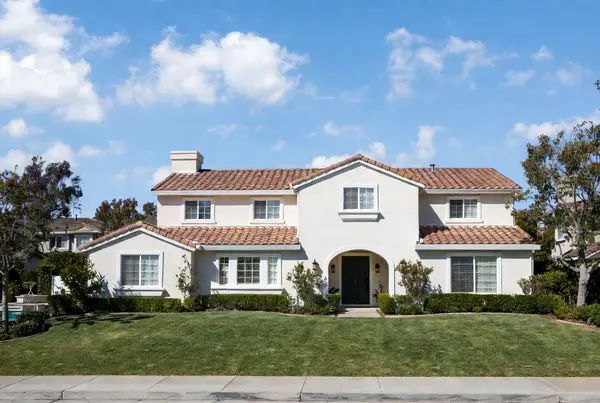
Home Inspection in Fountain Valley
A central Orange County suburb built almost entirely in one boom decade, where a high water table, slab foundations, and original systems shape the inspection.
Fountain Valley takes its name from the artesian wells and high water table that defined the land before it was drained and farmed, and then, starting in the 1960s, developed almost overnight into tract housing. The city incorporated in 1957 with barely two thousand residents and had grown more than fourteen-fold by 1970, nearly all of it single-family slab tracts built in one tight construction window. That compressed build-out is the inspection story. Homes here are old enough to be on later-generation roofs and original or once-replaced HVAC and water heaters, the slab foundations sit over ground that historically held water close to the surface, and pools are common on the larger Green Valley lots. We built the inspection around the tract-era city Fountain Valley actually is.
A high water table and one tight building era are the Fountain Valley inspection story
What defines Fountain Valley is how quickly and uniformly it was built. Almost the entire city went from agricultural land to finished tract housing in about a decade, which means a very consistent housing stock, slab-on-grade, single-story, three- and four-bedroom homes, with a correspondingly consistent set of aging-system questions. The land's original character as high-water-table farmland drained by canals is not just historical trivia. It means foundation drainage, slab moisture, and yard grading deserve real attention on an inspection here, more than in a market that was never artesian ground. Green Valley's larger lots often carry pools, which adds equipment and safety-barrier scope. The inspection has to read the slab, the original-era systems, the water table history, and the pool where one exists, then flag what a specialist should evaluate before a buyer closes.
The systems we look for across Fountain Valley
A home here is almost always a single-story slab tract house from the 1960s or 1970s, sometimes with a pool. Here is what we trace on every inspection.
Slab foundations and site drainage
The flat slab foundations sit on historically high-water-table ground. We document cracking and movement clues along with yard grading and drainage, and flag what an engineer should evaluate. For the detail on how we catch hidden moisture, see our infrared scanning guide.
Electrical age and updates
1960s and 1970s tract homes commonly carry original or partly updated electrical service. We document the panel, wiring, and grounding and flag outdated conditions for an electrician.
Original or aging plumbing
Original supply and drain lines are common in unremodeled homes from this era. We document the visible plumbing and functional flow and flag what a plumber should scope.
Roofs and moisture
Tract-era homes are typically on a second or later roof by now. We document the roof and flashing with drone imagery and use thermal imaging to find hidden moisture.
HVAC and older equipment
Original or aging HVAC is common across this housing stock. We document the condenser, furnace, and ductwork and flag equipment nearing end of life. For the detail on why ducted returns matter in tract homes, see our Garden Grove ducted HVAC returns guide.
Pool equipment on Green Valley lots
The larger Green Valley lots often carry a pool. We document the pump, filter, heater, and safety barriers where present.
Neighborhood by neighborhood
We cover all of Fountain Valley, from the family tracts to the town center. Here is what we focus on in each.
Green Valley
The well-kept 1960s and 70s neighborhood near Mile Square Park. Larger lots, pools, slab foundations, and consistent tract-era systems.
Downtown Village
The more urban town-center area. Mixed housing types, original systems, and a walkable core.
Mile Square Park area
The neighborhoods ringing the regional park. Family-oriented tracts, slab foundations, and standard 1960s-70s systems.
Talbert & east side
The eastern neighborhoods toward Santa Ana. Consistent tract stock and original-era systems.
Newhope corridor
The central north-south spine. Dense tract housing and mixed updates.
Warner Avenue corridor
The southern edge toward Huntington Beach. Tract homes with coastal-adjacent influence.
We also serve nearby Costa Mesa and Huntington Beach, plus the broader Orange County market. Same premium package, same same-day report, same $300 discount.
What Fountain Valley buyers miss
The water table history still matters
Ground that historically sat close to the surface affects how a slab and yard drain today. We document the clues and flag what a specialist should evaluate.
The systems are original more often than buyers expect
A home built in the 1960s tract boom can still carry original-era electrical and plumbing behind a refreshed interior. We document what era the systems are actually from.
A pool changes the checklist
On the larger Green Valley lots, pool equipment and safety barriers deserve the same attention as the house. We document both.
A slab still needs a look
Slab cracking and movement clues are worth documenting even on a home that looks level. We flag what a structural engineer should evaluate when something warrants it.
Every inspection includes premium tech. No add-ons
3D Matterport
Walk every room from anywhere. Valuable for out-of-area and relocation buyers.
Drone roof
Documents tract-era rooflines and roofs that ground-level views miss.
FLIR infrared
Catches moisture behind walls and around windows, plus electrical hot spots.
LIDAR floor plan
Accurate to-scale plan, useful on standard and added-onto tract layouts.
Same-day report
Full report by email the same day, with a prioritized findings list.
Pay at Closing available
Defer the inspection fee until escrow closes. The $300 discount still applies. Practical on a Fountain Valley purchase where cash is committed through escrow.
Learn more →Fountain Valley questions
Why does the water table history matter for a modern inspection?
Are the systems in these homes original?
Do you inspect the pool too?
How do I know if my slab has a real problem?
How long does an inspection take here?
Can I pay at closing?
Inspection guides
Huntington Beach Liquefaction & Methane Guide
What a mapped liquefaction zone and a methane district mean for a buyer just down the road.
Irvine Graded-Pad Settlement Guide
How to read stucco cracks and door racking for differential settlement on engineered hillside pads.
Why Infrared Scanning Matters in California Homes
How thermal imaging finds hidden moisture and electrical hot spots in Fountain Valley tract homes.
How to Read a Home Inspection Report in California
What the findings mean and how to prioritize them.
Do You Need a Home Inspection on New Construction?
Why any home, new or converted, needs an independent inspection.
Garden Grove Ducted HVAC Returns Agent Guide
Why post-war and 1960s tract additions often outgrow their original return air ductwork.
Formaldehyde and Engineered Wood Agent Guide
What a fresh kitchen or flooring remodel means for indoor air quality, and what a general inspection does and does not assess.
Other service areas
San Jose, CA
Bay Area. Postwar tract housing at scale, annexation-era permit gaps, downtown and creek-corridor liquefaction, Willow Glen Eichlers, no city pre-sale requirement.
Santa Clara, CA
Bay Area. 1950s stock reaching end of life together, Silicon Valley Power service rules, citywide liquefaction zone, expansive clay, condos and townhomes.
Fremont, CA
Bay Area. Five historic townships with five build eras, the Hayward Fault through the middle of town at its junction with the Calaveras, no lateral ordinance.
San Mateo, CA
Bay Area peninsula. Mandatory point-of-sale sewer lateral inspection, bay mud settlement, no fault zone, 2024 flood-map revision, six housing eras.
San Francisco, CA
Bay Area headquarters. Wood-frame Victorian and Edwardian stock, ~45% pre-1940, fog-belt moisture, soft-story garage openings, re-clad walls, and the 3R records gap.
Oakland, CA
Bay Area. Pre-war flatland bungalows and Victorians, hillside downslope construction, Hayward Fault creep, 1991 fire rebuild areas, sewer lateral certificate at sale.
See all areas →Ready to inspect your Fountain Valley home?
Same-day reports. Full premium tech. $300 off. Pay at closing available.
Questions? Call 1-888-88-INSP-9 or message us online.