The Cord Through the Window: A Hemet Generator and Transfer Switch Safety Guide for Agents
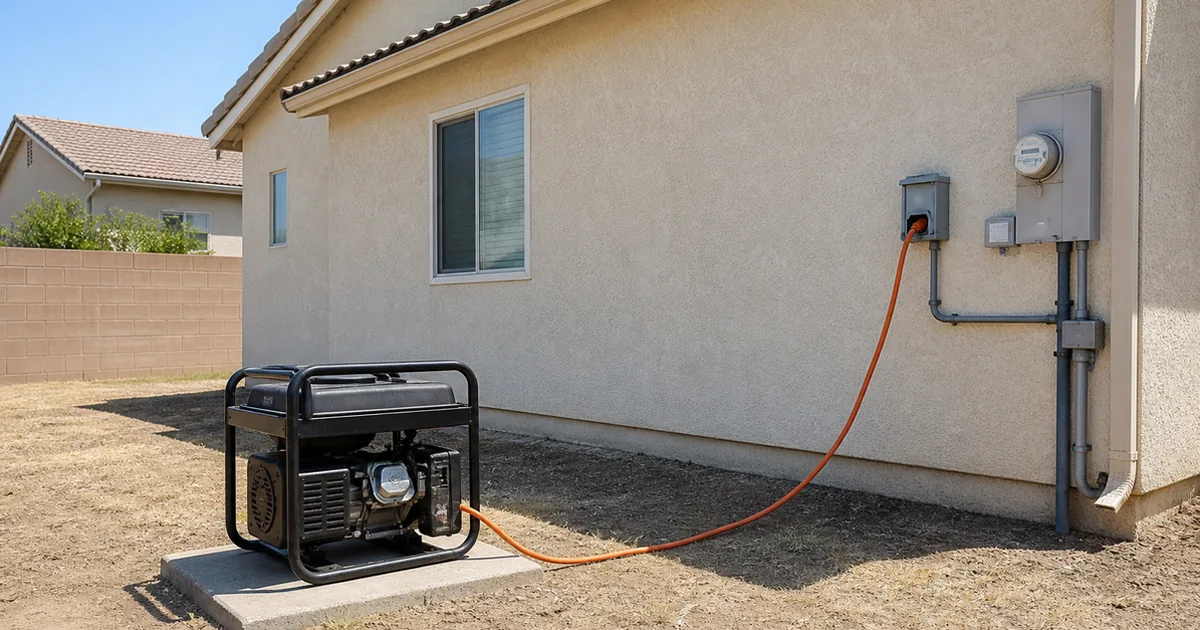
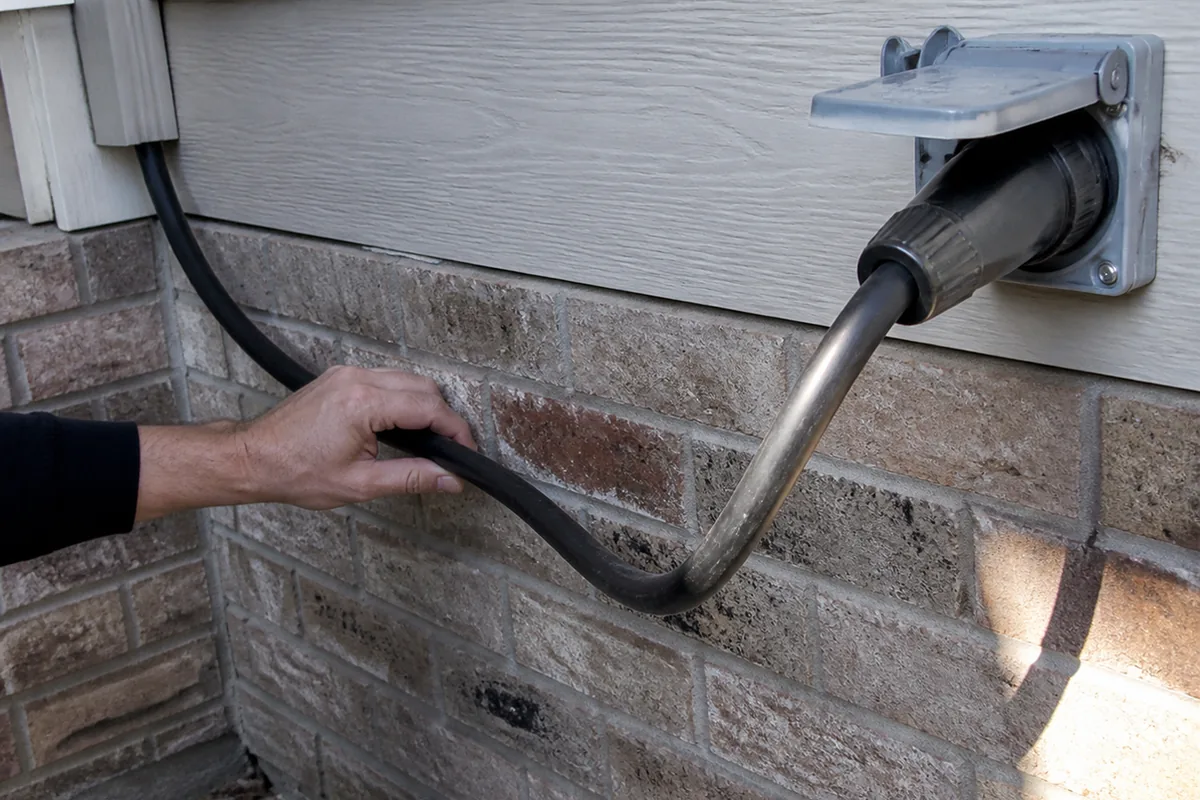
The house was a foothill-edge property in the San Jacinto Valley, the kind that had lost power twice the prior fall during utility shutoff events. The seller had bought a portable generator that fall and, by his own description, ran an extension cord through a cracked-open window to a power strip in the hallway during the second outage. By the time of the inspection he had upgraded to something more permanent, a heavy-gauge cord running from the generator’s pad outside to a homemade inlet box mounted next to the electrical meter, wired straight into the house’s sub-panel with no interlock and no transfer switch anywhere in the system. The main breaker and the generator breaker could both be switched on at the same time, and there was nothing in the panel stopping that from happening.
We are describing this as a composite of a pattern we see repeatedly across Hemet’s utility-shutoff-exposed housing stock, not one identified property or job. It is common enough in this specific market, real outage risk driving real but often improvised backup-power installations, that every agent working here should understand it before it turns up in a report.
This guide is for the agent working Hemet and the surrounding communities we also serve, including nearby San Jacinto, Menifee, and Perris, where the same foothill and valley terrain carries the same Public Safety Power Shutoff exposure. Here is why generator adoption is a real, checkable pattern in Hemet, what the backfeed hazard actually is, and how a finding usually plays out in escrow.
Why this matters for the agent
Most buyers have never wired a generator into a house before and do not know that plugging one directly into a wall outlet or a dryer outlet with a makeshift double-male cord, sometimes called a suicide cord, is one of the most dangerous common household electrical mistakes a homeowner can make. It energizes the house’s entire wiring system from the generator, and it can also backfeed power out through the house’s service connection onto the utility line outside, a real and documented hazard to line workers who may be repairing what they believe is a de-energized line.
Hemet adds a specific reason this comes up more here than in a coastal or urban market. The city sits in Southern California Edison territory in the San Jacinto Valley foothills, an area with real, repeated Public Safety Power Shutoff events during high fire-risk conditions, on top of ordinary utility outages. That combination has driven genuine adoption of both portable and standby generators for backup power, and a meaningful share of those installations were done by a homeowner or a handyman rather than a licensed electrician working from a permit, which is exactly where the backfeed and installation-quality problems show up.
The backfeed and electrocution hazard
Plugging a portable generator directly into a wall outlet, or into a dryer or range outlet using a double-male adapter cord, energizes the entire house’s electrical wiring from the generator. That means every outlet, switch, and fixture in the house is live from the generator’s output, at a moment when the homeowner has likely disconnected nothing else in the system. Worse, if the main breaker has not been switched off, that same power can travel backward through the house’s service equipment and out onto the utility line feeding the house, a real hazard called backfeed.
A downed or damaged utility line is normally assumed dead once a utility crew has isolated it for repair. A backfed generator can put voltage back onto that line without any warning, a hazard that has caused real line-worker injuries and deaths nationally. This is precisely why utilities and electrical codes require a break-before-make mechanism, something that physically prevents the utility feed and a generator feed from both being connected to the house’s wiring at the same time.
Interlock kits versus transfer switches
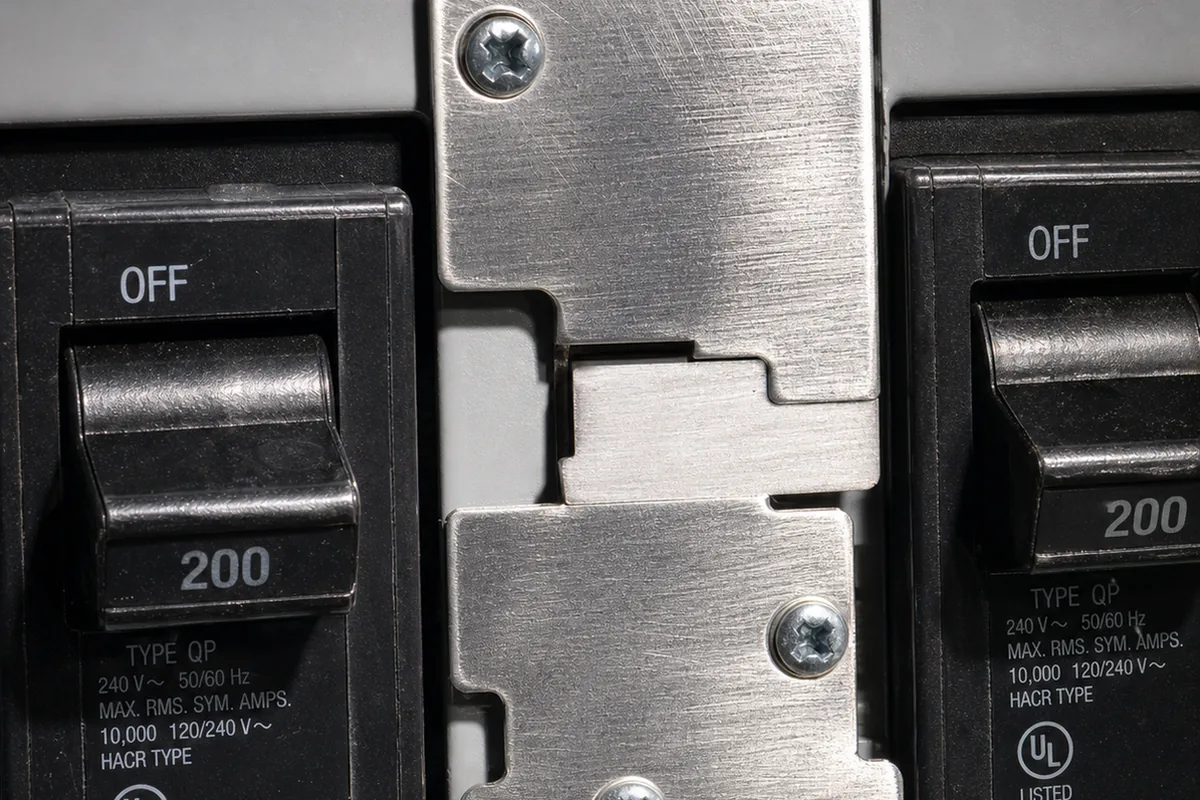
An interlock kit is a mechanical device installed at the main panel that physically prevents the main breaker and a generator breaker from both being switched on simultaneously. It typically consists of a sliding metal plate or bracket that blocks one breaker from being turned on while the other is on, forcing the homeowner to switch off the main before switching on the generator breaker, and vice versa. Interlock kits must be listed for the specific panel they are installed in; a generic or improvised interlock is a real installation-quality defect even though the concept is sound.
A transfer switch, manual or automatic, is a separate piece of equipment that physically isolates a set of circuits from the utility feed before connecting them to the generator, rather than relying on a mechanical interlock inside the existing panel. A manual transfer switch requires the homeowner to flip a set of switches in sequence; an automatic transfer switch senses a utility outage and switches over on its own, typical of a permanently installed standby generator system. Both an interlock kit and a transfer switch accomplish the same core safety goal, isolating the generator from the utility feed, through different hardware.
Generator placement and carbon monoxide risk
- Placement relative to doors, windows, and vents. A running generator must be located outdoors, away from doors, windows, and any attic or crawlspace vent openings, since carbon monoxide from its exhaust can enter the house through any of these paths even from a distance most owners underestimate.
- Never in a garage, even with the door open. A generator running in a garage, regardless of ventilation attempts, can build a lethal carbon monoxide concentration in the attached living space far faster than most people expect.
- Grounding. A portable generator typically needs its frame properly grounded per the manufacturer’s instructions, distinct from the house’s own electrical grounding system, and a missing or improvised ground is a real installation defect.
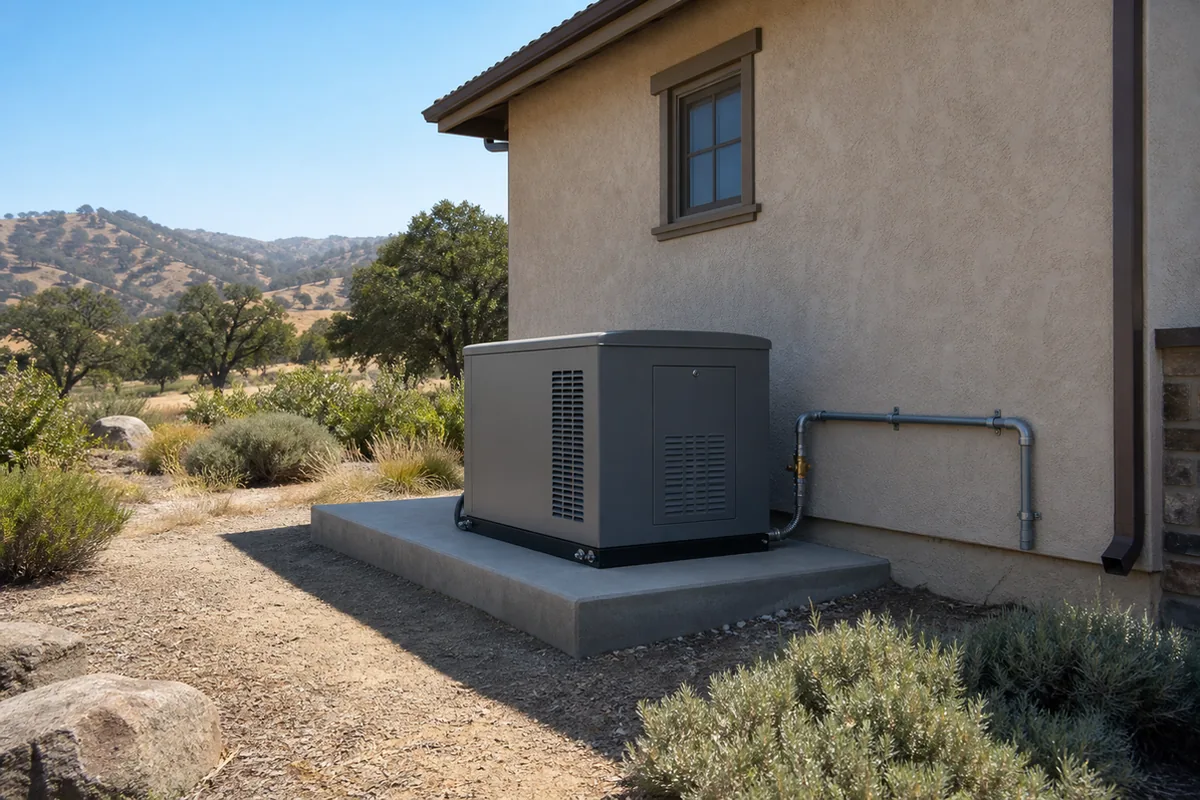
- Standby versus portable installation quality. A standby generator, permanently installed, typically running on natural gas or propane, and set on a dedicated concrete pad, is generally professionally installed with a permit and an automatic transfer switch. A portable generator connected through a homeowner-installed inlet box and interlock or transfer switch varies enormously in quality, since it is far more often installed without a permit or a licensed electrician.
- Fuel storage for portable units. Gasoline stored for a portable generator needs to be kept in approved containers, away from ignition sources and living space, a real fire-safety consideration independent of the electrical hazard.
What agents should tell every buyer
- A home inspector can document the presence, location, and apparent installation quality of a generator inlet, an interlock kit, or a transfer switch, but cannot perform an electrical load calculation or confirm the generator was sized correctly for the house’s circuits.
- A portable generator with no visible interlock kit or transfer switch anywhere in the electrical system, especially alongside a homemade inlet box or a cord running through a window or door, is a genuine backfeed and shock hazard, not a minor deficiency.
- Generator placement matters as much as the electrical connection. A generator stored or run near a door, window, or vent opening is a real carbon monoxide risk regardless of how the electrical side was installed.
- A permanently installed standby generator on a concrete pad with an automatic transfer switch is generally the more professionally installed and lower-risk configuration, though it still deserves the same inspection attention to placement and connection quality.
- This is a life-safety finding, both electrical and combustion-related, and should be treated with the same seriousness as any other major electrical or carbon monoxide item in the report.
- Confirming load calculations, permit status, and correct generator sizing for the house’s electrical demand is licensed electrician work, not something a home inspection can certify.
Red flags during showings
- A portable generator with a cord running through a cracked window, a door, or a vent opening rather than through a proper inlet box.
- No visible interlock kit or transfer switch anywhere near the main panel where a generator inlet or connection point is present.
- A generator stored inside a garage, even one with the door left open during use.
- A homemade or improvised double-male adapter cord, sometimes called a suicide cord, kept in a garage or shed.
- A standby generator installed without an obvious permit sticker, disclosure, or professional-grade installation appearance, sitting directly on bare ground rather than a proper pad.
- Gasoline containers for a portable generator stored near an ignition source or inside living space.
The negotiation playbook
When a generator or transfer-switch finding surfaces in a Hemet escrow, the deal usually moves down one of a few paths.
The first path is adding a proper interlock kit or transfer switch, appropriate when a portable generator setup exists with a reasonable inlet connection but no isolation device, and a licensed electrician can retrofit the missing piece without a larger panel change.
The second path is a full licensed-electrician evaluation, warranted when the existing installation shows clear signs of homeowner or handyman work, a homemade inlet, no permit history, or any indication the main and generator breakers could be on simultaneously.
The third path is a placement and ventilation correction, appropriate when the electrical connection is sound but the generator itself is stored or was run somewhere that creates a carbon monoxide risk, a garage or near an opening into the house.
The fourth path is a credit or informed acceptance, appropriate when the finding is limited to a portable generator with a straightforward, inexpensive interlock retrofit, and the buyer wants to proceed with a plan to have an electrician address it after closing.
How the inspection actually catches it
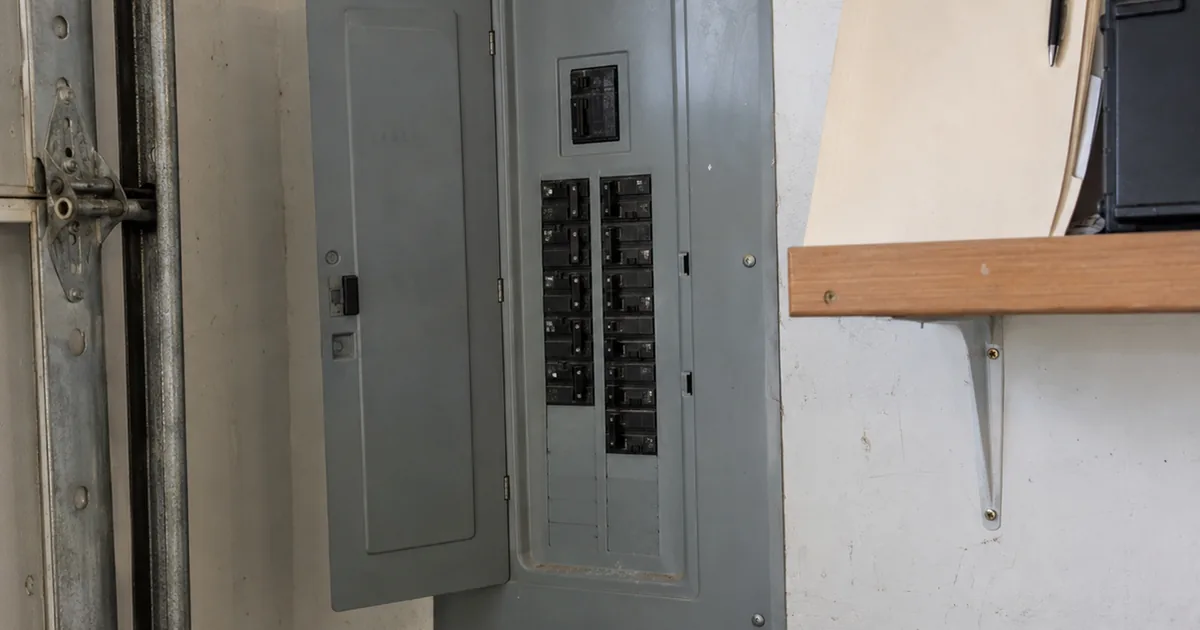
We check the main electrical panel on every Hemet inspection for any generator inlet, interlock kit, or transfer switch present, and document its apparent installation quality, whether it looks like a listed, properly installed device or an improvised connection.
We look at where a generator is stored or was apparently run relative to doors, windows, and vent openings, and we note a garage-stored generator as a distinct carbon monoxide concern independent of the electrical connection. Where a standby generator is present, we document its pad, apparent fuel connection, and clearance from the house.
We do not perform an electrical load calculation, verify permit history, or confirm correct generator sizing for the house’s circuits. That is licensed electrician work, the same specialist boundary we describe in our CSST gas line bonding guide. Where we find a missing interlock or transfer switch, an improvised connection, or a generator placement that creates a carbon monoxide risk, we say so plainly in the report and recommend a licensed electrician’s evaluation. Our what’s included page covers the full electrical and life-safety scope of every Hemet inspection.
Quick FAQ
Is this the same as the CSST gas line bonding topic covered for Yorba Linda? No, unrelated mechanisms. Our Yorba Linda CSST gas line bonding guide covers electrical bonding of flexible gas tubing against lightning-induced surge, a fuel-gas topic. This guide covers backup electrical power generation and the isolation hardware that keeps a generator from backfeeding the utility grid, an entirely different system.
Is this the same as an electrical panel or wiring defect topic like El Cajon’s aluminum wiring or Escondido’s FPE panels? No. Our El Cajon aluminum branch wiring guide and Escondido Federal Pacific and Zinsco panel guide cover wiring material and panel-brand hazards inside the house’s permanent electrical system. This guide covers a separate, added system, backup power generation and its isolation hardware, that any of those panel types could have retrofitted onto them.
Does a whole-house standby generator eliminate this risk? A properly installed standby system with an automatic transfer switch is generally the lower-risk configuration, since it is almost always professionally installed. It still deserves inspection attention to placement, clearance, and connection quality, but the backfeed risk specifically is what a transfer switch or interlock is designed to prevent.
Can a homeowner install an interlock kit themselves? An interlock kit must be listed for the specific panel model it is installed in, and improper installation defeats its purpose. This is generally licensed electrician work, not a homeowner DIY project, even though the parts themselves are commercially available.
Is a carbon monoxide alarm enough protection if a generator is run in the garage? No. A working CO alarm is an important backstop but is not a substitute for correct generator placement. A generator should never be run in a garage, even with the door open, regardless of alarm coverage.
The honest summary
Hemet’s real Public Safety Power Shutoff and wildfire-season outage exposure has pushed genuine generator adoption across the San Jacinto Valley, and a meaningful share of those installations were done without a permit, a licensed electrician, or a proper interlock kit or transfer switch. None of this means every generator setup in Hemet is unsafe. It means the isolation hardware and the generator’s placement deserve a real look on any house with backup power present, rather than an assumption that a generator running at all means it was installed correctly.
We check every generator inlet, interlock kit, and transfer switch, along with generator placement and clearance, on every Hemet inspection, and we tell you plainly whether the installation looks professional, borderline, or warrants a licensed electrician’s evaluation before you close.
See what every inspection includes → · Read our FAQ → · Explore Hemet home inspections →
Related reading
- CSST Gas Line Bonding in Yorba Linda. A separate fuel-gas topic, electrical bonding against surge rather than backup power generation.
- Aluminum Branch Wiring in El Cajon. A wiring-material hazard inside the house’s permanent electrical system, distinct from the added backup-power system covered here.
- Federal Pacific and Zinsco Panels in Escondido. A panel-brand obsolescence hazard, useful context on the electrical panel any generator interlock would be installed into.
- Smoke and CO Alarm Compliance in Ontario. The alarm device itself, an important backstop but not a substitute for correct generator placement and installation covered here.
- Unvented Gas Fireplaces and Heaters in Chatsworth. A different backup-comfort appliance category, combustion byproducts released directly into the room rather than engine exhaust from a generator.