Roof Layers in Northridge: An Agent’s Guide
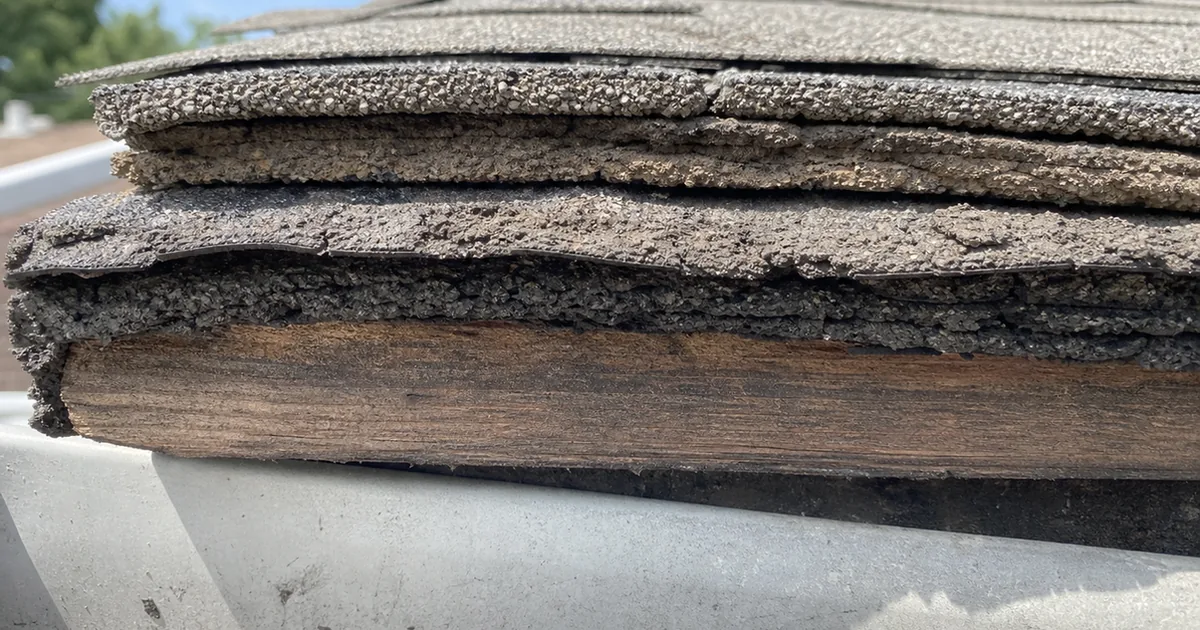
From the street the roof looked ordinary. Gray architectural shingles, no missing tabs, nothing that would make a buyer pause on a drive-by. The seller’s disclosure said the roof had been done about twelve years ago, which sounded reassuring. Up close at the edge of the eave, the story changed. You could see the cut end of the roof in cross-section, and it was not one roof. It was three. Two older shingle roofs still sat underneath the one that had been installed twelve years ago, and the whole stack was nailed through into a deck nobody had looked at since the 1960s.
This is one of the most common findings on Northridge tract homes, and one of the easiest for everyone in the deal to walk past. The valley’s post-war and 1960s neighborhoods were built with asphalt composition roofs, and in sixty years those roofs have come due more than once. The cheap way to handle that is to lay a new roof directly over the old one instead of tearing off. It is faster, it is cheaper, and it hides everything underneath. Building code allows a limited amount of this, and past that limit the roof has to come off. A lot of valley roofs are already at or beyond that line.
This guide is for the agent working Northridge and the valley tracts, including nearby Chatsworth and West Hills, where the same post-war and 1960s roof stock carries the same layering habit. Here is why the layers matter, how to count them without going on the roof, and how to keep a roof that “was done twelve years ago” from blowing up your escrow.
Why this matters for the agent
Here is what is at stake. A roof is the single most expensive item on most inspection reports, and the number of layers can change the price of the job by thousands. Tearing off three layers of old asphalt and hauling it away costs real money that a simple overlay does not, so a buyer who budgeted for a straightforward re-roof can find the number is much higher than they planned. That is the kind of surprise that reopens a negotiation late, or ends one.
It also changes what anyone can honestly say about the roof’s condition. When there are layers underneath, nobody has seen the sheathing in decades. Water that gets past the top layer can travel between layers, so leaks show up far from where they started and the deck can be quietly rotting while the surface still looks fine. And because the code limit on layers exists partly to keep the roof’s weight in check, a stacked roof adds dead load to a house, which is not a trivial detail in a neighborhood that learned about seismic loads the hard way in 1994. We inspect and document the roof. The structural question, if the load looks like an issue, goes to an engineer.
For your transaction, the layer count is a number worth knowing early rather than late. It moves the roof from a vague “it has some life left” to a specific and defensible cost, and specific costs get negotiated. Vague ones get argued about.
Why the second and third layer are a problem
Roofing over an existing roof is legal within limits, and the limits exist for good reasons. Building code permits a recover but does not allow more than two total layers of roof covering, and a roof that already carries two applications has to be stripped to the deck before a new one goes on. Code also bars recovering over a roof that is water-soaked or deteriorated, because covering rot does not fix rot.
The trouble with a stacked roof is that every problem it creates is concealed by design. Fasteners have to reach through more material to bite into the deck, and when they do not, the new shingles hold on poorly and lift in wind. The old surface underneath is not flat, so the new shingles telegraph every ridge and cupped tab below them, which stresses the new material and creates gaps where water sits. Heat gets trapped between layers, and in an unventilated attic under a valley sun that cooks the assembly from both sides, which is why a stacked roof in this climate rarely reaches the service life printed on the bundle. And the flashings, which are where most roofs actually leak, are frequently reused or clumsily built up rather than replaced, because doing them properly means getting down to the deck.
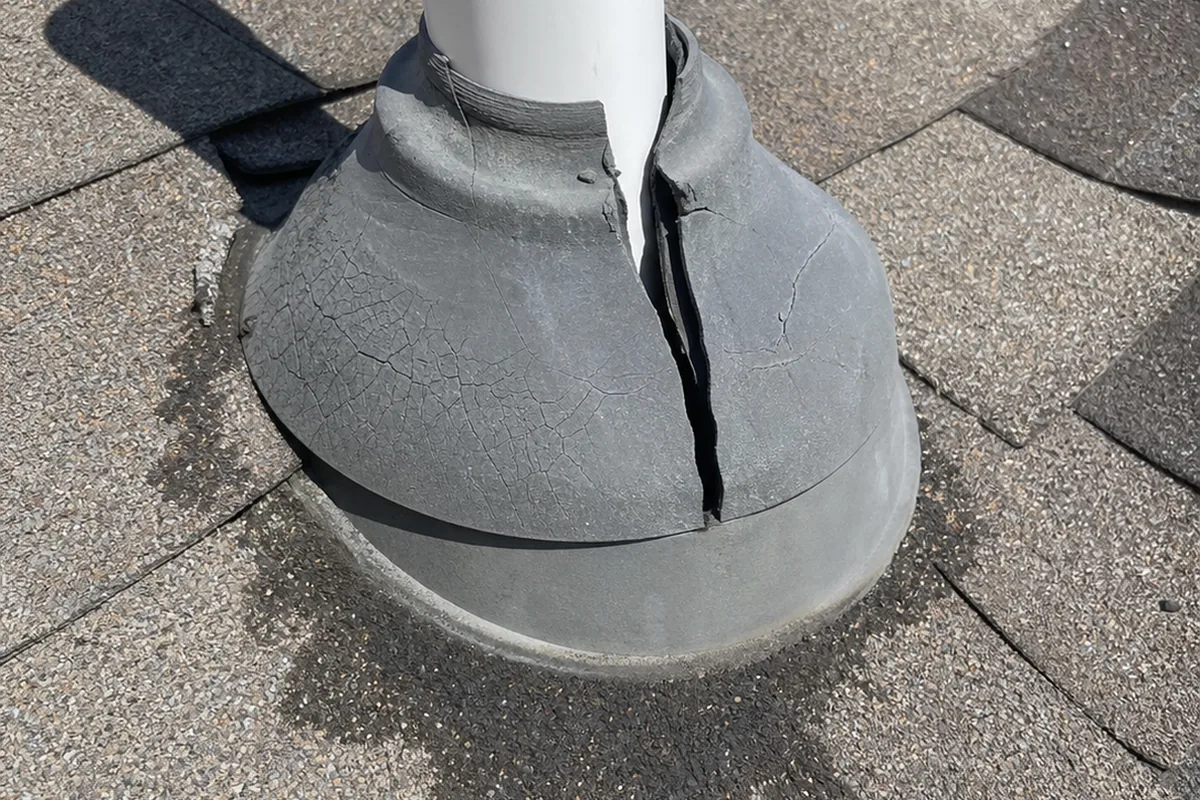
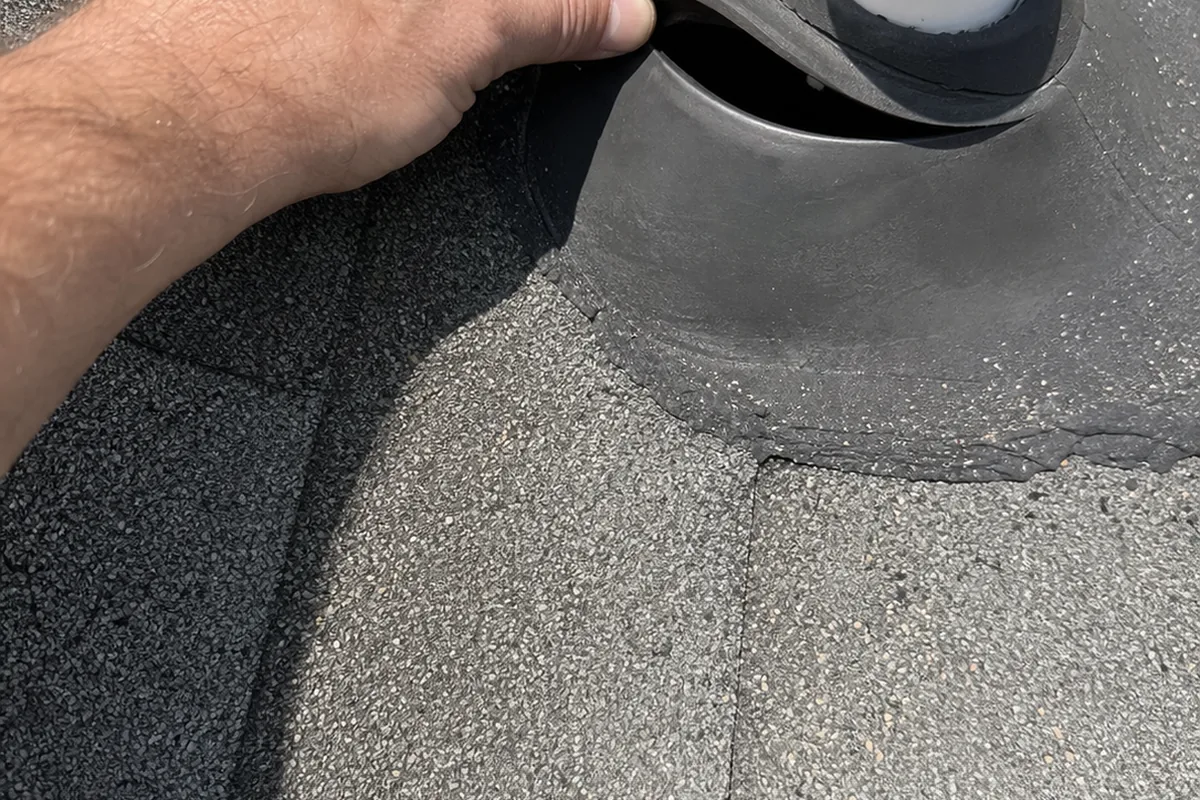
That last point is the one worth repeating to a buyer. Most roof leaks are not failures of the field of shingles. They happen at the transitions: the valleys, the chimney and wall flashings, and above all the rubber boots around the plumbing vent pipes, which dry out, crack, and split in this sun, and which an overlay job often just leaves in place. A roof can be twelve years old, look fine from the street, and be leaking at a boot the whole time.
What agents should tell every buyer
When a buyer is under contract on a Northridge tract home, give them these points before the inspection.
- Ask how many layers are on the roof, not just how old the top one is. “Re-roofed twelve years ago” tells you nothing about what is underneath it.
- Ask whether the last job was a tear-off or an overlay, and ask for the permit or invoice. A tear-off is documented and a buyer should want to see it.
- Understand the cost difference. Stripping two or three layers costs meaningfully more than laying over one, and that difference belongs in the buyer’s number.
- Expect the flashings and the vent boots to matter more than the shingle field. Cracked vent boots are the most common leak we find on these roofs and they are cheap to replace.
- Read the roof and the attic together. A hot, unventilated attic shortens the life of the roof above it, so the two findings are usually connected.
- If the roof is stacked and near the end, plan for a full tear-off, not a fourth layer. Code will require it and so will any decent roofer.
A buyer who hears this from you prices the roof correctly at the start instead of renegotiating it at the end.
Red flags during showings
You can learn a surprising amount from the ground. Watch for these on Northridge homes.
- Look at the cut edge of the roof at the eave or the rake. Layers are often visible in cross-section from the driveway, and you can sometimes count them.
- A roofline that looks lumpy, wavy, or telegraphed rather than flat, which suggests new shingles laid over an uneven old surface.
- Granules collecting in the gutters and at the downspout outlets, which is the roof shedding its wear surface.
- Curled, cupped, or cracked shingle tabs, and bare patches where the fiberglass mat shows through.
- Rubber boots around the plumbing vent pipes that look gray, checked, or split, which is a leak in progress even on a newer-looking roof.
- Ceiling stains inside, especially near a chimney, a wall junction, or a bathroom, since bathrooms are where the vent pipes come through.
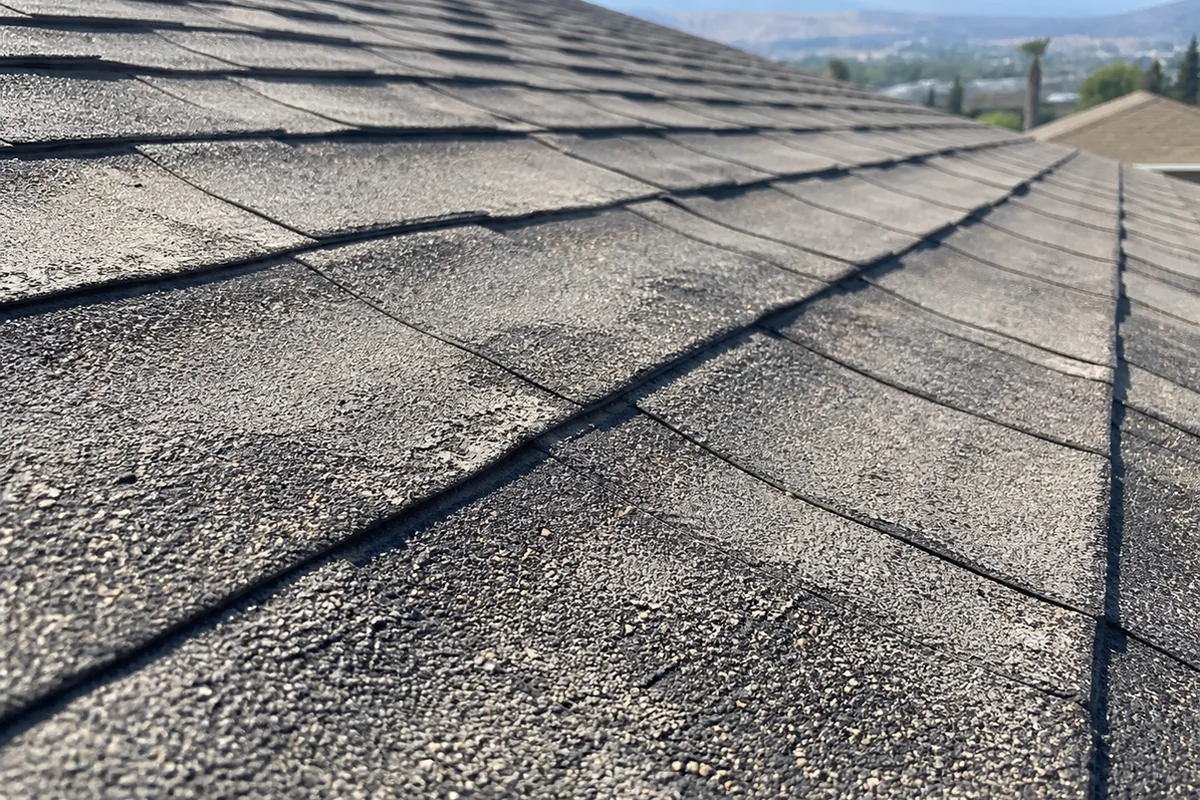
If we see these, we document them and point the buyer to a licensed roofer.
The negotiation playbook
When roof findings surface in Northridge, the deal usually moves one of a few ways.
The first path is the seller replaces the small stuff. Cracked vent boots, a failed section of flashing, and a few lifted shingles are inexpensive repairs, and when the roof otherwise has life left, this is the clean outcome. Push for the boots specifically. They are the cheapest leak fix in roofing and they get skipped constantly.
The second path is a credit sized to a tear-off bid. When the roof is stacked and aging, the honest number is a full strip-and-replace, and the buyer should take a credit built on a licensed roofer’s bid for exactly that, including the disposal of the old layers. Do not let the credit get sized to an overlay that code will not permit anyway.
The third path is a roofer’s evaluation before anyone commits. When the layer count or the deck condition is genuinely uncertain, the sensible move is to get a roofer up there during the contingency period. Nobody should be negotiating a five-figure item on a guess, and a roofer can confirm what a visual inspection can only indicate.
The fourth path is walk-away, and on a roof it is usually about what is under it. If the deck is soft and there are three layers hiding it, the job can grow once the tear-off starts, and some buyers do not want an open-ended repair. That is a fair call. We document what we found and when, and the decision belongs to the buyer and their specialists.
How the inspection actually catches it
The roof is where drone coverage does work that a ladder cannot. We fly the roof and document the field, the valleys, the flashings, and every penetration in detail, which on a valley tract home means getting a clear look at plumbing vent boots that are almost impossible to assess from the ground. We look for the telegraphing and unevenness that indicate an overlay, and we examine the roof edge at the eaves and rakes where the layers show themselves in cross-section, which is the most reliable way to count them without cutting into the roof.
Inside, we go into the attic and read the underside of the sheathing, because that is where a concealed leak declares itself first as staining, dampness, or delamination long before it reaches a ceiling. We check the attic’s ventilation at the same time, since a roof cooking over a sealed attic is aging faster than its warranty ever assumed. Thermal imaging helps locate moisture in the ceiling below when a leak is active but has not yet stained. Our guide on tile roof underlayment covers the other roof type you will meet in this region, and the failure mode there is different. Our Woodland Hills attic guide covers what a sealed, underinsulated attic does to the roof deck above it, which is the same valley heat problem from the other side.
What we do not do is issue a roof certification or a remaining-life warranty. A home inspection reports the roof’s visible condition and the evidence of layering. When the finding calls for it, we say plainly that a licensed roofer needs to open it up and price it. If we see something worth flagging, it goes in the report.
Schedule a Northridge inspection →
Quick FAQ
How many layers of shingles are actually allowed? Building code permits a roof to carry no more than two layers of roof covering. A roof that already has two applications must be stripped to the deck before a new roof is installed, and code also prohibits recovering over a roof that is water-soaked or deteriorated. Plenty of older valley roofs are already at that limit, which means the next roof is a tear-off whether the owner likes it or not.
Can you tell how many layers there are without tearing into the roof? Usually. The cut edge of the roof at the eaves and rakes shows the stack in cross-section, and layers are often countable there, sometimes even from the driveway. Telegraphing and an uneven surface are supporting evidence. It is a visual determination and not a guarantee, which is why we recommend a roofer confirm it before anyone negotiates a large number.
The roof was replaced twelve years ago. Isn’t it fine? Not necessarily. The age of the top layer says nothing about what is under it, whether the flashings were replaced, or whether the deck was ever inspected. A twelve-year-old overlay on two older roofs, with the original vent boots left in place, is a roof with problems regardless of the date on the invoice.
What actually leaks on these roofs? The transitions, not the middle of the shingle field. Valleys, chimney and wall flashings, and especially the rubber boots around plumbing vent pipes, which crack and split in the valley sun. Vent boots are the most common leak source we find on tract roofs here and among the cheapest things to fix.
Does an extra layer of roofing matter structurally? It adds weight to the structure, which is one of the reasons the code limits layers. On most homes it is not the primary concern, but it is not nothing either, particularly in a neighborhood with the seismic history this one has. We document what we see, and if the load or the framing looks like a genuine question, that goes to a structural engineer rather than staying with us.
The honest summary
A Northridge tract roof is often not one roof. It is two or three, stacked, with the oldest one hiding a deck nobody has looked at in decades. The layer count is the number that decides what the next roof costs, and it is knowable early, from the edge of the eaves and from the attic underneath. Get it early and the roof becomes a line item. Get it late and it becomes a renegotiation.
We will fly the roof, count what we can see at the edges, read the sheathing from the attic, check every vent boot and flashing, and tell your buyer plainly whether they are buying a repair or a tear-off. Then we hand it to a roofer to price. That is the job.
Related reading
- Cut Rafters and Truss Modifications in North Hollywood. What is happening under the roof covering, the structural framing and what remodels have done to it.
- Kick-out flashing and roof-to-wall water in Whittier. The flashing detail at the roof-wall junction that re-roofed homes routinely skip, and the water damage it causes behind stucco.
See what every inspection includes → · Read our FAQ → · Explore Northridge home inspections →