Wood Shake Roofs: What a Bonsall Agent Needs to Know
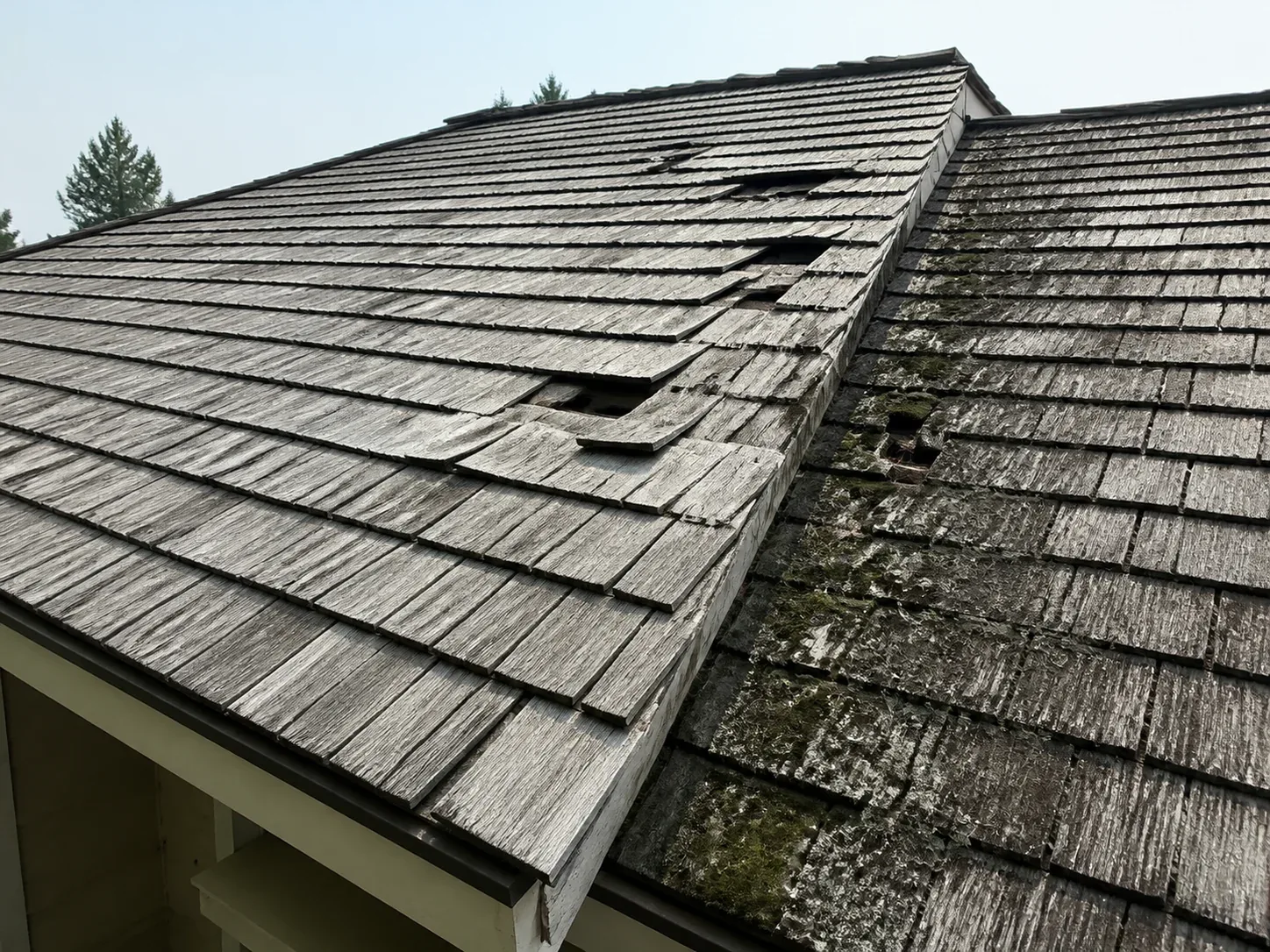
A buyer touring a custom ranch home on a graded pad above the San Luis Rey valley in Bonsall admired the roof from the driveway before ever walking the attic. It was a wood shake roof, thick hand-split cedar courses gone silver-gray with age, the kind of roof that reads as authentic and expensive from the street. Up close and from inside the attic it told a different story: individual shakes curling at the butt edge, a scatter of split and missing pieces near the ridge, moss holding moisture in the north-facing valleys, and a second layer of older shakes still in place underneath the first, installed over rather than removed. None of that was visible from where the buyer had been standing.
We are describing this as a composite of a pattern we see across Bonsall’s older ranch-style and custom hillside homes, not one identified property or job. Bonsall is a rural, unincorporated North San Diego County community of avocado and citrus groves, larger lots, and genuine ranch and custom-built houses, many dating from the 1960s through the 1980s, an era when wood shake and wood shingle roofing was a common, even expected, covering on this kind of property. That combination, an older roofing material on a large share of the local housing stock, in a rural wildland-adjacent setting, is exactly why an agent working Bonsall needs a straight answer about what a wood shake roof actually is, how it fails, and what its fire-risk profile means before it becomes a surprise in escrow.
This guide is for the agent working Bonsall and the surrounding communities we also serve, including Fallbrook, Vista, and Escondido, where a wood shake or wood shingle roof comes up often enough on an older ranch or custom property that agents deserve a clear picture of what a general home inspection can and cannot tell a buyer about one.
Why this matters for the agent
Bonsall’s housing stock skews toward larger parcels, working and former agricultural land, and custom or semi-custom construction rather than tract subdivisions. A meaningful share of that stock was built in the decades when wood shake and wood shingle roofing was a standard, popular choice for a ranch or custom home, prized for its natural look and its fit with the rural, equestrian character of the area. Many of those original roofs are still on the house, sometimes with a second layer added over the first rather than a full tear-off, and sometimes with a series of localized repairs rather than a full re-roof.
A wood roof that looks intact from the street or in listing photos can be well past its functional service life underneath, and a wood roof’s fire-risk classification is a genuinely different question from a composition or tile roof’s, one that a rural, wildland-urban-interface community like Bonsall cannot treat as a footnote.
What a wood shake or wood shingle roof actually is
Wood shingles are sawn to a uniform taper, thinner and more uniform in appearance. Wood shakes are typically hand-split or split-and-resawn, thicker, and more irregular in texture and thickness, the look most people picture when they say “shake roof.” Both are most commonly cedar, sometimes redwood, and both are installed in overlapping courses over spaced sheathing or battens that allow air to circulate underneath the wood, a detail that matters as much as the covering material itself.
That underside airflow is not incidental. Wood roofing needs to dry out between wetting cycles to have any reasonable service life. A wood roof installed over solid sheathing with no ventilation gap, or one that has had insulation or a later roofing layer packed against the underside over the years, loses that drying capacity and deteriorates faster than the material’s reputation would suggest.
What actually goes wrong with an aging wood roof
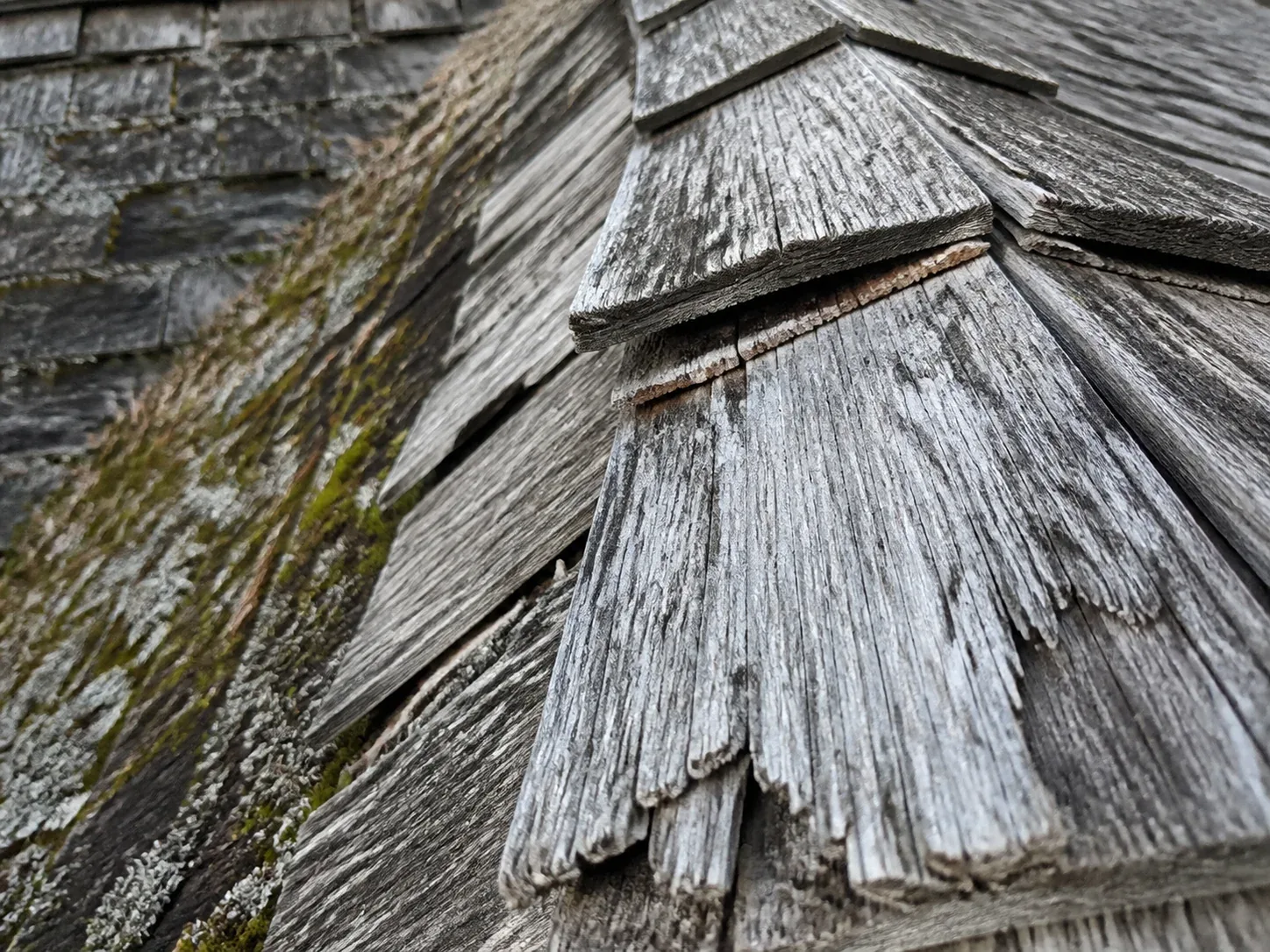
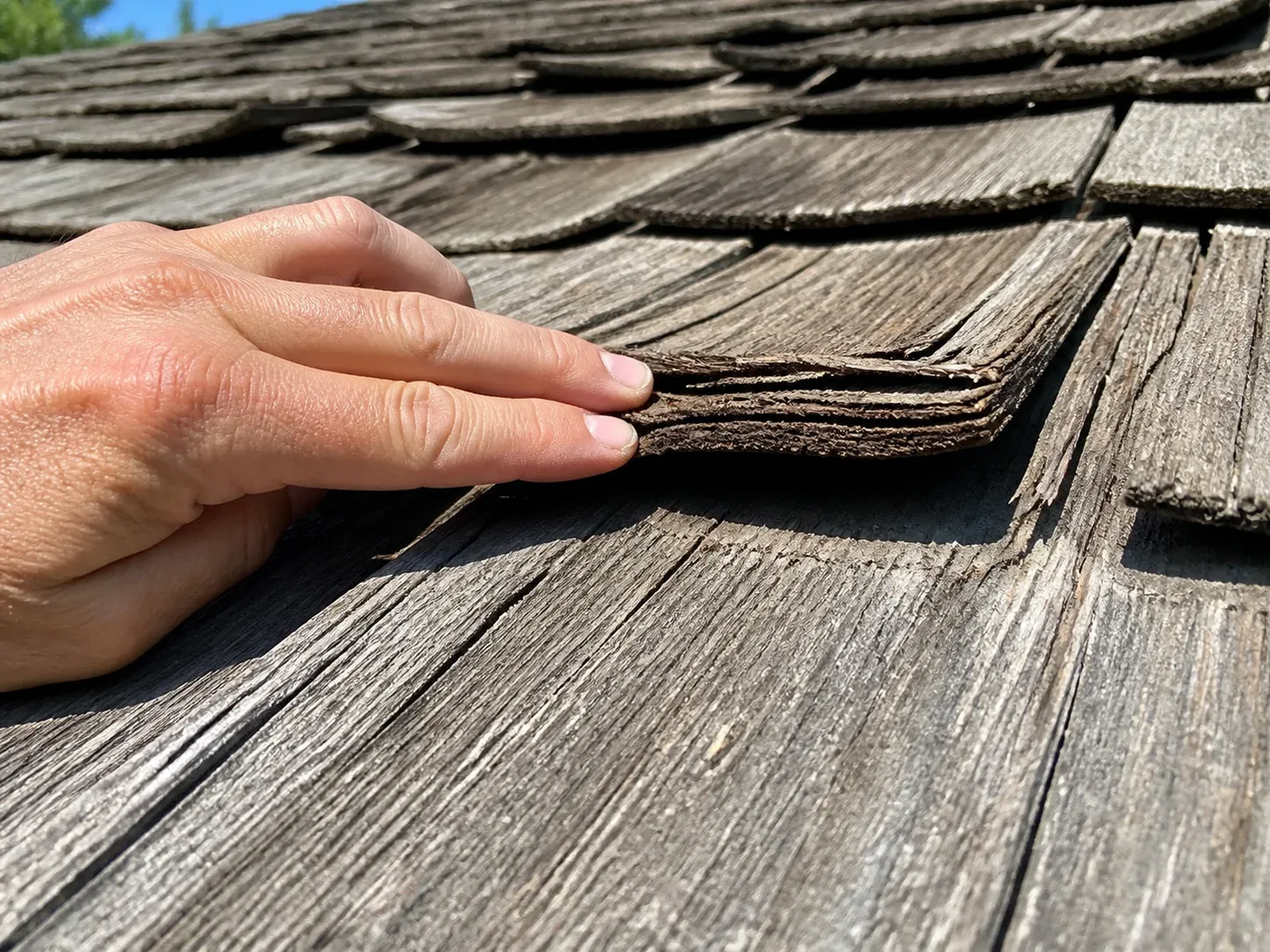
Curling, splitting, and cupping. Repeated wet-dry cycles, common in a climate with real seasonal rain followed by long dry stretches, cause individual shakes and shingles to curl at the edges, split along the grain, or cup across their width. Once a shake has split or curled enough to open a gap to the sheathing below, it is no longer doing its job even if it is still nailed in place and visually present.
Moss, lichen, and algae in shaded or north-facing areas. Wood roofing under tree canopy or on a north-facing slope holds moisture longer than a sun-exposed section, and moss and lichen growth is both a cosmetic sign and a moisture-retention problem in its own right, holding water against the wood and accelerating the same decay process a Bonsall inspector would look for on any exterior wood member.
Loss of natural weathering oils and surface erosion. Wood roofing sheds its natural oils and the outer wood fibers erode over decades of UV and weather exposure, leaving a rougher, thinner, more moisture-absorbent surface than the roof had when new, even on shakes that have not visibly split or curled.
Layering over an original roof rather than a tear-off. Because a full wood-roof tear-off is expensive, some reroofs over the decades were done by adding a second layer over the first rather than removing it. A layered roof carries more weight, traps more moisture between the layers, and is harder to properly ventilate than a single, correctly installed layer.
Ridge and hip cap deterioration. The ridge and hip caps see the most direct sun and weather exposure on the whole roof and are frequently the first place visible failure shows up, well before the field of the roof looks obviously worn.
See what every Bonsall inspection includes →
What agents should tell every buyer
- A wood shake or wood shingle roof’s remaining service life is a real, material question on an older Bonsall property, not a cosmetic preference, and it belongs in the same conversation as any other major system nearing the end of its useful life.
- Curling, splitting, moss growth, and visible ridge-cap wear are documentable conditions an inspector can point to directly, not a subjective judgment call.
- A layered roof, a second course installed over an original rather than a full tear-off, is a real condition worth asking the seller about directly, since it affects both remaining life and reroofing cost.
- Wood roofing’s fire classification and performance in a wildland-adjacent setting is a genuinely different conversation from a composition shingle or tile roof, and California’s wildfire-hardening requirements have evolved over time, so a buyer should confirm current local requirements rather than assume the existing roof already meets them.
- Roof financing and homeowners insurance underwriting both look closely at roof material and remaining life, and a wood roof nearing the end of its service life can affect either well before the roof visibly fails.
- A general home inspection documents the roof’s visible condition, layering where determinable, and access-level findings, but a full remaining-life estimate and any wildfire-hardening scope belongs to a licensed roofing contractor.
Red flags during showings
- Individual shakes or shingles that are visibly curled, cupped, split, or missing, especially in clusters rather than isolated pieces.
- Heavy moss, lichen, or algae growth concentrated on shaded or north-facing roof slopes.
- A ridge or hip cap that looks noticeably more worn or patched than the surrounding roof field.
- Any sign, from the attic or from a roof-edge view, that a second layer of shakes sits over an older layer rather than a single installed course.
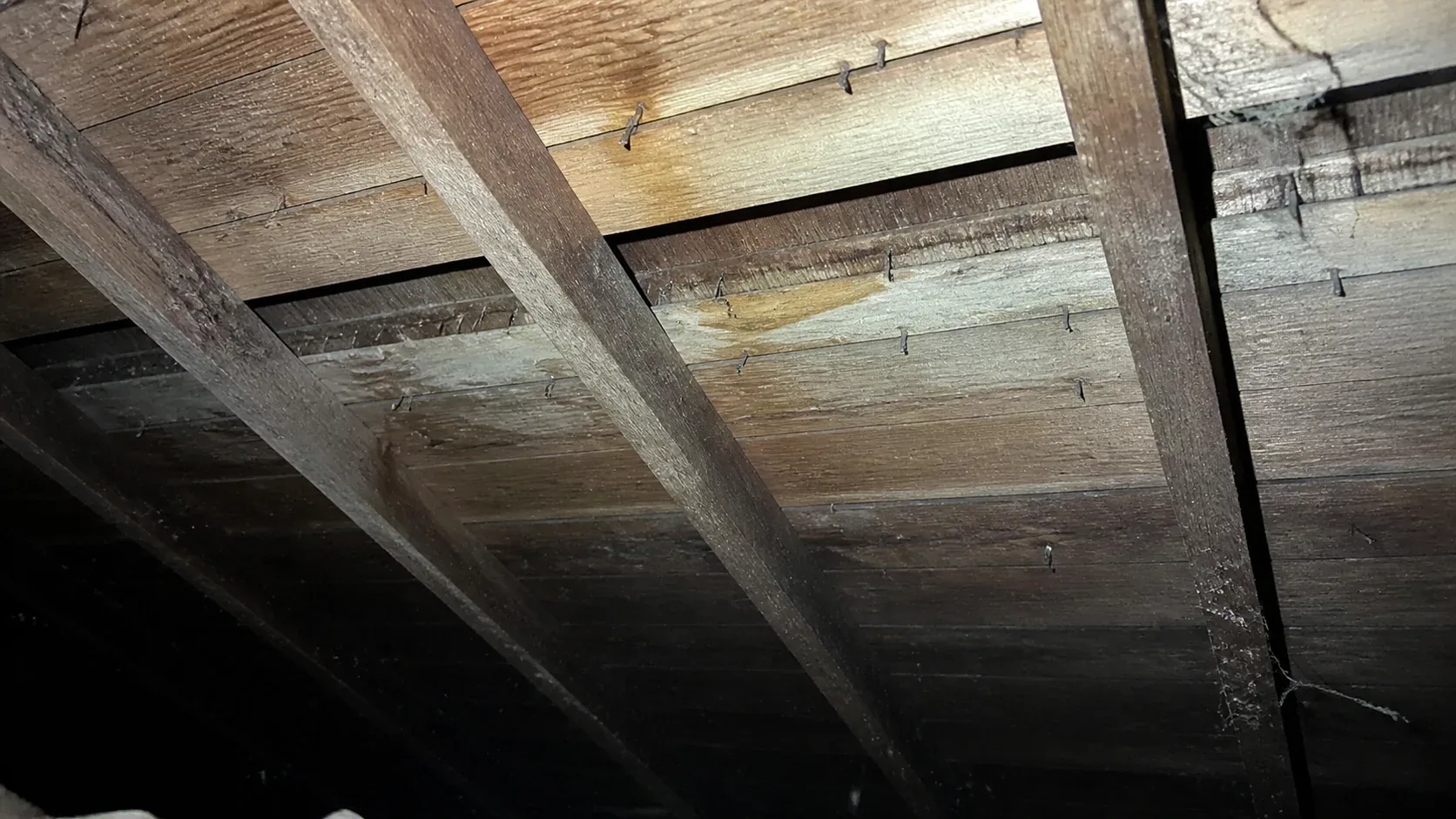
- Daylight visible through the roof deck from inside the attic, a direct sign the covering has failed in that area.
- Recent patch repairs in mismatched or newer-looking wood scattered across an otherwise weathered roof, suggesting ongoing localized failure rather than a single isolated event.
The negotiation playbook
When an aging wood shake roof surfaces in a Bonsall escrow, the path usually depends on how much visible deterioration is present and how it lines up with the roof’s apparent age.
The first path is no action at all, appropriate when the roof shows light, even weathering with intact courses, no layering, and no active leak evidence, treated as a system with real remaining life that simply needs normal maintenance.
The second path is a roofing contractor evaluation before close, warranted whenever curling, splitting, or moss growth is concentrated enough to raise a real question about remaining service life, so the buyer has an actual professional estimate of years remaining rather than a guess from the curb.
The third path is a credit or informed acceptance, appropriate once a contractor’s findings are in hand and the buyer understands exactly what remaining life and what reroofing cost they are accepting.
The fourth path is a full reroof negotiation, appropriate when the roof shows advanced, widespread deterioration, confirmed layering, or active leak evidence, where the realistic outcome is treating the roof as a near-term replacement rather than a maintainable system.
How the inspection actually catches it
We walk the roof where it is safely accessible and document the covering material, the apparent condition of the shakes or shingles, and any visible curling, splitting, moss growth, or missing pieces.
From the attic, we look for daylight penetration through the roof deck, evidence of a second roofing layer, staining or moisture evidence at the sheathing, and whether the roof was installed with the airflow gap the material depends on.
Where the visible condition or layering raises a question the inspection cannot fully resolve, we say so plainly and recommend a licensed roofing contractor for a remaining-life estimate and a wildfire-hardening review appropriate to the property’s setting.
Our what’s included page covers the full roof and exterior scope of every Bonsall inspection, including drone imagery that documents roof condition without walking every section by hand.
Quick FAQ
Is this the same topic as Oakland’s beam and post deterioration article or Toluca Lake’s wood decay article? No. Oakland’s article covers structural framing members, the posts and beams carrying a house’s floor load, a completely different building system. Toluca Lake’s article covers the fungal-decay mechanism itself, the moisture and airflow conditions that let decay fungi grow in wood generally. This article is specifically about the roof COVERING material, wood shakes and shingles as a roofing product, their own deterioration pattern, layering history, and fire-risk profile. Where fungal decay does show up in a wood roof deck, this article references Toluca Lake’s mechanism rather than duplicating it.
Is this the same as Canyon Lake’s metal roofing article or Lake Balboa’s roof drainage article? No. Canyon Lake’s article covers a different roofing material entirely, metal roofing’s own installation and fastening defects. Lake Balboa’s article covers gutters and downspouts, the system that carries water away once it leaves the roof, not the roof covering itself. This article is specifically about wood shake and wood shingle roofing as a material.
Does Inspection.re estimate how many years a wood roof has left? No. We document the visible condition, apparent layering, and any active moisture or leak evidence. A precise remaining-life estimate and any wildfire-hardening scope of work is a job for a licensed roofing contractor.
Are wood shake roofs banned in California? Requirements vary by jurisdiction, fire hazard severity zone, and whether the roof is being replaced versus repaired, and codes are updated over time. We do not assert a specific code section as settled fact. A buyer or agent with a specific concern should confirm current requirements with the local building department or a licensed roofing contractor before assuming either way.
Should a buyer walk away over an older wood shake roof? Rarely on its own. Most situations resolve with a contractor evaluation, a negotiated credit, or a planned reroof budgeted into the purchase. The real question is how much of the roof’s service life is actually left and what that means for near-term cost.
The honest summary
A wood shake or wood shingle roof is not automatically a defect on a Bonsall property, but it is an aging natural material with a real, finite service life and a fire-risk profile that deserves a direct conversation, not an assumption based on how it looks from the driveway. We document what we can see, the covering’s condition, its layering history where determinable, and any active moisture evidence, and we tell a Bonsall buyer plainly when the roof calls for a contractor’s closer evaluation before move-in.
We walk every accessible roof section and attic on every Bonsall inspection looking for exactly this pattern, and where the evidence calls for a specialist, we say so rather than guessing.
See what every inspection includes → · Read our FAQ → · Explore Bonsall home inspections →
Related reading
- Beam and Post Deterioration in Oakland. A structural framing article, a different building system than this article’s roof covering, referenced here only for contrast.
- Wood Decay and Fungal Rot in Toluca Lake. The moisture-driven decay mechanism itself, referenced as the deeper reference for any fungal decay found in a wood roof deck.
- Metal Roofing Defects in Canyon Lake. A different roofing material’s own installation and fastening defects.
- Why Infrared Scanning Matters in California Homes. How thermal imaging can help surface moisture patterns under an aging roof covering.