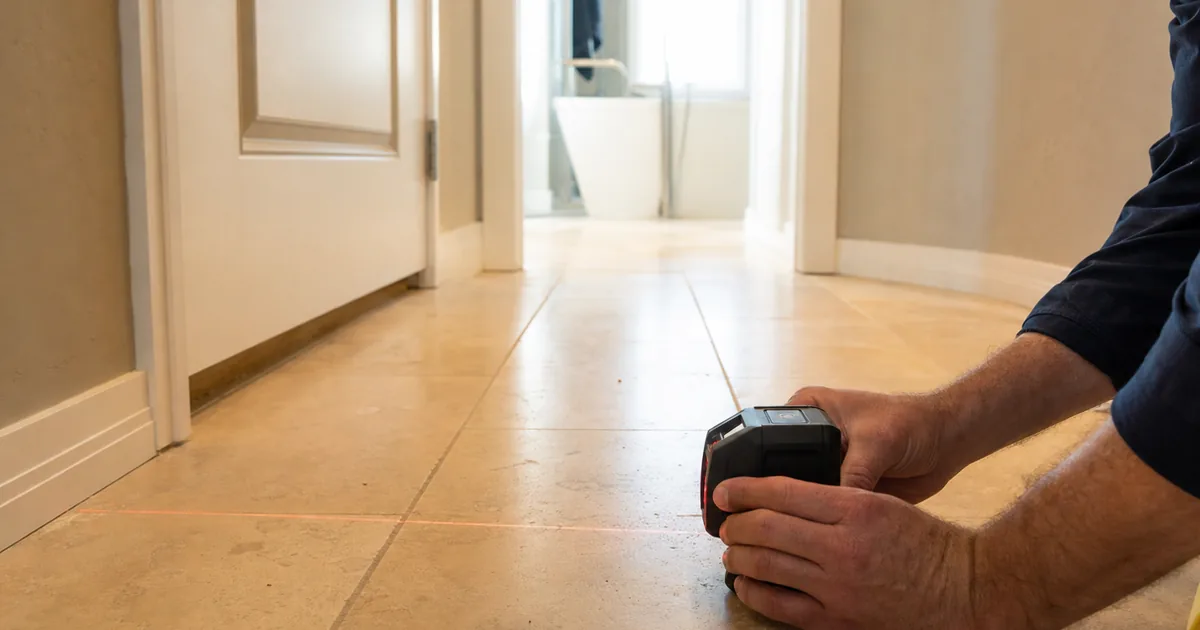
We inspected a single-story home off North Main earlier this year. Nothing about the house looked like a problem. Fresh paint, a redone kitchen, a slab that read level to the eye standing in the hallway. Then we set the laser level and walked the perimeter.
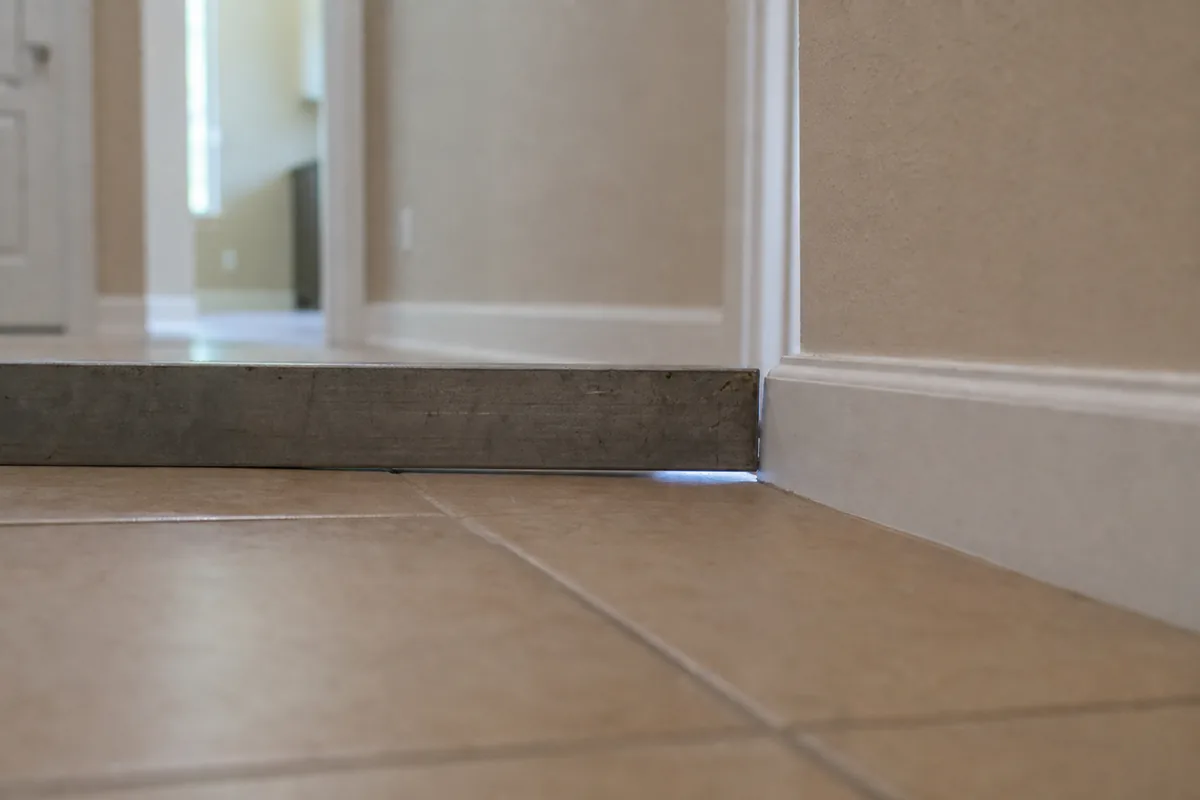
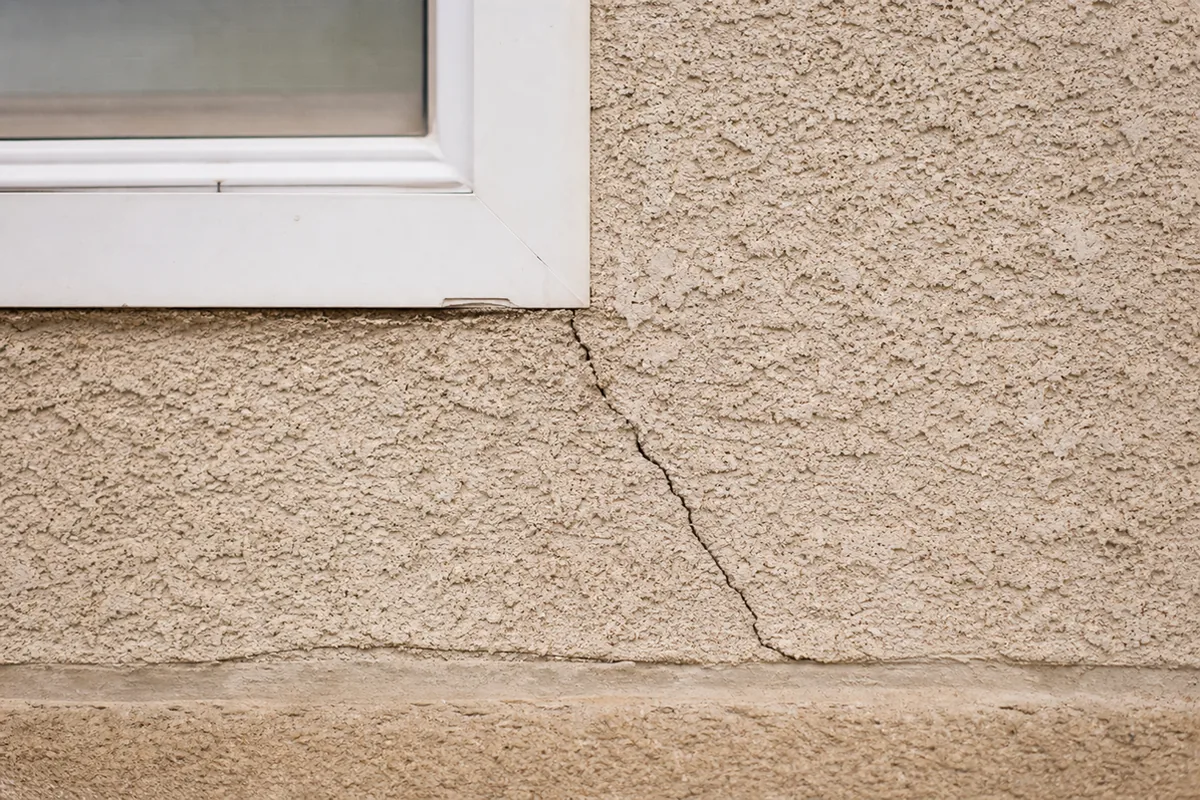
The floor dropped just under three quarters of an inch across one corner of the house, and a hairline crack ran diagonally from a window frame down to the slab edge, the kind of movement pattern that shows up when part of a foundation is sitting on soil that settled at a different rate than the rest of the lot. Corona’s assessor records and the county’s own citrus-era maps put that block inside what was lemon acreage into the 1950s. Somewhere under that slab is the old orchard ground, graded, filled, and built over when the packing houses closed and the tracts went in.
The buyer’s agent had no idea the neighborhood had a citrus history at all, let alone that it mattered to the foundation.
Schedule a Corona inspection · Same-day report · Pay-at-closing available
Here is how that one resolved. We documented the crack, the laser-level readings, and the crawlspace access clues in the same-day report and told the buyer directly that a structural engineer needed to look at the pattern before the contingency closed. The engineer’s letter confirmed differential settlement, not a structural emergency, and recommended monitoring plus a modest amount of underpinning at the affected corner. The buyer’s agent used that letter to negotiate a credit and the deal traded. The lesson was not that old grove land is a dealbreaker. It is that in Corona’s older subdivisions, the ground under the slab has a history that the paint job does not tell you, and the time to read that history is during escrow.
Why this matters for the agent
Corona grew up as citrus country, and a lot of its housing sits on ground that was farmed for decades before it was ever graded for a foundation.
Three things tend to ride on this. First, the cost. A monitored, minor settlement case with spot underpinning runs in the low five figures. A more serious case with a full perimeter foundation repair runs well past that. Second, the timing. Settlement is slow until it isn’t, and a buyer who skips the evaluation can end up managing a structural claim years into ownership instead of negotiating it before close. Third, the disclosure gap. Sellers report what they know, and most current owners have no idea their lot was ever a lemon grove, so the history that actually explains a crack pattern rarely makes it onto a Transfer Disclosure Statement.
If you work Corona’s older neighborhoods, particularly the blocks between the historic Circle and the newer hillside tracts, this is part of your inventory whether you have thought about it that way or not.
What former grove land actually does to a foundation
The mechanism is straightforward once you know to look for it. Citrus acreage was worked, irrigated, and root-systemed for decades before a single house went up on it.
When groves came out ahead of subdivision, the standard practice for most of the twentieth century was to grade the lot, sometimes push and bury the old root balls and grubbed stumps rather than fully excavate them, and place fill without the compaction testing a modern subdivision requires. Organic material left in the fill decomposes over years, leaving small voids under the ground surface. Soil that was tilled and irrigated for a lemon grove behaves differently under a slab than soil that was never farmed, because it was aerated and amended for root growth rather than compacted for bearing capacity. The result is a lot where one section of the pad rests on native, undisturbed ground and another section rests on old agricultural fill, and the two settle at different rates as the decades pass. That is differential settlement, and it shows up as a diagonal crack, a door that starts sticking, or a slab that reads level in one room and out of level in the next.
California’s building code has addressed this directly for new subdivisions since the 1960s. Chapter 18 requires a preliminary soil report for every subdivision map, and if that report finds expansive soil or other problem conditions, it requires a lot-by-lot soil investigation with engineered recommendations before anything is built. The rule exists because this exact failure mode, old agricultural or unengineered fill settling unevenly under a new foundation, was common enough to write into state law. It just does not reach backward to the tracts that were already built before the ordinance caught up with them.
Why this shows up more in some Corona pockets than others
Not every Corona lot has this history, and that is exactly why the location matters more than the age of the home.
The hillside tracts in South Corona, places like Sierra Del Oro and Eagle Glen, were mostly graded from undeveloped hill and canyon land in the 1990s and 2000s under modern grading and compaction standards, so their foundation risk runs more toward slope and drainage than old fill. The older, flatter neighborhoods closer to the historic Circle and along North Main sit on ground that was citrus acreage into the mid-twentieth century, and those are the lots most likely to carry buried agricultural fill under a mid-century or later slab. We do not treat every Corona home the same way for this reason. We treat the ground the same way the county’s own soil ordinance does, as something that has to be evaluated on the specific lot, not assumed from the neighborhood name.
What agents should tell every buyer on an older Corona home
A short list buyers writing offers on Corona’s older, flatter neighborhoods should hear from you before they go into escrow.
- A level-looking slab does not rule out settlement. Differential movement is often a fraction of an inch across a room, easy to miss without a laser level or a straightedge.
- Ask whether the lot was ever agricultural. County assessor and historical land-use records can confirm whether a parcel sat in citrus acreage, and that history is a legitimate diligence question, not trivia.
- A hairline crack at a window or door frame is a starting point for questions, not an automatic red flag. Most cracks are cosmetic. The ones that matter follow a diagonal pattern tied to a corner or an addition line.
- Budget for the possibility of a structural engineer’s evaluation as its own line item. Most come back with monitoring recommendations, not major repair, but you want that letter before removing contingencies, not after.
- If underpinning or foundation repair is recommended, get a written scope and bid before negotiating a credit. The bid anchors the number and tells you whether the fix is localized or perimeter-wide.
Red flags during showings (no special tools required)
You do not need a laser level to flag a settlement concern at a showing. Add these to your walk-through on any older Corona property.
- A diagonal crack running from a window or door frame down toward a corner of the slab, especially if it is wider at one end.
- Doors or cabinets that stick or swing open on their own, which can point to a frame that has racked out of square.
- A visible dip or high spot when you sight down a long hallway or across an open room.
- Stucco cracking in a diagonal pattern near a corner, mirroring what may be happening at the slab underneath.
- Gaps between baseboards and the floor, or between a countertop and the wall, that are wider on one side of a room than the other.
- Any mention in the disclosures of prior foundation work, even minor, on the subject property or immediate neighbors.
None of these prove a settlement problem on their own. All of them are reasons to bring a level to the second showing.
The negotiation playbook when settlement surfaces in escrow
There are four paths most of these deals end up on. Knowing them in advance helps you steer.
Seller commissions the structural engineer before closing works when the seller wants a clean sale and the timeline allows it. Insist the engineer’s letter addresses cause, not just symptoms, and that any recommended monitoring or repair scope is spelled out, not left as a verbal reassurance.
Seller credits the buyer to handle it after closing is the most common outcome once an engineer’s letter is in hand. Size the credit to the actual bid, whether that is a monitoring program with no immediate work, spot underpinning at one corner, or a broader perimeter repair. Do not negotiate off the inspection report alone. Get the engineer’s number first. The same four-path structure applies to expansive clay foundation issues in the Inland Empire, to graded-pad settlement on Irvine’s engineered hillside pads, and to post-tension slab questions on newer hillside tracts. Coastal lots carry their own version of this conversation, covered in our Huntington Beach liquefaction and methane guide.
Buyer walks under the inspection contingency happens when the evaluation comes back worse than the crack pattern suggested, or when the buyer is not comfortable owning a structural unknown regardless of the number. That is a legitimate outcome, and your job as the buyer’s agent is making sure they understand it is available before the contingency period runs out.
Deal closes with monitoring only is common and reasonable when the engineer’s letter finds slow, minor movement that does not currently warrant repair. Document the buyer’s informed decision in writing, keep the engineer’s letter with the transaction file, and treat the monitoring plan as a real to-do, not paperwork to file away.
How the inspection actually catches it
A visual walk-through alone will miss most differential settlement, because the movement that matters is often a fraction of an inch and the surface finishes can hide it. Catching it takes measurement.
We run a laser level across every slab we inspect, checked against a straightedge at any crack or door that raises a question, so a sloped section reads as a number, not an impression. We tie that to a crawlspace or foundation-perimeter walk where access allows, looking for the same crack pattern from below, and we run thermal imaging at interior wall corners because a settling foundation often shows a companion moisture or gap signature that the camera picks up before it is visible to the eye. When the measurements and the crack pattern point to differential settlement, we say so directly in the same-day report and tell the buyer a structural engineer needs to evaluate the cause, because the inspection documents the condition, the engineer prices and scopes the fix.
The foundation story in Corona’s newer hillside tracts runs differently, more about slope and drainage than old fill, which we cover in our post-tension slab foundation guide for the newer Inland Empire tract pattern. And the way thermal imaging surfaces hidden movement and moisture together is in our piece on why infrared scanning matters.
Quick FAQ for buyers and agents
Does every older Corona home have this problem? No. Most homes on former grove land show no measurable settlement at all. The point is that the history exists on some lots, and a level check during inspection is the only way to know which ones.
How do I find out if a lot was once a citrus grove? County assessor records and Corona’s own Heritage Room historical archive document the city’s citrus-era land use. It is a reasonable diligence question for an older, flatter-neighborhood purchase.
What does a structural evaluation cost? An engineer’s site visit and letter typically runs a few hundred to around a thousand dollars, small next to what it tells you before you own the outcome.
Is a diagonal crack always a foundation problem? No. Most cracks are cosmetic, tied to normal curing or minor settling that every slab experiences. A diagonal pattern tied to a corner, paired with a measurable slope, is what moves it from cosmetic to worth an engineer’s opinion.
Does California law require sellers to disclose old agricultural use? Not specifically. The Transfer Disclosure Statement covers known material facts and past repairs, but most current owners were never told their lot was farmland, so the history often has to come from your own diligence, not the seller’s paperwork.
The honest summary for agents
If you work Corona’s older neighborhoods, you are selling homes on ground with a real agricultural history, and that history occasionally shows up as differential settlement decades later. The lots caught with a laser level during the inspection contingency are negotiations. The ones caught after closing, when a door will not latch or a crack has widened over a year, are disputes with nothing left to negotiate. Your buyer is far better served by the first.
The inspection that catches it is not the one that eyeballs the slab and moves on. It is the one that measures every floor, checks the crack pattern against the movement, and tells the buyer plainly when an engineer needs to look, with a same-day report so you have the documentation in hand before the contingency clock runs out.
Related reading
- Driveway and Flatwork Trip Hazards in Lakewood. Concrete movement from tree-root heave rather than soil settlement.
- Downey Foundation Dampproofing and Waterproofing Guide. A coating and moisture-entry question at the wall, a different mechanism from soil-driven settlement.
Schedule a Corona inspection or see our full inspection scope before you book. Want to see what the finished report looks like? Here is a sample inspection report. Common questions are answered in the FAQ. For the newer hillside tract foundation pattern, read our post-tension slab foundation guide, and see why infrared scanning matters on older homes.
- Footings and Foundation Reinforcement at Room Additions in Santee. Differential movement caused by an untied addition footing rather than by site history and consolidating ground.