The house showed beautifully on a bright afternoon, and that was part of the problem. With the sun straight on the glass, the windows looked fine. It was only when the inspector worked through the house room by room, looking at each window at an angle and in the shade, that the count climbed: a hazy lower corner here, a permanently clouded pane there, a faint mineral film on a slider that no amount of cleaning would touch. Sixteen of the home’s dual-pane windows had failed seals. The buyers had walked the house twice and counted zero.
We are keeping the address private and the details composite, because in Costa Mesa’s 1980s and 1990s homes this is one of the most common findings there is, and one of the most consistently overlooked. A failed window seal is quiet, easy to miss in the right light, and individually cheap to ignore, until you add up a whole house of them. The home was lovely. It also had several thousand dollars of glass that needed replacing, and nobody had it on the radar.
Here is how that one resolved, and what it should change about how you handle a home full of dual-pane windows.
Schedule a Costa Mesa inspection · Same-day report · Pay-at-closing available
Why this matters for the agent
Much of Costa Mesa’s housing was built or re-windowed in the era of dual-pane glass, and those windows are now old enough that their seals are failing in numbers. A single foggy window is a footnote. A dozen of them is a real line item that buyers either negotiate or get surprised by. Because the failure is easy to miss at a showing and easy to dismiss one window at a time, it tends to surface as a total only when an inspector counts the whole house.
The risk for the agent is the surprise and the size of it. A buyer who learns at the report stage that the home needs sixteen windows of glasswork feels like something was hidden, even though nothing was, and the number is large enough to reopen a negotiation. A buyer who knows the count going in treats it as a normal cost of an older dual-pane home and folds it into the deal. The difference is whether someone looked at every window, properly, which is exactly what an inspection does.
What a failed window seal actually is
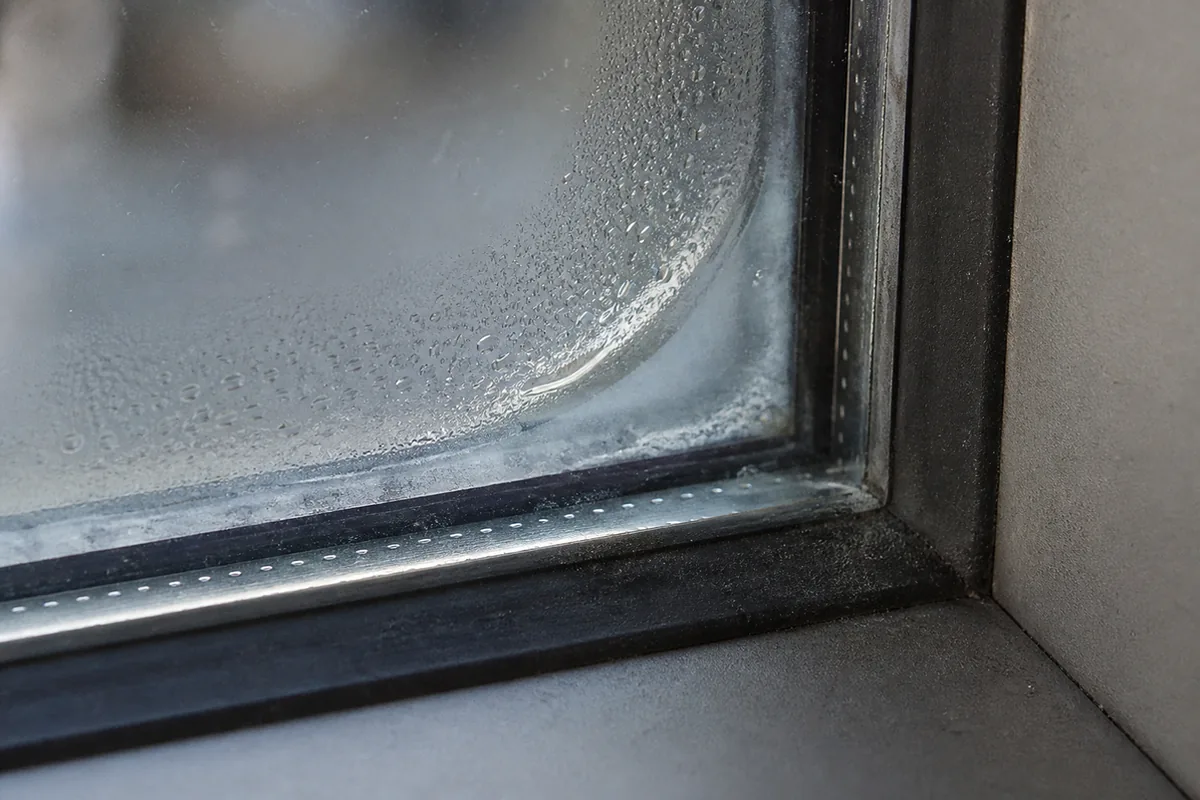
A modern dual-pane, or insulated glass, window is two panes of glass bonded to a perimeter spacer, with the gap between them sealed airtight and usually filled with argon or krypton gas for insulation. Inside that spacer is a desiccant, a moisture absorber that keeps the sealed cavity dry. The whole assembly is called an insulated glass unit, or IGU.
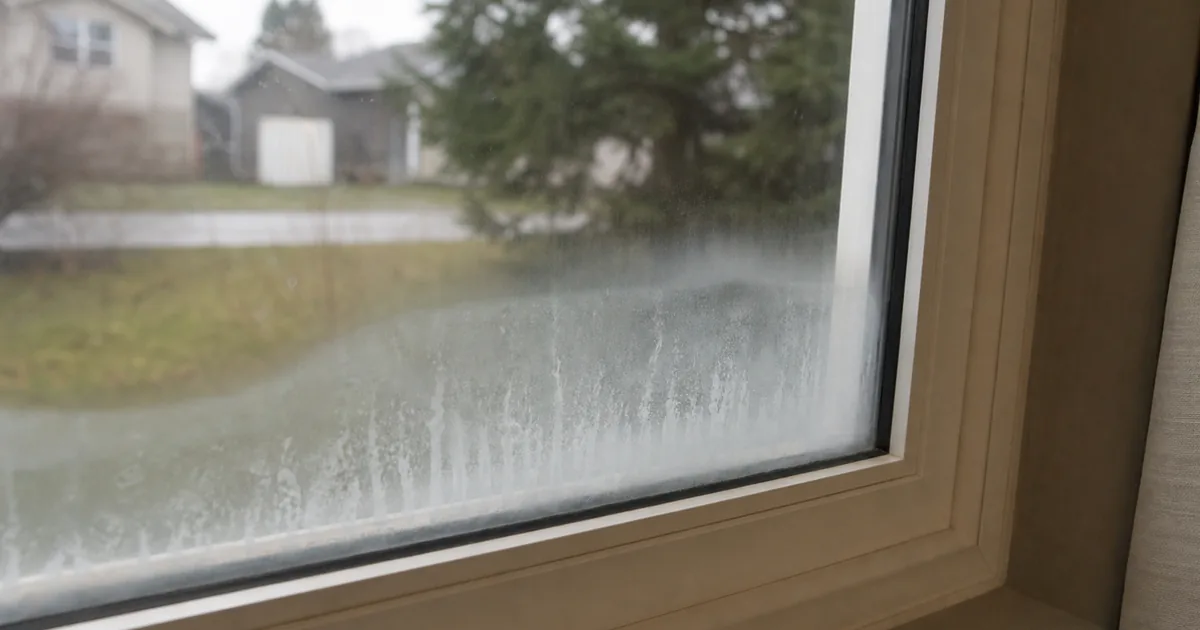
The seal is supposed to be hermetic, but over time, typically somewhere between seven and twenty-five years depending on quality, it degrades from thermal cycling, sun exposure, manufacturing defects, or installation stress. Once the seal cracks even microscopically, outside moisture migrates into the cavity faster than the desiccant can absorb it. That trapped moisture is what you see as fog, haze, or mineral streaking between the panes, and it is the only thing that causes it. Just as important, the insulating gas escapes, so the window loses much of its insulating value at the same time.
Why it fails to get counted (the part most agents skip)
The thing that catches people is that a failed window hides in plain sight. With direct sun on the glass, even a badly fogged pane can look clear, so a bright midday showing is the worst possible time to spot them. The haze is often worst in the morning, in humidity, or in raking light, and it can sit in just one corner of a large pane where the eye skips over it.
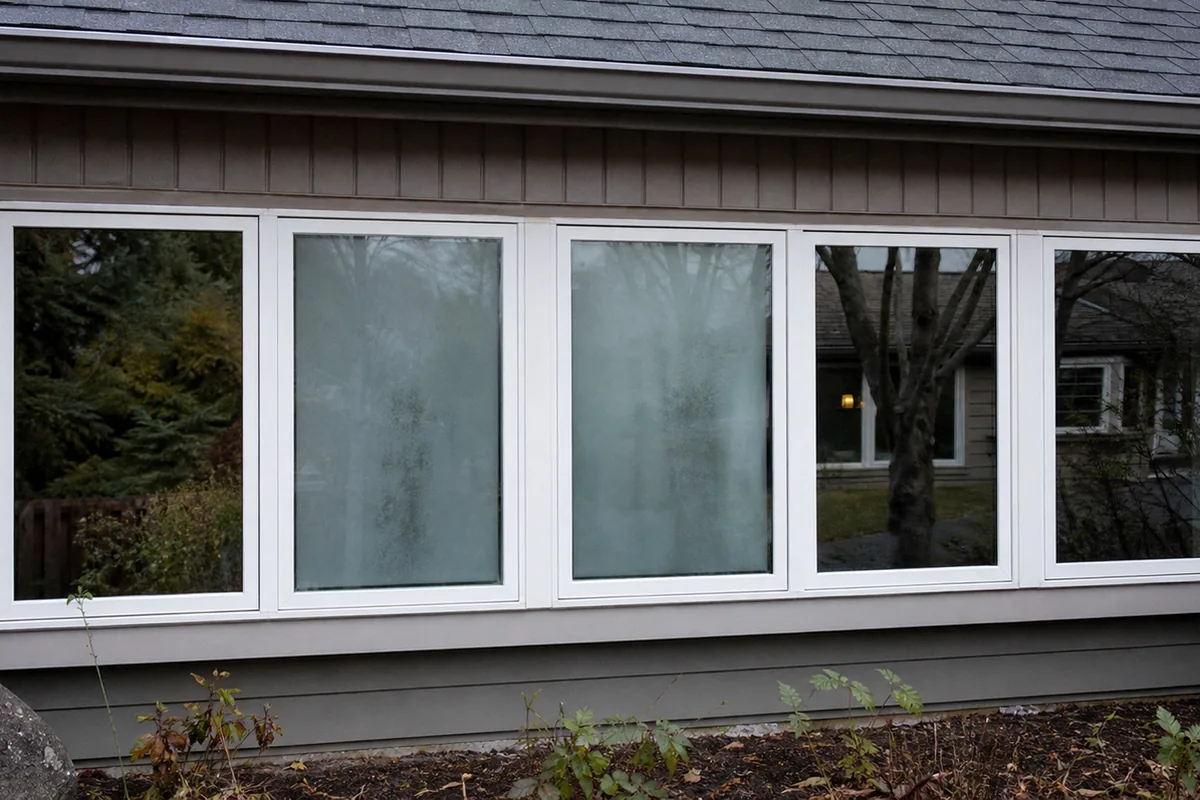
It is also a death by a thousand cuts. Each foggy window feels minor, easy to mentally file under cosmetic and move on, so nobody tallies them. The cost only becomes real when you count the whole house and multiply, and on a home that was fully fitted with dual-pane glass in the same year, the windows tend to fail in the same window of years, which is why they show up in bunches rather than one at a time. And because a fogged unit cannot be cleaned, wiped, or restored to new, the only real fix is replacement, which is the part buyers do not realize until they ask.
What agents should tell every buyer
Tell them to expect failed seals on any older dual-pane home and to want every window checked, not glanced at. Framed up front, a count of foggy windows is just a normal cost of an older home, not a defect that was hidden.
Tell them what the fix really is. A fogged IGU cannot be cleaned, and the proper repair is to replace the insulated glass unit, not the whole window, which typically runs a few hundred dollars per window. So-called defogging services that drill and dry the cavity are cosmetic, commonly refog within a few years, and do not restore the lost insulating gas, so they are not a real fix to plan a purchase around. Knowing that keeps the buyer from chasing a cheap non-solution.
Tell them it is a clean thing to negotiate because it is countable. Unlike a vague moisture worry, a list of failed windows is a specific number with a specific per-window cost, which makes for a straightforward credit or repair conversation. For how another countable older-home item runs through escrow, our salt-air corrosion guide follows the same know-the-number pattern, and the copper plumbing in these same tracts behaves the same way in our Tustin copper pinhole leak guide.
Red flags during showings
You can spot failed seals at a showing if you look the right way.
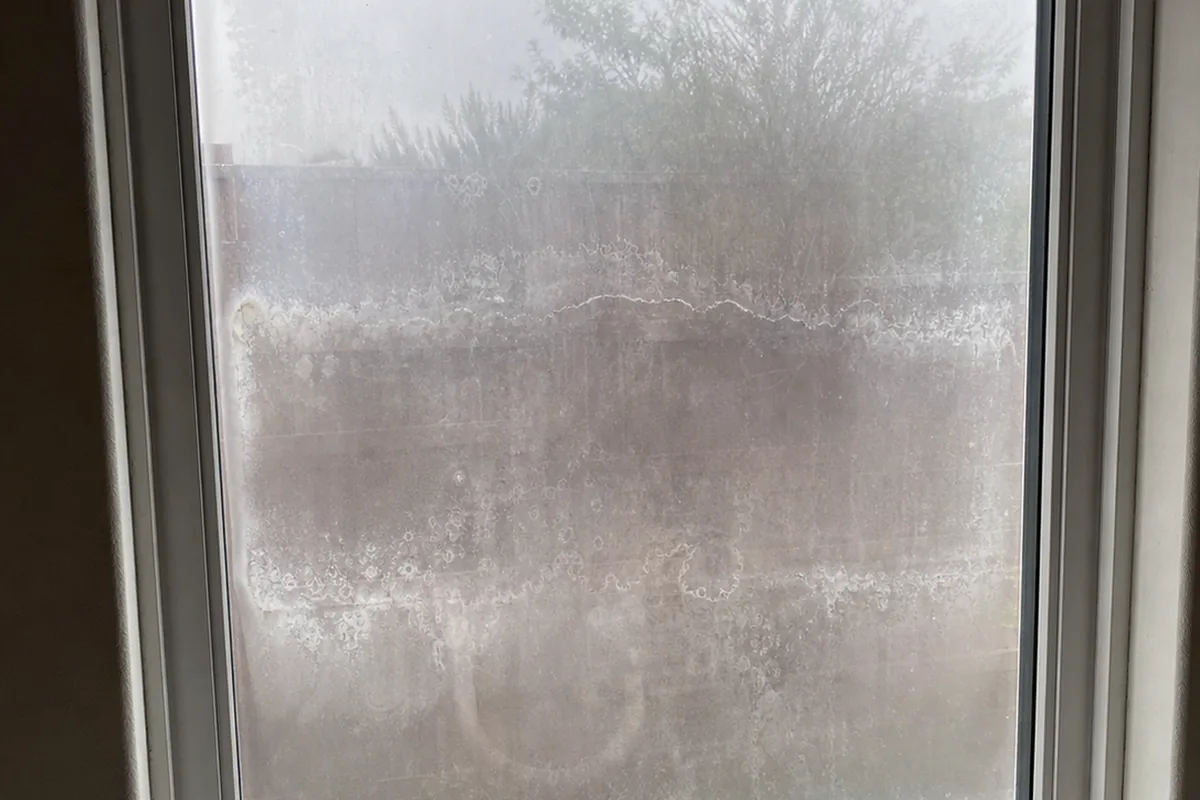
Look at the glass at an angle and in the shade, not straight on in the sun. Move to the side of each window and look across the pane; haze, a cloudy film, or condensation trapped between the layers shows up off-axis when it disappears head-on.
Look in the corners and along the bottom edge. Seal failure often starts at one corner or along the lower edge of the unit, where a faint crescent of haze or a mineral line is the first sign.
Watch for streaks that do not wipe away. A film or streaking that stays after the glass is cleaned is between the panes, not on the surface, which means the seal is gone.
Note the age and the matching set. A home fully fitted with dual-pane windows twenty to thirty years ago is a prime candidate for seals failing in numbers, because they all aged together.
The negotiation playbook
When an inspection counts failed windows, there are four ways the deal tends to go.
The first path is the per-window credit. Because the finding is a specific count with a known per-window glass cost, the cleanest outcome is usually a credit sized to replacing the failed units, which the buyer schedules after closing. It is one of the easiest numbers in a deal to agree on.
The second path is the seller replacement. The seller can have the failed IGUs replaced before closing, which on a long list can be a meaningful job; a glass company’s quote defines it.
The third path is bundling it into a windows decision. On a home where many windows have failed and the rest are the same age, some buyers choose to plan a fuller window replacement and negotiate accordingly, treating the failures as the tipping point rather than a one-for-one swap.
The fourth path is accepting it knowingly. A buyer who likes the home may simply absorb the glass cost as a known first-year project. That is a fine choice when it is informed, which is the whole reason to count the windows during the inspection.
How the inspection actually catches it
A real inspection counts every window, the right way. We look at each pane off-axis and in shade as well as in direct light, check the corners and lower edges where seals fail first, and distinguish surface condensation and dirt from the trapped haze that means the seal is gone. We note every failed unit so the buyer has an actual count rather than a vague impression, and we explain that the fix is IGU replacement, not cleaning or defogging. Where moisture around a window suggests more than a failed seal, we use thermal imaging to check for intrusion into the wall, as our infrared scanning guide explains. We tie it to the rest of what an older Costa Mesa home needs and report it as a defined item. See what every inspection includes.
Quick FAQ for agents
Can a foggy window be cleaned or fixed cheaply? No. The fog is moisture sealed between the panes, so it cannot be cleaned. Defogging services are cosmetic and commonly refog within a few years without restoring the insulating gas. The real fix is replacing the insulated glass unit.
How much does it cost? Replacing the glass unit, rather than the whole window, typically runs a few hundred dollars per window. The total depends on how many failed, which is exactly why counting them matters.
Why do so many fail at once? A home fitted with dual-pane windows in the same year tends to have them age and fail in the same window of years, so they show up in bunches.
Is it a structural or safety problem? No. It is a performance and cost issue: the window fogs and loses insulating value. It is not a hazard, but it is a real and countable expense.
How long does it take to inspect? Counting windows is part of a normal two-to-four-hour inspection. The report lists the failed units so the number is concrete.
The honest summary for agents
Failed dual-pane window seals are one of the most common and most overlooked findings in Costa Mesa’s older homes, precisely because each one is easy to miss in the sun and easy to dismiss on its own. Counted across a whole house, they become a real number, and a buyer who learns that number at the report stage feels ambushed while a buyer who knows it going in just negotiates it. Your value as the agent is making sure every window gets checked the right way and treating the count as the straightforward, per-window cost it is. That is what turned sixteen quietly foggy windows into a clean credit and a buyer who knew exactly what they were buying.
Related reading
- Shower Pan Leaks in Aliso Viejo. A concealed moisture failure a clean surface hides, like a failed window seal.
- Copper Pinhole Leaks in Tustin: An Agent’s Guide: the other quiet, age-driven cost hiding in the same Orange County tracts, where the plumbing fails from the inside out.
- Salt Air Killed a Carlsbad AC at Year 6: another countable older-home cost that runs through escrow as a known number rather than a surprise.
- Unpermitted Additions and Garage Conversions: An Agent’s Guide: the permit and square-footage questions that ride along with Costa Mesa’s heavy remodel culture.
- Why Infrared Scanning Matters in California Homes: how thermal imaging tells a failed seal from real moisture intrusion into the wall.
- Santa Monica Marine-Layer Crawlspace Moisture: the coastal-humidity defect that hides under raised-foundation homes, rotting subfloors the way failed seals hide in the glass.
See what every inspection includes, how to read your inspection report, and our inspection FAQ. For city-specific pages, start with Costa Mesa, Tustin, and Newport Beach.
If you have a Costa Mesa home with dual-pane windows in escrow, we can count every failed seal and give you the report that turns a vague impression into a number you can negotiate.
Schedule a Costa Mesa Inspection → · Call 1-888-88-INSP-9 A window can also raise a completely different question on an older house, because the sash channel is where painted surfaces turn into dust. See the federal dust-lead levels and what they govern.