Double-Tapped Breakers: A Downey Agent’s Guide
Double-tapped circuit breakers are one of the most common DIY electrical shortcuts we find in Downey homes. Over the past 15 years, Downey’s housing stock has shifted constantly. Original 1940s and 1950s post-war bungalows were wired for basic living. Then came the garage workshops. The pool equipment rooms. The additions that homeowners packed onto their properties. Each one meant new electrical circuits. And instead of hiring a licensed electrician to run a subpanel or install dual-rated breakers, many owners took the shortcut: they crammed two wires under a single breaker lug never designed to hold them.
This creates a specific, avoidable hazard. A double-tapped breaker means two hot circuit conductors terminated under one breaker lug rated for only a single conductor. The breaker manufacturer lists exactly what it can hold. When two wires go under one lug, the connection becomes loose, heat builds up, the insulation on one or both wires starts to degrade, and you get arcing inside the panel. Buyers walk into a property expecting standard electrical work. They find the previous owner’s shortcut instead.
As an agent working Downey, you’ll see this repeatedly. It’s one of those findings that makes buyers nervous, and with good reason. But it’s also completely correctable. This guide walks through what it is, how inspectors catch it, what it means for the deal, and how to frame it for your buyers.
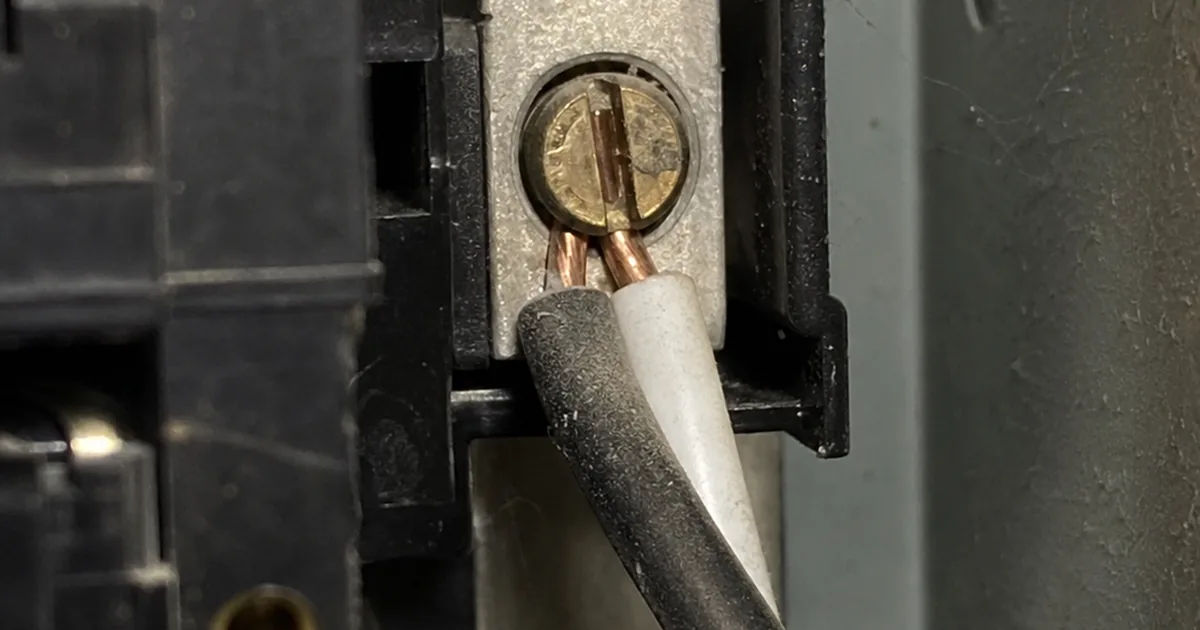
That is the shape of this finding. Two conductors. One breaker. Loose. Hot.
This guide is for the agent working Downey and nearby communities like Bellflower, Paramount, and Norwalk where post-war properties and subsequent owner additions have left a trail of this exact wiring practice.
Why this matters for the agent
Double-tapped breakers are not a cosmetic issue. They are a fire hazard. A loose connection inside an electrical panel generates heat. Heat degrades wire insulation. Exposed conductors arc. An arc becomes a fire. The Downey Fire Department, the California Electrical Code, and every major insurance carrier all flag this as a defect requiring licensed correction.
For your buyer, this means two things. First, it’s a required repair before closing. Title companies, lenders, and insurance agents all expect to see a licensed electrician sign off on the correction. Second, it’s a negotiation point. The seller can pay for the fix upfront, or the buyer can take a credit and hire their own electrician after closing. Either way, the deal does not move forward until someone addresses it.
As the agent, you have a window to explain this clearly before your buyer gets spooked. Double-tapped breakers are fixable in a single afternoon. They don’t require a new panel. They don’t mean the house is unsaleable. They mean the previous owner took a shortcut, and now it’s corrected. Frame it that way, and most buyers move forward without hesitation.
What a double-tapped breaker actually is
A circuit breaker is a safety device. It sits in the electrical panel and protects a single circuit by cutting power if the current exceeds a safe threshold. Every breaker has a rated amperage: 15 amps, 20 amps, 30 amps, and so on. Every breaker also has a physical lug, a terminal where you screw down the wire carrying the circuit’s current.
Breaker manufacturers rate each lug to hold a specific number of conductors at a specific wire gauge. A standard single-pole breaker lug is rated for one conductor, typically 14-gauge or 12-gauge wire. That’s it. One hole. One screw. One wire.
When an electrician or homeowner places two conductors under one lug, they violate the breaker’s listing. The lug is not designed to grip two wires evenly. One wire sits tighter than the other. The loose wire vibrates slightly as current flows. Over time, the connection loosens further. The contact area shrinks. Resistance increases. Heat builds.
We have seen this in dozens of Downey properties. A homeowner adds a garage workshop circuit in 1987. Rather than call an electrician, they find an open slot in the panel and jam two wires under an existing breaker. Sometimes they even think they are being clever, using a double-pole breaker for the two separate circuits. But a double-pole breaker is not the same as a dual-rated breaker. A double-pole breaker is listed for one conductor per lug, just in a wider housing that fits two lugs side by side. Two conductors under one lug remains a violation.
The correct fix is one of three things. First, run the second circuit to a new breaker slot with a single conductor. Second, use a tandem or twin breaker specifically listed for two conductors in a single slot. Third, install a subpanel to house the new circuit on its own breaker. Licensed electricians know which option fits the panel, the circuit load, and the available space.
What actually goes wrong
Heat. Arcing. Fire. Not immediately, usually, but inevitably.
When current flows through a loose connection, resistance rises exponentially. A tight connection at 100 amps might generate barely any heat. A loose connection generates 10 times more heat at the same current. The insulation on the wires, usually rated for 60 degrees Celsius to 90 degrees Celsius depending on the wire type, starts to break down. The plastic becomes brittle. Cracks form. Exposed copper inside the lug touches the lug itself. That is an arc. An arc is a small, contained fire inside the panel.
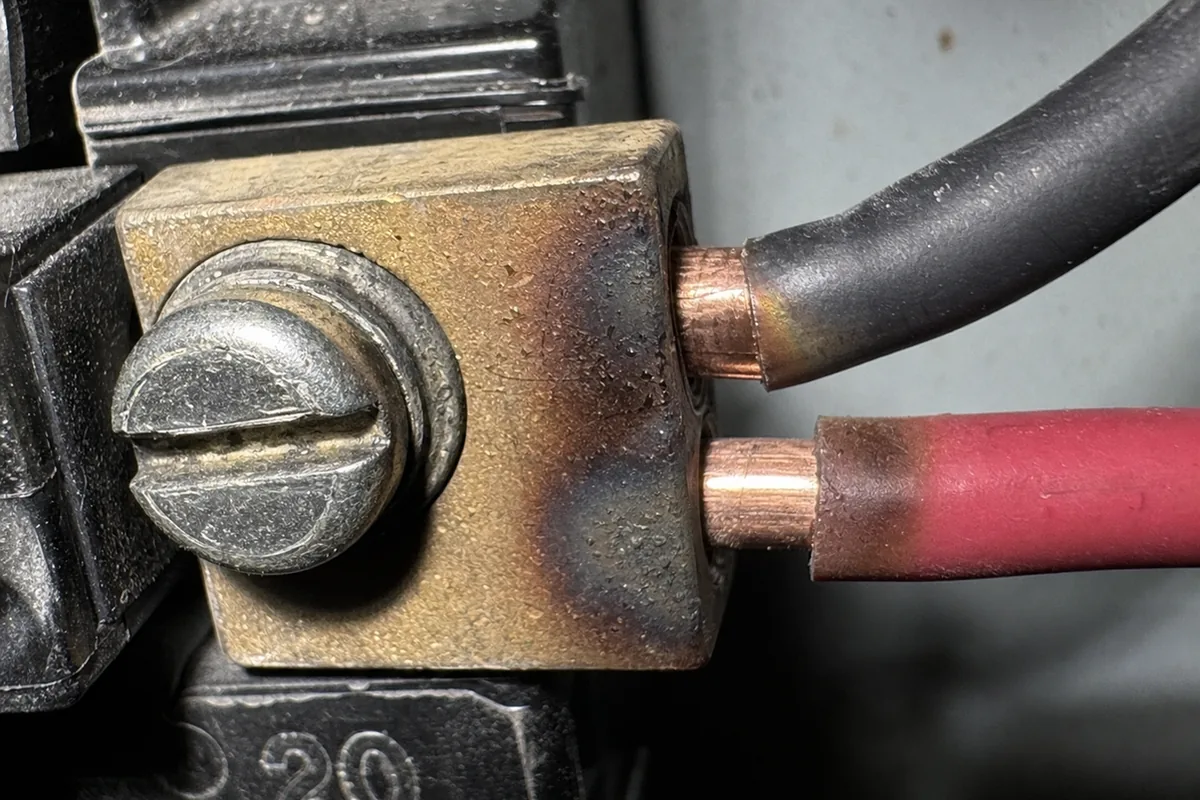
Breakers are supposed to trip when current exceeds their rating. But arcing inside the lug does not always trigger a trip. The breaker responds to overall current draw, not to a localized fire inside its lug. So the arc can burn for hours, or days, until it eventually causes enough current anomaly to trip the breaker, or until the arc grows large enough to reach neighboring breakers or the panel bus itself.
This is entirely different from the electrical issues we have written about in other Downey-area properties. Unlike aluminum branch wiring problems documented in other parts of California, double-tapped breakers are not a material defect. Unlike the Federal Pacific and Zinsco panel failures common in areas like Escondido, double-tapping is not a breaker design flaw where breakers fail to trip. Unlike undersized electrical service in areas like San Marino, double-tapping is not about total capacity. And unlike missing GFCI or AFCI protection, this is not a missing safety device but a loose connection that should never exist.
The hazard is real. It is also completely correctable. A licensed electrician can address it in an afternoon by running new wire to an open breaker, swapping in a tandem breaker, or installing a small subpanel. The repair is not expensive. It is not disruptive. It is not a reason to walk away from an otherwise sound property.
Schedule a Downey inspection →
What agents should tell every buyer
-
This is an improper installation, not a faulty product. The breaker itself is fine. The installation violates the breaker manufacturer’s rating. Any licensed electrician can correct this.
-
It is a fire hazard. Loose connections in electrical panels generate heat. Heat causes fires. Your insurance company will require this fixed before they cover the property. Your lender will require it before they fund the loan.
-
It is not expensive to fix. A licensed electrician can install a new breaker, run wire to a new slot, or install a small subpanel in under a day. The cost is typically under $500 to $1,500 depending on the solution.
-
The previous owner probably took a shortcut. They wanted to add a circuit for a garage, pool, or room addition. Instead of hiring an electrician, they did it themselves and crammed two wires where one belonged. This was common in Downey in the 1970s through 1990s. It does not reflect on the house, only on that one decision.
-
You have options for the repair. The seller can pay for a licensed electrician to fix it before closing. You can take a credit and hire your own electrician after closing. Your lender and inspector can recommend contractors. You are not locked into a single solution.
-
A corrected panel is a good outcome. Once fixed, the electrical system is safer and more compliant. You may even gain an extra circuit capacity if the electrician installs a subpanel. This is not a problem that damages the property long-term. It is a problem that has a clean, straightforward solution.
Red flags during showings
Watch for these visible signs when you walk a Downey property:
- A breaker panel cover with breakers sitting unusually close together or overlapping visibly. This suggests tandem breakers or double-tapped installations.
- Multiple breakers with hand-written labels or incomplete labeling. Many DIY panel jobs leave no circuit map. If a breaker is unlabeled or labeled in pencil or marker rather than printed, it often came from an informal addition.
- A pool equipment room or detached garage workshop added well after the house was built. These are the most common triggers for DIY circuits.
- Visible electrical conduit or wire runs that look improvised or unfinished. Framing the circuit improperly often goes hand-in-hand with double-tapping.
- A second panel or subpanel that looks newer but incomplete. Sometimes an owner started the right solution but finished only halfway.
- Burn marks, scorch, or dark discoloration on the inside of the panel cover or on breakers themselves. This is a sign of past arcing or overheating.
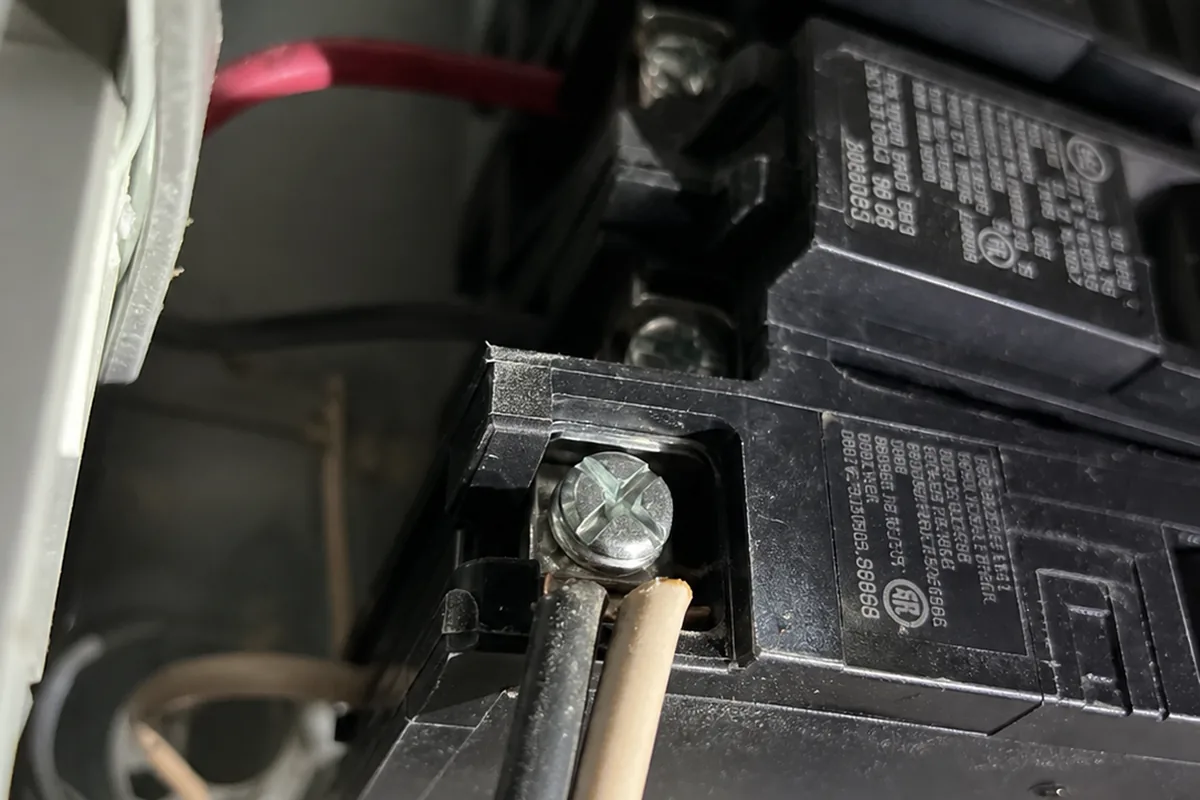
None of these is a deal-killer. All of them are worth noting and requesting a full inspection.
The negotiation playbook
Three repair paths exist. Each has trade-offs.
Path 1: Seller funds correction before closing. The seller hires a licensed electrician, pays for the repair, and provides documentation. You get a signed-off correction and the deal closes on time. Sellers usually prefer this if they caught the issue early and want the deal to proceed smoothly. Cost is typically $300 to $1,500 depending on complexity.
Path 2: Buyer takes a credit. The seller provides a credit toward the repair, and you hire your own electrician after closing. This works when the seller is cash-constrained or when the buyer wants flexibility in choosing the contractor. You control the repair and get the contractor’s preferred timeline. Negotiate a credit that covers the estimated bid plus 10 percent for overruns.
Path 3: Broader electrical evaluation and subpanel upgrade. If the panel is crowded or aging, the electrician might recommend upgrading to a subpanel rather than simply adding a new breaker. This costs more upfront, typically $1,500 to $3,000, but gives the property more capacity and leaves the panel cleaner for the next owner. If the property is likely to see future additions or heavy use, this can be a smart long-term investment. Buyers often accept this option if the seller or lender provides a credit.
Path 4: Combination approach. Seller covers half the cost, buyer covers half. This splits the burden when both parties want to move forward but neither wants to absorb the full cost. Agree on a licensed electrician’s estimate before committing.
Most Downey deals with this issue close successfully. Buyers are not unreasonable about a correctable defect. Frame it clearly, provide a repair cost estimate, and move forward with one of these paths.
How the inspection actually catches it
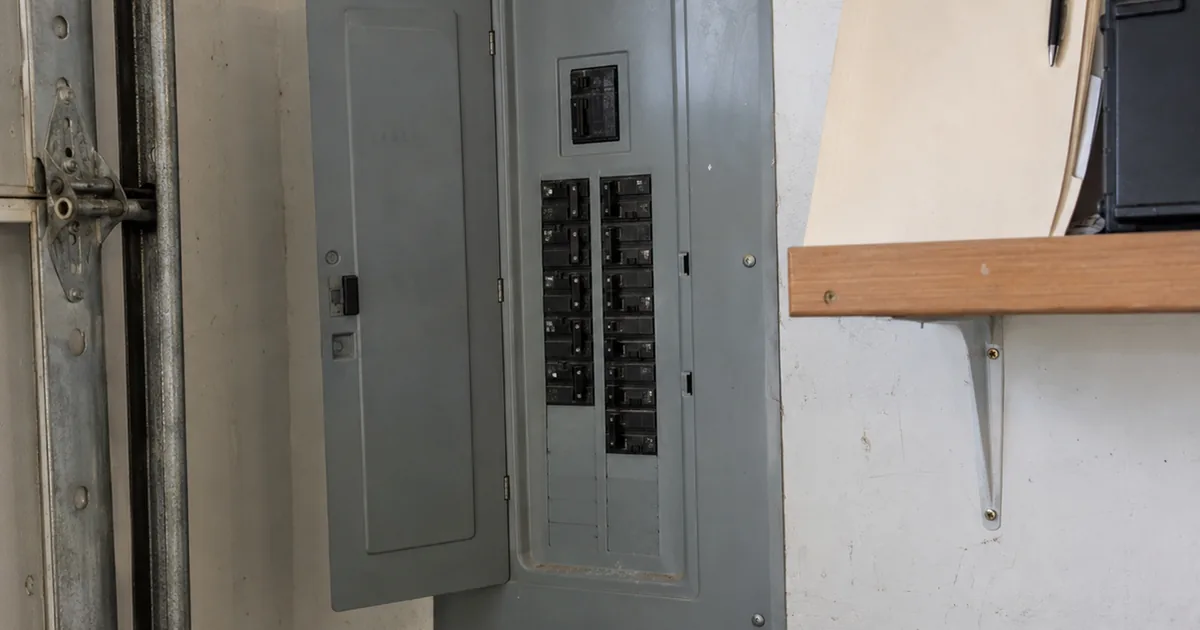
A visual inspection of the breaker panel is part of every professional home inspection. The inspector removes the panel cover, looks inside, and catalogs what is there.
Double-tapped breakers are visible immediately. An experienced inspector opens the panel and counts the breakers and wires. If there are more wires than breaker slots, or if a single breaker clearly has two wires crammed under its lug, the finding is clear. We photograph the interior, document which breaker is involved, and measure wire gauges to confirm.
Sometimes the double-tapping is less obvious. A breaker might have one wire screwed down tightly and a second wire bent back out of sight. The inspector has to examine each lug and trace each wire to be certain. This is why thorough inspection matters. A quick visual is not enough. The inspector has to look carefully at each connection.
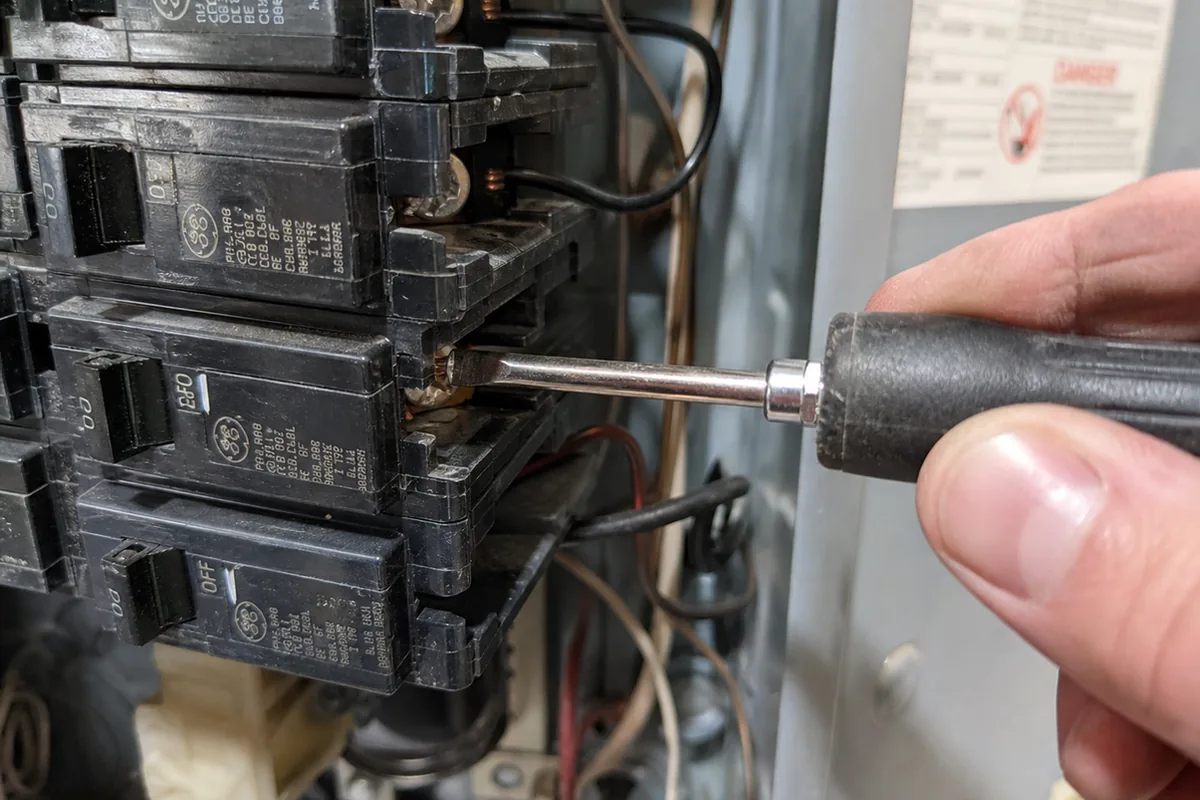
In some cases, the double-tap is hiding behind other breakers or in a crowded panel corner. Professional inspectors know to move breakers or shift wires carefully to see everything. We also note any burn marks, discoloration, or signs of heat damage inside the panel, which often point to a problem area.
The inspection report will note the specific breaker slot, the wire gauges, and a clear recommendation: this breaker has two conductors and must be corrected by a licensed electrician. The report also typically notes the hazard and the required solution, giving the buyer and their electrician a clear starting point.
Quick FAQ
Q: Can I ignore a double-tapped breaker if it hasn’t caused a fire yet? A: No. It is a code violation and a fire hazard. Your insurance company will require it fixed. Your lender will require it fixed before they fund the loan. Ignoring it puts your property at risk and makes it difficult to sell.
Q: Can I just move one wire to a different breaker slot? A: Only if there is an open slot available and it is safe to run new wire to that slot. That is a question for a licensed electrician. Many older panels are too full for this option.
Q: Will this issue come back later? A: No, not if corrected properly. Once a licensed electrician has run new wire, installed a new breaker, or installed a subpanel, the problem is solved permanently. There is no reason to expect it to recur.
Q: What if I fix it and then want to add more circuits later? A: That depends on your panel capacity and the total load on your electrical service. If you have available slots and adequate service capacity, you can add more circuits. If your panel is full, you may need a subpanel upgrade. A licensed electrician can evaluate this.
Q: Does fixing a double-tapped breaker improve the house value? A: Not directly. A corrected electrical system is the baseline expectation, not a premium feature. However, a faulty system reduces value or prevents sale. Correction brings the property in line with standard expectations.
The honest summary
Double-tapped breakers are a specific wiring defect. Two wires under one breaker lug that is rated for one wire. A loose connection. Heat. Arcing. Fire.
They are common in Downey because the housing stock is old and owners have added circuits informally for decades. They are completely correctable. A licensed electrician fixes this in one afternoon. The cost is manageable. Buyers accept it as a negotiable item almost every time.
As an agent, your job is to explain this clearly. Not as a catastrophe. Not as a trivial detail. As a straightforward defect with a straightforward solution. Frame it that way, get the repair estimate, and move the deal forward.
See what every inspection includes → · Read our FAQ → · View a sample report → · Explore Downey home inspections →
Related reading
- Redlands AFCI and GFCI outlet protection. Missing or incorrect safety devices in a home’s outlets and breakers are a separate (and increasingly common) electrical finding.
- San Marino undersized electrical service. Undersized service is about total capacity and voltage, not about individual breaker terminations.
- Culver City older electrical panels. Aging panel components and wiring methods are a different issue from installation defects.
- How to read a home inspection report in California. A general guide to understanding inspection findings and next steps.