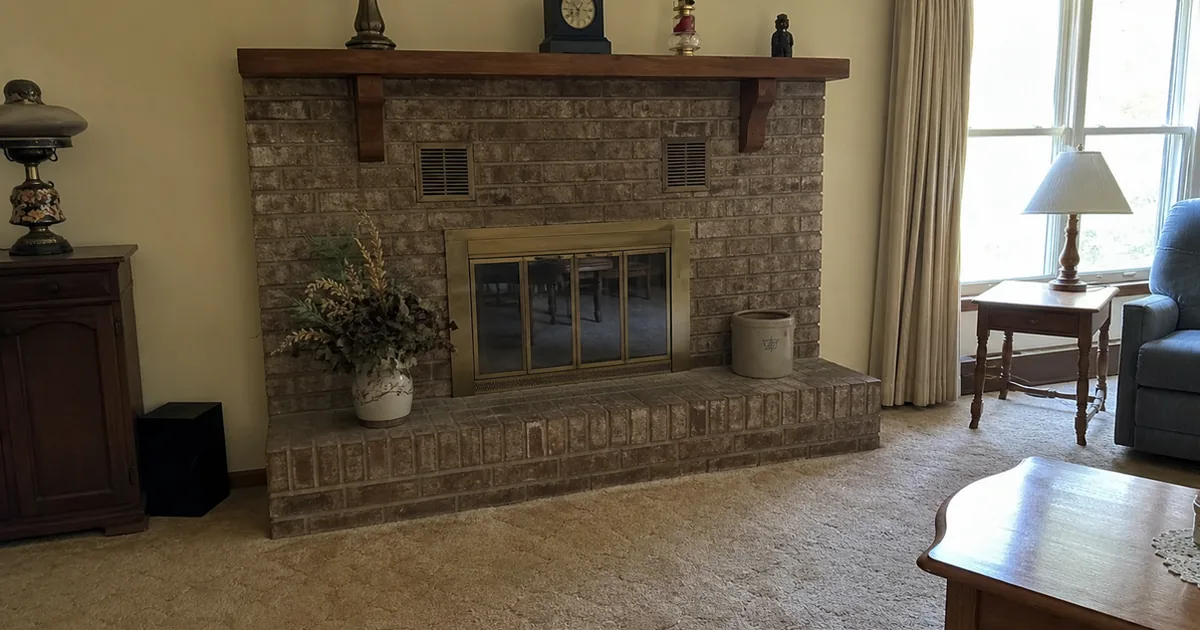
In a two-story home in the Encino hills, the fireplace looked like solid masonry from the family room. Painted brick surround, a big hearth, the works. Up on the roof it told the truth. The chimney was a double-wall metal flue inside a wood-framed box, the rain cap was rusted through, the spark arrestor screen was gone, and water had been running down the inside of the chase for a while. The firebox was a factory-built metal unit, not brick. Beautiful room. A rusting appliance behind the drywall, on a hillside lot where a missing spark arrestor is a fire-code problem.
This is the Encino fireplace reality, and it catches buyers and agents off guard. The brick you see in the room is often just a facing. Behind it sits a factory-built, or prefab, fireplace: a metal firebox and an insulated metal chimney, listed as an appliance and installed inside a framed chase. Most homes built or remodeled from the late 1970s on use them, and Encino has a lot of that stock, from valley-floor ranch updates to the larger hillside homes with two or three fireplaces. A prefab is a legitimate system when it is installed and maintained right. The trouble is that it ages like an appliance, not like a brick chimney, and the hillside fire exposure raises the stakes on the parts up top.
This guide is for the agent working Encino. Here is what a prefab fireplace actually is, what fails on it, why the spark arrestor matters more here than most places, and how to keep it from surprising your deal.
Why this matters for the agent
Here is what is at stake. A fireplace reads as a warm, simple feature, so buyers rarely think of it as a system that can fail or cost money. A prefab that has been leaking at the chase, that is missing its cap and spark arrestor, or that had unlisted gas logs dropped in can be a safety issue, a water-intrusion issue, and a fire-code issue all at once. On a hillside lot in a high fire hazard area, a chimney with no spark arrestor is not a maintenance nicety, it is a defensible-space and code question.
For your transaction, the fireplace is a small line item that can carry outsized weight. Water coming down a chase stains ceilings and rots framing. A cracked firebox or a damper left shut over gas logs is a carbon-monoxide concern. A missing spark arrestor in a fire zone is a quick fix, but it is the kind of item that makes a buyer wonder what else went unmaintained. The agent who knows a prefab from masonry, and who gets it looked at early, keeps a minor system from becoming a late-escrow scramble. We inspect and document the fireplace and flag what a chimney specialist should evaluate. The fire-zone and permit questions run through the city and Cal Fire.
What a prefab fireplace actually is
A factory-built fireplace is a listed appliance, not a masonry structure. The firebox is sheet metal with refractory panels inside that mimic brick, and the chimney above it is a double or triple-wall insulated metal pipe. The whole thing is engineered as a system and listed to a safety standard, and the building codes require it to be installed exactly the way its listing and instructions specify. The brick or stone you see in the room is usually a non-structural facing built around the metal unit, and the part above the roof is often a framed and sided box called a chase, with a metal pan on top.
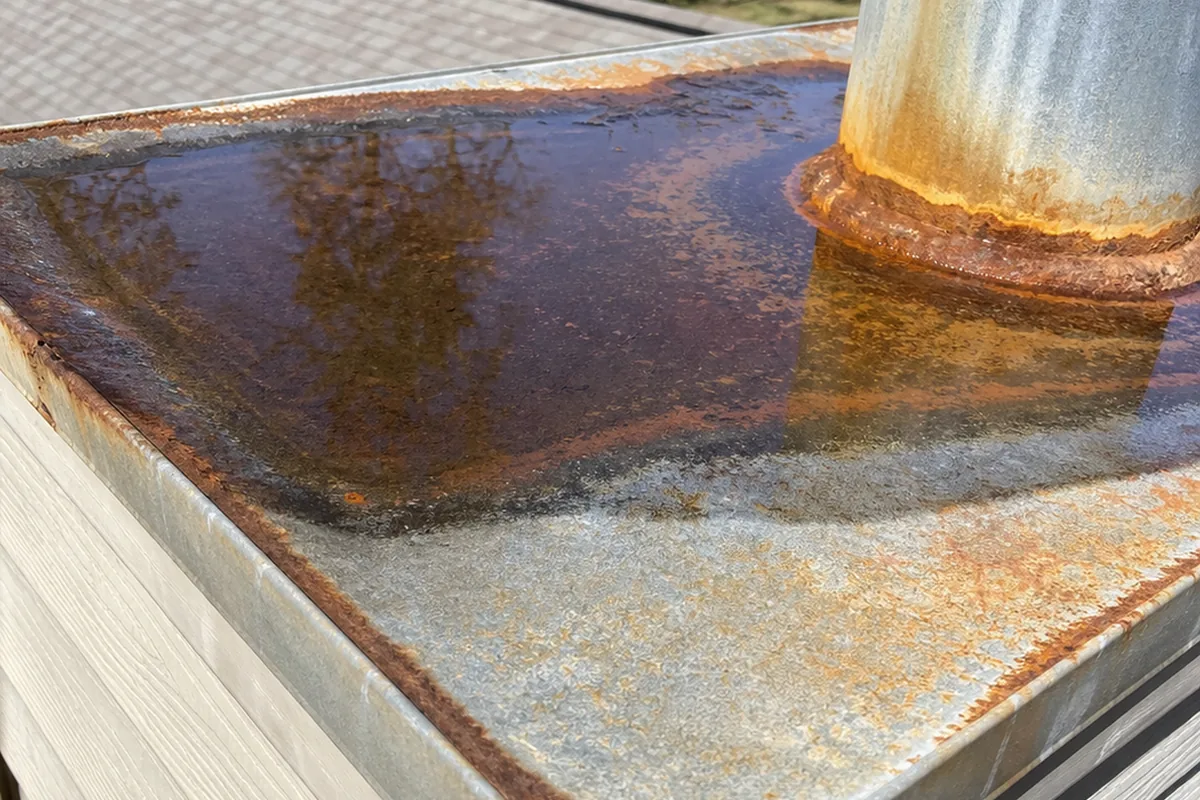
That appliance nature is the whole point for an inspection. The listing is specific about clearances to wood framing, about which parts can be combined, and about how the chimney terminates. Mixing a firebox from one brand with a chimney from another voids the listing. Packing insulation against the metal chimney where it passes through the attic defeats the clearance the unit was designed around. And because the metal parts rust, a prefab has a service life in a way a brick chimney does not. None of this makes a prefab a bad system. It means the inspection has to read it as the manufactured appliance it is, not assume it is maintenance-free masonry. Our guide on why infrared scanning matters in California homes covers how we find the moisture that hides behind a facing like this.
The chase, the cap, and the spark arrestor, the parts that fail first
On most Encino prefabs, the first failures are up top, at the chase and the termination. The chase top is usually a metal pan, and if it was not built with a slope or a cricket, water pools on it, rusts it, and finds the seams. From there it runs down the outside of the metal chimney, into the chase framing, and eventually onto the firebox and the ceiling below. A missing storm collar or failed chase flashing does the same thing. Water intrusion at the chase is one of the most common prefab findings, and it hides because the damage starts inside the box.
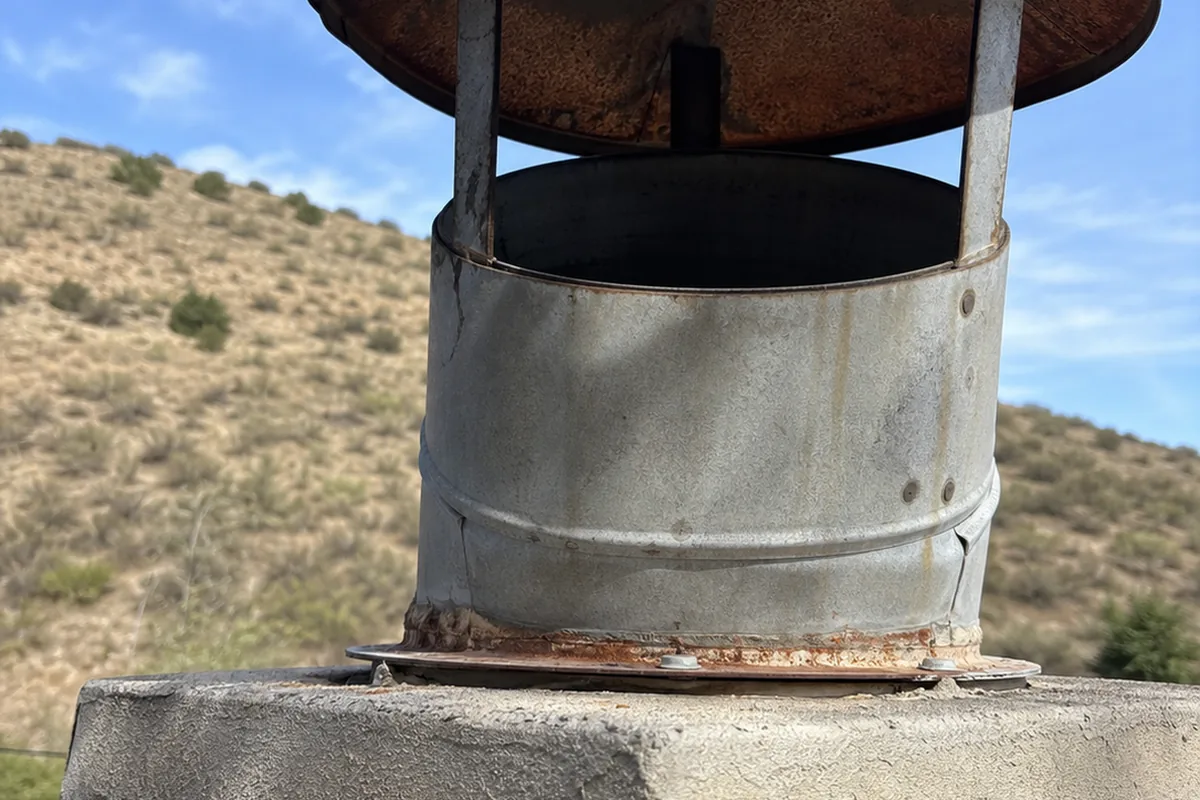
The termination hardware is the other early failure, and in Encino it carries extra weight. A factory-built wood-burning chimney needs a listed cap, and it needs a spark arrestor, a metal screen that keeps embers from leaving the flue. Caps rust out and spark arrestor screens corrode away or were never there. In much of Encino, especially the hillside neighborhoods south of Ventura Boulevard against the Santa Monica Mountains, homes sit in a Very High Fire Hazard Severity Zone, and California’s defensible-space rules call for a spark arrestor screen with small mesh openings on chimney outlets. A chimney throwing embers over a fire-prone hillside is exactly the risk that rule targets. The fix is cheap. The point is that on these lots it is not optional.
What agents should tell every buyer
When a buyer is touring Encino homes with fireplaces, give them these points before they write.
- Assume the fireplace is factory-built metal, not masonry, unless proven otherwise. Most homes here from the late 1970s on use a prefab behind a brick facing.
- The parts that fail first are up top. Ask about the chase pan, the cap, the flashing, and any history of ceiling stains near the fireplace.
- On a hillside or fire-zone lot, the spark arrestor is a code item. A missing or corroded screen needs to be replaced, and it is a fast fix.
- If the wood-burning fireplace was switched to gas logs, ask whether the logs are listed for that firebox and whether the damper was clamped open. A shut damper over gas is a carbon-monoxide risk.
- Confirm the home has working carbon-monoxide alarms. California requires them in homes with a fireplace or other fuel-burning appliance.
- A prefab has a service life. If it is rusted, water-damaged, or full of mismatched parts, budget for a chimney specialist to evaluate replacement, not just a cleaning.
A buyer who hears this from you treats the fireplace as a system to check, not a decoration to admire, and there are no late surprises.
Red flags during showings
You can read a lot without going on the roof. Watch for these on Encino fireplaces.
- A metal firebox with visible seams, refractory panels that look like molded brick, and a metal damper up in the throat, all signs of a prefab rather than masonry.
- Rust staining, water stains, or peeling paint on the ceiling or wall above or beside the fireplace.
- A rusted chase pan, a missing rain cap, or no visible spark arrestor screen when you look up at the termination from the yard.
- Ceramic gas logs sitting in a firebox with no visible damper stop, or a damper that closes fully over the gas.
- A firebox interior with cracked or crumbling refractory panels, or rust and pitting on the metal.
- No carbon-monoxide alarm near the sleeping areas in a home with a fireplace.
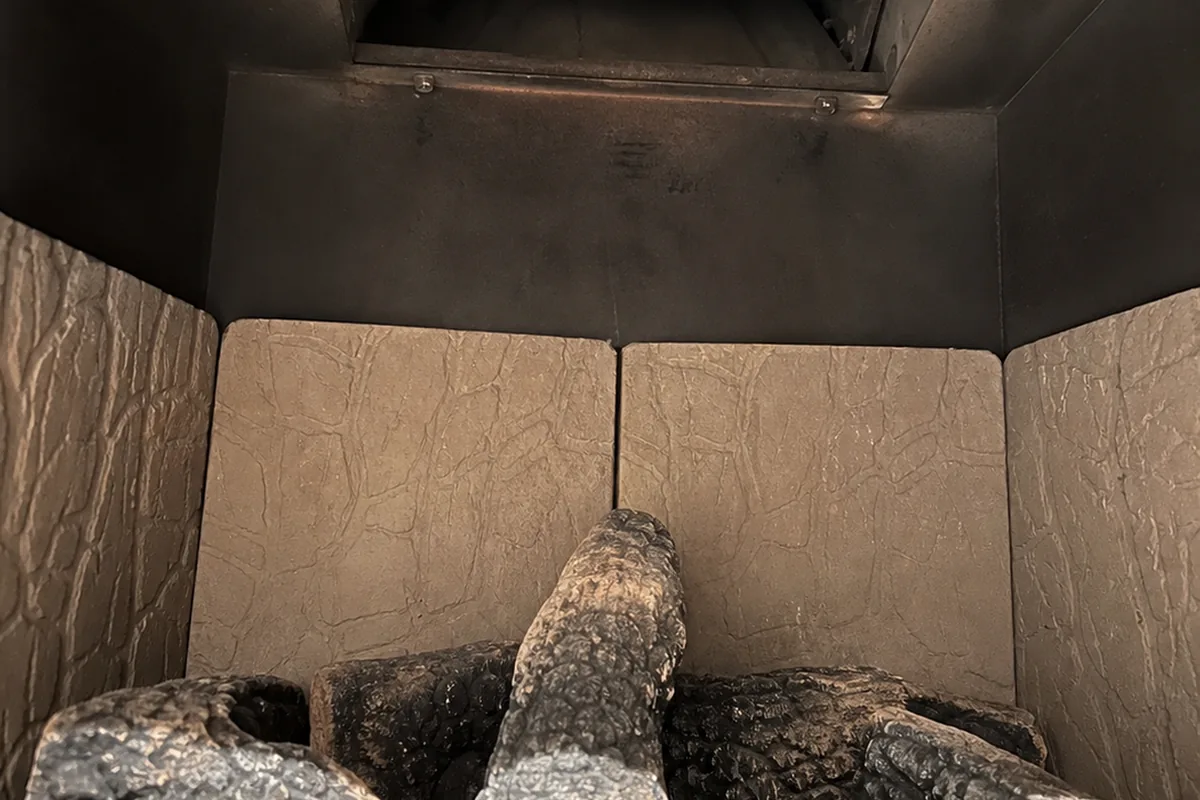
If we see these, we document them and point the buyer to a chimney specialist, and to the city and Cal Fire for the fire-zone questions.
The negotiation playbook
When prefab findings surface in Encino, the deal usually moves one of a few ways.
The first path is seller-handles-the-safety-items. The seller replaces a missing cap and spark arrestor, corrects a shut damper over gas logs, and addresses active water intrusion before closing. This is the cleanest route for the low-cost, high-safety items, and the spark arrestor in a fire zone belongs here.
The second path is a credit with a specialist’s bid. If the firebox is cracked, the metal is rusted, or the parts are mismatched and the unit needs replacement, the buyer takes a credit sized to a licensed chimney or hearth contractor’s bid and does the work after closing. Size it to the real number, because a full prefab replacement plus chase repair is more than a cap swap.
The third path is repair-then-verify. Water damage at a chase often means both a leak to stop and framing or drywall to fix. A sensible deal has the seller stop the leak and repair the visible damage, with the buyer verifying the fix and reserving for anything found once the chase is opened.
The fourth path is walk-away, which is rare on a fireplace alone. It usually only happens when the fireplace sits on top of larger unmaintained-home findings and the buyer decides the pattern is the problem. We document what we found and when, and the decision belongs to the buyer and their specialists.
How the inspection actually catches it
The fireplace is where a careful inspection earns a small fee back fast. We open the firebox and read whether it is factory-built or masonry, check the refractory panels for cracks, and look at the damper and its condition. On a prefab we look for rust, for water staining, and for mismatched or unlisted components. We go up with a drone and, where access allows, on the roof to document the chase pan, the flashing, the storm collar, the cap, and the spark arrestor, which is the part a ground-level look almost always misses.
We use thermal imaging and moisture tools to find the water intrusion that hides in the chase and the wall above the firebox before it shows as a stain. Where the fireplace was converted to gas logs, we note whether a damper stop is present and flag the carbon-monoxide question. What we do not do is sweep the flue or issue a chimney-sweep certification. Our companion guide on masonry chimneys covers the other kind of chimney you will meet in older LA homes, and our inspection report page shows how findings like these show up with photos. We document the fireplace honestly, hand the buyer a clear priority list, and tell them who to call next. If we see something worth flagging, it goes in the report.
Schedule an Encino inspection →
Quick FAQ
How do I tell a prefab fireplace from masonry? Look inside the firebox. A factory-built unit is sheet metal with molded refractory panels and a metal damper in the throat, and the chimney above is a round metal flue, often inside a sided chase on the roof. Masonry is solid brick or block with a clay flue liner. Most Encino homes from the late 1970s on are prefab behind a brick facing. Our inspection FAQ covers how findings like this get organized in the report.
Is a missing spark arrestor really a problem? On a hillside or fire-zone lot, yes. California’s defensible-space rules call for a spark arrestor screen on chimney outlets in high fire hazard areas, and much of the Encino hillside is in a Very High Fire Hazard Severity Zone. The screen keeps embers in. It is an inexpensive fix and worth doing right away.
We are putting gas logs in. Anything to watch? Two things. Use logs listed for that firebox, and make sure the damper is clamped or stopped in the open position so combustion gases vent. A damper left free to close over burning gas is a carbon-monoxide hazard. And confirm the home has working carbon-monoxide alarms, which California requires with any fuel-burning appliance.
Does a prefab fireplace wear out? Yes, it is a manufactured appliance with a service life. Rust, water damage, cracked refractory panels, and mismatched parts can push a unit to replacement rather than repair. A chimney or hearth specialist can tell you which one you are looking at.
Does the home inspection replace a chimney sweep? No. We document the fireplace and chimney condition and flag defects, but we do not sweep the flue or certify it. When our findings call for it, we recommend a specialist who evaluates the flue internally.
The honest summary
The fireplace in an Encino home is usually a manufactured metal appliance dressed up as masonry, and it deserves to be read that way. The chase, the cap, and the spark arrestor fail first, water intrusion hides inside the box, and on a hillside fire-zone lot the spark arrestor is a code item, not a nicety. Add the carbon-monoxide question on any gas-log conversion, and the fireplace goes from decoration to a system worth a real look.
We will read the firebox, document the chase and termination with a drone, flag the water and the missing hardware, and point your buyer to a chimney specialist and to the city and Cal Fire for the fire-zone questions. That is the job. We also inspect nearby Tarzana and Woodland Hills.
See what every inspection includes → · Explore Encino home inspections →
Related reading
- Glendale masonry chimney and earthquake guide: the other chimney type you will meet in older LA homes, and how it fails differently from a prefab.
- Brentwood masonry fireplace and chimney guide: the firebox, hearth, flue, and chimney-top checks on the real masonry version of what the prefab imitates.
- Thousand Oaks water heater safety guide: another quiet appliance in the garage that carries outsized code and safety weight.
- Wildomar wildfire defensible space guide: the broader fire-hardening picture that a missing spark arrestor is one part of.
- Why infrared scanning matters in California homes: how thermal imaging catches chase water intrusion before it stains the ceiling.
- Sherman Oaks mid-century modern home inspection guide: a neighboring valley city with its own mix of older systems and hillside homes.
- Cut Rafters and Truss Modifications in North Hollywood. Structural framing damage from remodels, another attic finding on valley homes.