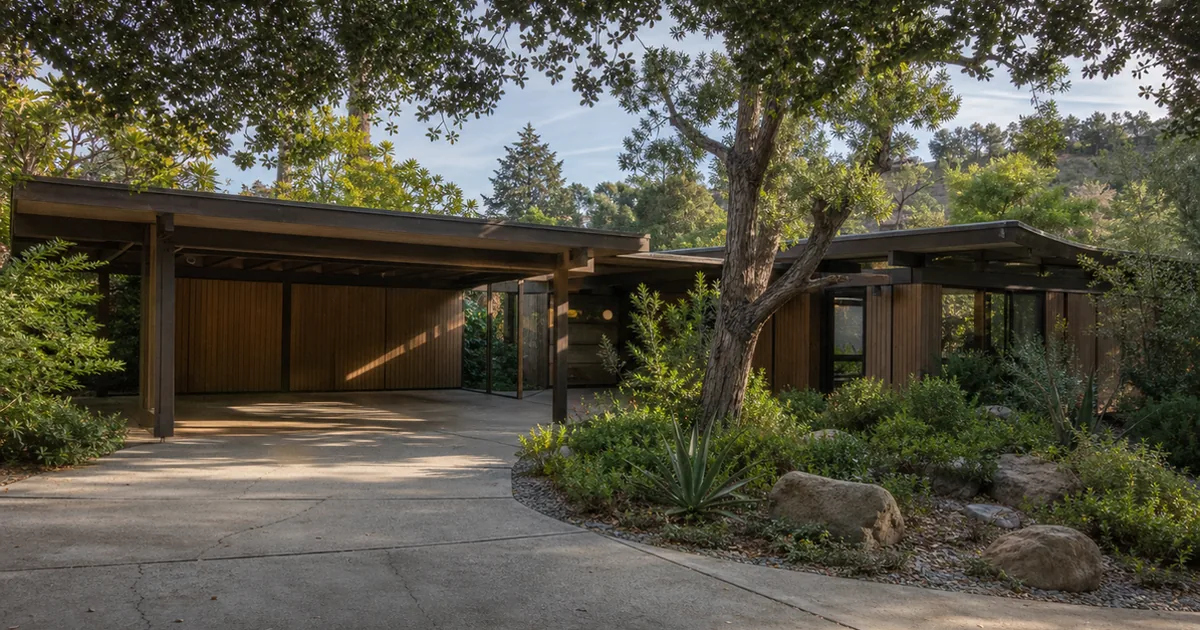
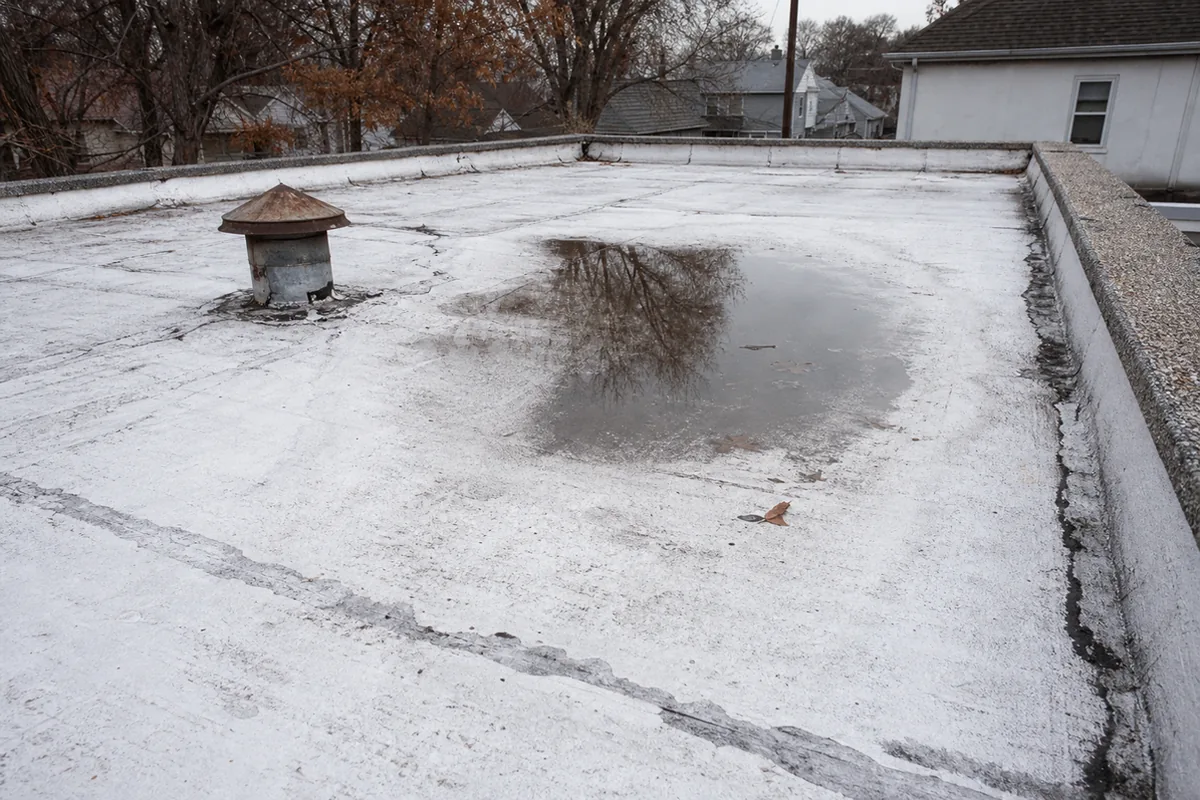
The house was exactly what the buyers had been hunting for: a 1958 post-and-beam in the Sherman Oaks hills, walls of glass framing the Valley, a flat roofline, tongue-and-groove ceilings, the real thing. It showed beautifully. When the inspector got up on the roof, the picture changed. The flat roof had low spots holding water, the coating was cracking at the seams, and inside, the radiant heating in the slab had been quietly abandoned years earlier because a leak had never been worth chasing. None of it showed at the open house.
We are keeping the address private and the details composite, because this is the pattern with these homes, not a one-off. Mid-century modern houses are some of the most desirable on the market and some of the most misunderstood at inspection, because the very features that make them special, the flat roof, the glass, the exposed structure, the slab, behave nothing like a conventional house. The home was gorgeous. It just had to be read on its own terms.
Here is how that one resolved, and what it should change about how you handle a mid-century modern home.
Schedule a Sherman Oaks inspection · Same-day report · Pay-at-closing available
Why this matters for the agent
Sherman Oaks and the surrounding south Valley are full of mid-century modern and post-and-beam homes from the 1950s and 1960s, and demand for them is strong. The trouble is that buyers, and plenty of inspectors, evaluate them as if they were ordinary ranch houses, and they are not. The roof, the heating, the windows, and the structure are all different systems with different failure modes and different repair costs.
The risk for the agent is mismatched expectations. A buyer who falls for the look without understanding the systems can be blindsided by a flat-roof replacement, an unfixable radiant slab, or the energy reality of single-pane glass walls. A buyer who goes in informed sees the same beautiful house and prices the work correctly. The difference is whether someone inspected the home as a mid-century home, which is the entire point of this guide.
What a mid-century modern home actually is
The style is more than a look. Mid-century modern and post-and-beam homes share a set of construction choices that define how they perform.
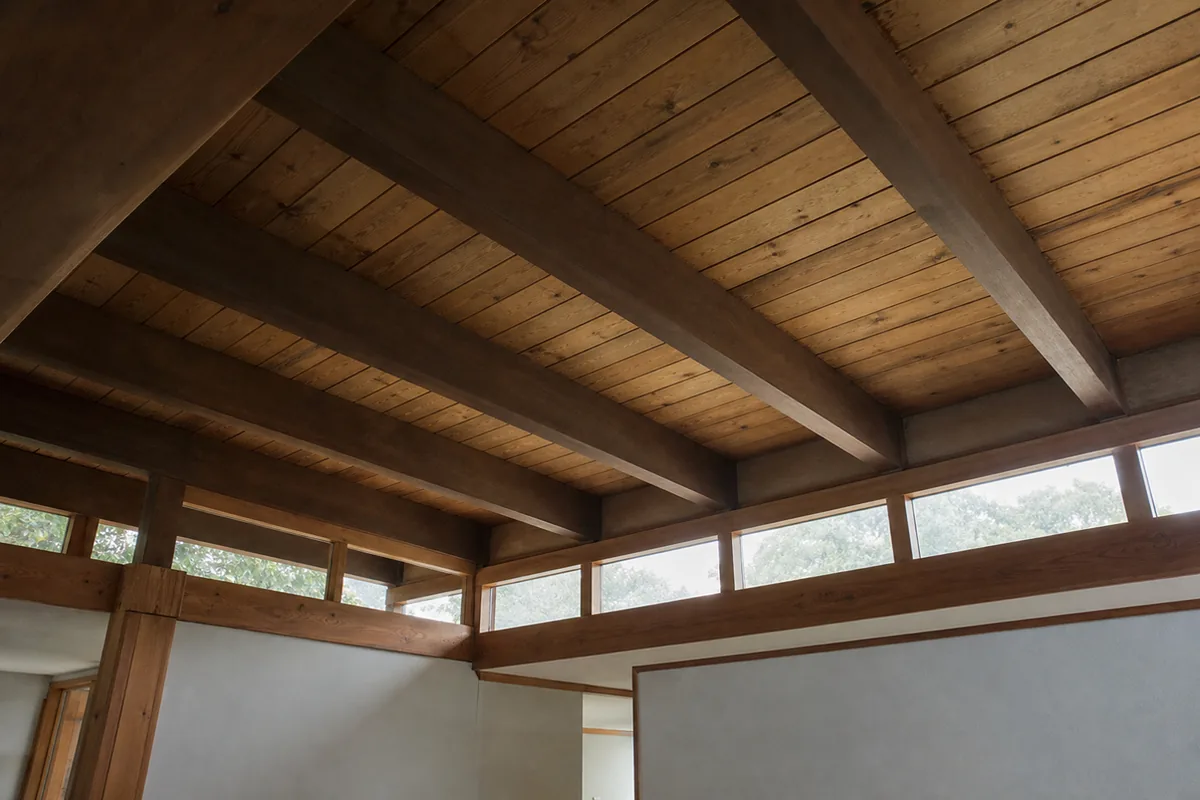
The roof is usually flat, low-slope, or butterfly, not pitched. The structure is often post-and-beam: the roof load carried on exposed beams and columns, with tongue-and-groove decking that is both the ceiling and the roof sheathing, which means little or no attic and little room for insulation. The walls are frequently floor-to-ceiling single-pane glass in thin aluminum or steel frames. And the home often sits on a slab, sometimes with radiant heating tubing cast into the concrete. Each of those choices is wonderful to live with and creates a specific thing to inspect.
Why it fails (the part most agents skip)
The failures cluster exactly where the design is most distinctive.
The flat roof is the big one. A low-slope roof drains slowly, ponds water in low spots, and depends entirely on its membrane or coating and its flashing to stay watertight. When that surface ages, water sits and finds its way in, and because there is no attic, it reaches the structure and the ceiling fast. Replacing a mid-century flat roof also costs more than a standard reroof, both because of the design and because owners want to preserve the look. A conventional pitched-roof neighbor down the street has the opposite problem: an attic that traps heat when it is thin or poorly vented, which is the whole story of our Woodland Hills attic guide, and a shingle field that is often two or three roofs deep rather than one, which our Northridge roof layers guide covers.
The radiant slab is the quiet one. In-slab radiant heating was often installed with steel tubing and no insulation under the slab, and the early steel systems corrode. When one leaks, it is buried in concrete, hard to locate, and expensive to fix, so many were simply abandoned and the house was switched to another heat source, which a buyer should know before they count on radiant heat.
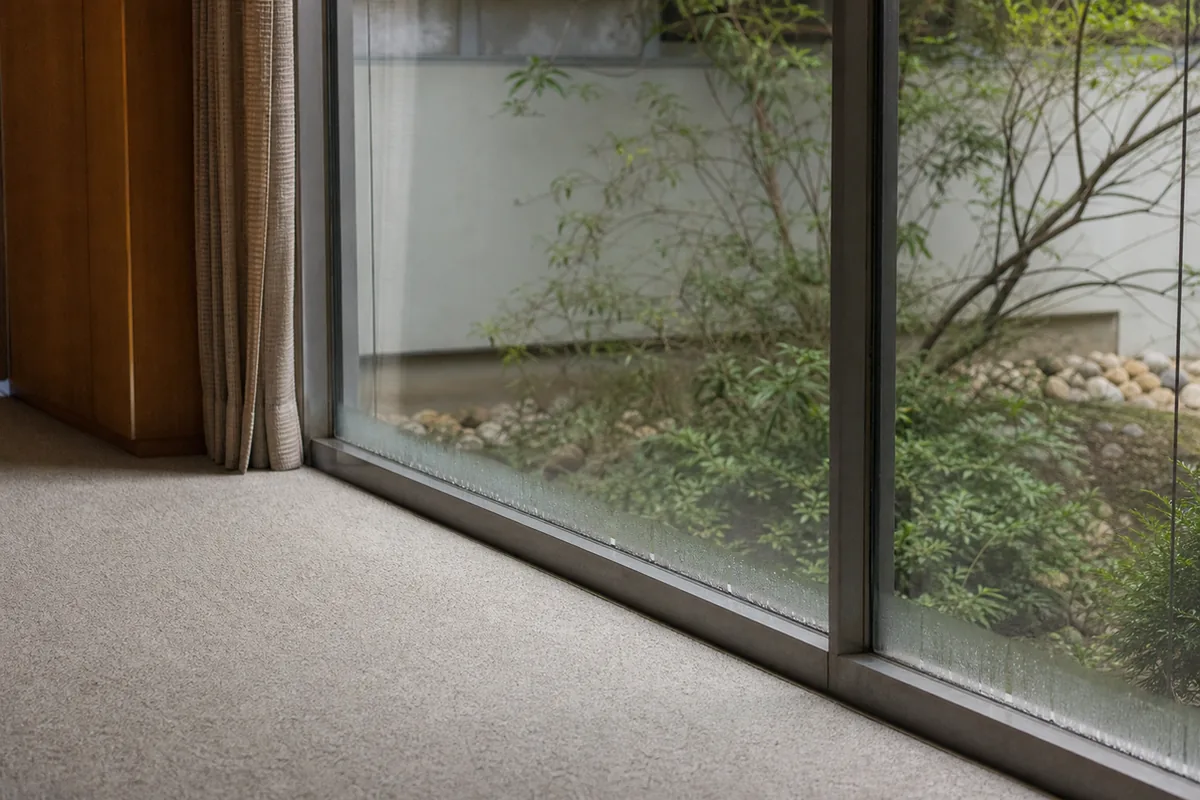
The glass and structure are the ongoing ones. Single-pane glass in metal frames has almost no insulating value, so these homes run hot in summer and cold in winter and cost more to condition, and the exposed beams and minimal insulation add to that. None of this is a defect exactly; it is the nature of the house, and it is exactly what a buyer should understand going in.
What agents should tell every buyer
Tell them a mid-century home is a wonderful house that has to be evaluated as a mid-century house, not a tract home. The flat roof, the radiant slab, the glass, and the structure each deserve specific attention, and an inspection that treats them generically misses the point.
Tell them about the roof and the heating specifically, because those carry the real money. Ask about the age and history of the flat roof and whether the original radiant heating still works or was abandoned. Those two answers shape the budget more than anything else in the house.
Tell them the systems are a feature with a cost, not a flaw to fear. Single-pane glass walls, minimal insulation, and original systems are part of owning an architectural home; the goal is to know the condition and the numbers, not to be scared off. For how another older-home system runs through a deal, our Federal Pacific and Zinsco panel guide follows the same know-it-going-in pattern.
Red flags during showings
You can read a lot about a mid-century home before the inspector arrives.
Look at the roofline and, if you can, the roof. A flat or low-slope roof with visible patching, a worn coating, or staining at the eaves and ceiling inside points to a roof near the end of its life. Water stains on a tongue-and-groove ceiling are serious, because there is no attic between that ceiling and the roof.
Ask how the house is heated. If the listing says radiant heat, ask whether it still works; an abandoned radiant system and a retrofit furnace or mini-split tell you the original system failed. A house relying on window or wall units may have lost its original heating entirely.
Feel the glass and the comfort. Single-pane glass walls, drafts at the beams, and rooms that are hot or cold tell you the envelope is original, which is normal for the style and worth pricing.
Check the slab and floors. Cracks in a slab floor, especially with any history of radiant heat, and uneven or patched flooring can point to slab or radiant-system issues worth a closer look.
The negotiation playbook
When an inspection flags the mid-century systems, there are four ways the deal tends to go.
The first path is the roofer’s evaluation and number. Because the flat roof is usually the biggest item, the cleanest move is often a short extension for a roofer experienced with low-slope and mid-century roofs to scope and price it, turning a worry into a line item that supports a credit or a seller repair.
The second path is the heating decision. If the radiant slab is abandoned or failing, the buyer and their contractor decide on the replacement heat source, and a credit sized to that work keeps the deal moving without anyone pretending the radiant system is fine.
The third path is the envelope-and-systems credit. Single-pane glass, insulation, and original electrical are known quantities a buyer may choose to upgrade over time; where condition warrants it, a credit reflects the work, and where it is simply the nature of the house, it is priced into the offer.
The fourth path is proceeding with eyes open. Many mid-century buyers love the house exactly as it is and simply want to know what they are taking on. An honest inspection lets them buy with confidence and plan the roof and systems on their own timeline.
How the inspection actually catches it
A real inspection of a mid-century home reads it as the specific kind of house it is. We get on the flat or low-slope roof where it is safe, document the surface, the ponding, the seams, and the flashing with drone imagery, and pay special attention to the tongue-and-groove ceilings below for any sign water has reached them. We identify the heating system and whether an in-slab radiant system is in use, retrofit, or abandoned, and we read the slab and floors for cracking and movement. We note the single-pane glazing and the envelope, run a thermal camera to find moisture and energy loss, as our infrared scanning guide explains, and we flag clearly what a roofer, HVAC contractor, or structural specialist should evaluate. The premium inspection leaves a buyer who sees the beautiful house and understands the systems holding it up.
Quick FAQ for agents
Are mid-century homes a bad buy? Not at all. They are highly desirable. They simply have to be inspected as mid-century homes, because the roof, heating, glass, and structure behave differently and cost differently than a conventional house.
Why is the flat roof such a big deal? A low-slope roof drains slowly, ponds water, and has no attic beneath it, so a failure reaches the ceiling and structure quickly, and replacement costs more than a standard reroof.
Can the radiant slab heating be fixed? Sometimes, but a leak in steel tubing cast into the slab is hard to locate and expensive to repair, which is why many were abandoned. We identify whether it still works and flag it.
Are single-pane glass walls a defect? No, they are original to the style, but they insulate poorly and affect comfort and energy cost. We document them so the buyer can plan.
How long does it take to inspect? A normal two-to-four-hour inspection, with extra attention to the roof, slab, and systems. The report comes the same day.
The honest summary for agents
Mid-century modern homes sell on their looks, and the looks are exactly what make them inspect differently: the flat roof, the radiant slab, the glass walls, and the exposed structure are features and failure points at the same time. Your value as the agent is making sure the home gets read as a mid-century home, so the buyer falls in love with the architecture and still knows what the roof and the heating will cost. That is what turned a flawless-looking 1958 post-and-beam into a documented roof-and-heating plan and a buyer who closed thrilled and clear-eyed instead of surprised the first winter.
Related reading
- The Van Nuys Home With 400 Square Feet That Didn’t Exist on Paper, added space and garage conversions, and the financing and permit gap across the Valley
- Federal Pacific & Zinsco Panels in Escondido, why certain older panels can quietly kill a deal
- Retaining Walls & Hillside Drainage in Poway, what hillside lots hide below the surface
- Why Infrared Scanning Matters in California Homes, how thermal imaging finds hidden moisture and electrical hot spots
- Older Electrical Panels in Culver City, the panel brands and mixed wiring that mid-century Westside homes so often still carry
- Palm Springs Evaporative Cooler Inspection Guide, the desert market’s own mid-century mechanical story, a roof-mounted swamp cooler instead of the flat roof and radiant slab found here
- Fire-Hardening a Historic Foothill Home in Sierra Madre, the roof, vent, eave, and Zone 0 ember-zone work that protects older homes on the wildfire edge
- Ducted HVAC Returns in Garden Grove, the same era of forced-air system and undersized return-air ductwork common to 1950s-1970s tract homes
- Prefab Fireplaces in Encino Homes, the factory-built metal firebox and chase hiding behind the brick facing next door
- Cut Rafters and Truss Modifications in North Hollywood. What skylights and vaulted-ceiling conversions do to the original roof structure.
See what every inspection includes, how to read your inspection report, and our inspection FAQ. For city-specific pages, start with Sherman Oaks, Encino, and Van Nuys.
If you have a mid-century home in escrow in Sherman Oaks or the south Valley, we can inspect it on its own terms and give you the report that prices the architecture honestly.