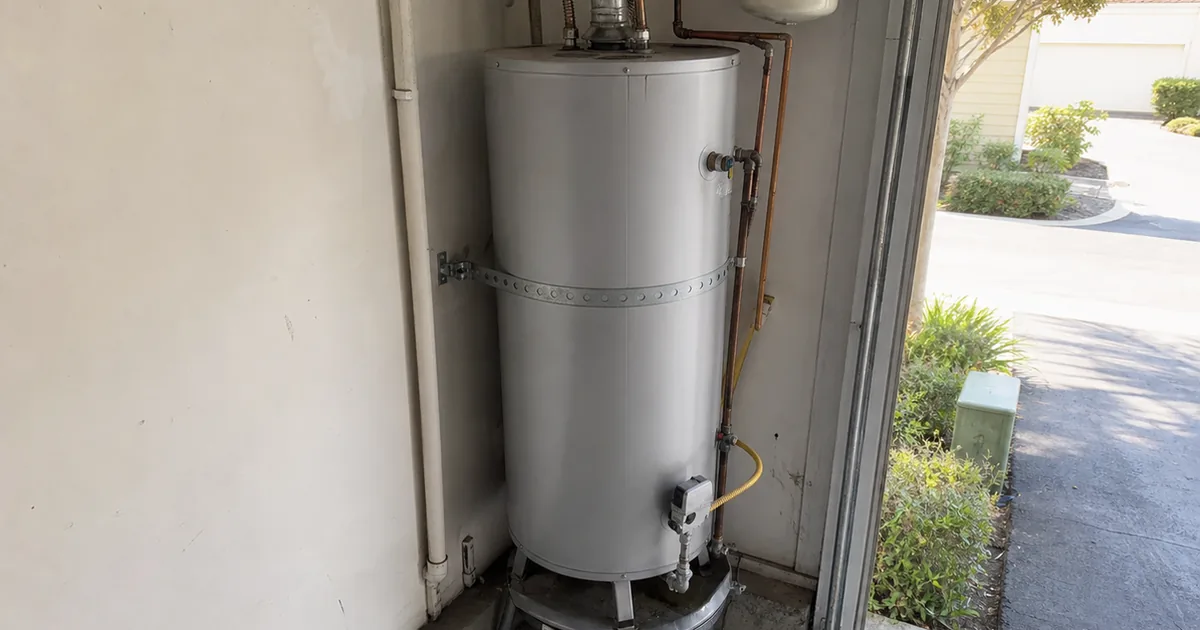
In a Thousand Oaks home off Lynn Road, the buyer walked the whole house and never gave the garage a second look. The water heater stood in the corner, doing its job. It also had one loose strap instead of two, a temperature-relief valve with no discharge pipe on it, and a vent connector that sloped the wrong way where it met the flue. Three items, all on one appliance, and every one of them a safety issue. The tank worked fine. That was never the question.
This is the pattern we see on water heaters across Thousand Oaks, and it is worth an agent’s attention because the water heater is the single most overlooked appliance in a home sale. It sits in a garage or a closet, it runs quietly for a decade, and nobody thinks about it until it leaks or fails an inspection. Yet it carries more code and safety requirements than almost anything else in the house: earthquake strapping that California law ties to the sale itself, a relief valve and discharge line that keep it from becoming a pressure hazard, and venting that keeps combustion gases out of the living space. In seismic country like the Conejo Valley, the strapping alone is not optional.
This guide is for the agent working Thousand Oaks. Here is what the water heater actually has to satisfy, what fails most often, and how to keep a quiet appliance in the garage from tripping up your deal.
Why this matters for the agent
Here is what is at stake. Buyers and sellers treat the water heater as an appliance that either works or does not, so the safety items around it go unnoticed until an inspection surfaces them. And unlike a cosmetic finding, several of these are tied to law and to real hazards. California requires water heaters to be braced or strapped against earthquakes, and it ties that requirement to the sale of the property. A missing relief-valve discharge line can turn a failing valve into a scald or rupture risk. Bad venting on a gas unit is a carbon-monoxide question. None of these are expensive to correct, but they are the kind of items an underwriter, an appraiser, or a nervous buyer will stop on.
For your transaction, the water heater is a cluster of quick fixes that look worse in a report than they cost to solve. The danger is timing. When strapping, a missing discharge pipe, and a venting problem all show up in the final days of escrow, they read as neglect and they eat time you do not have. The agent who knows what the water heater has to satisfy, and who gets it checked early, turns a page of red items into a short punch list. We document the water heater and its installation and flag what a licensed plumber should correct. The specifics of the strapping certification at sale run through the transaction and the seller’s disclosures.
What the water heater actually has to satisfy
A water heater is not just a tank. It is an appliance with a set of code requirements around it, and each one exists to head off a specific hazard. Earthquake bracing keeps a full tank, which can weigh several hundred pounds, from walking off its connections and shearing the gas or water line during a quake. The temperature and pressure relief valve, the TPR, protects against the tank overheating or overpressurizing, and its discharge pipe has to carry any release down to a safe spot near the floor so no one is standing over scalding water.
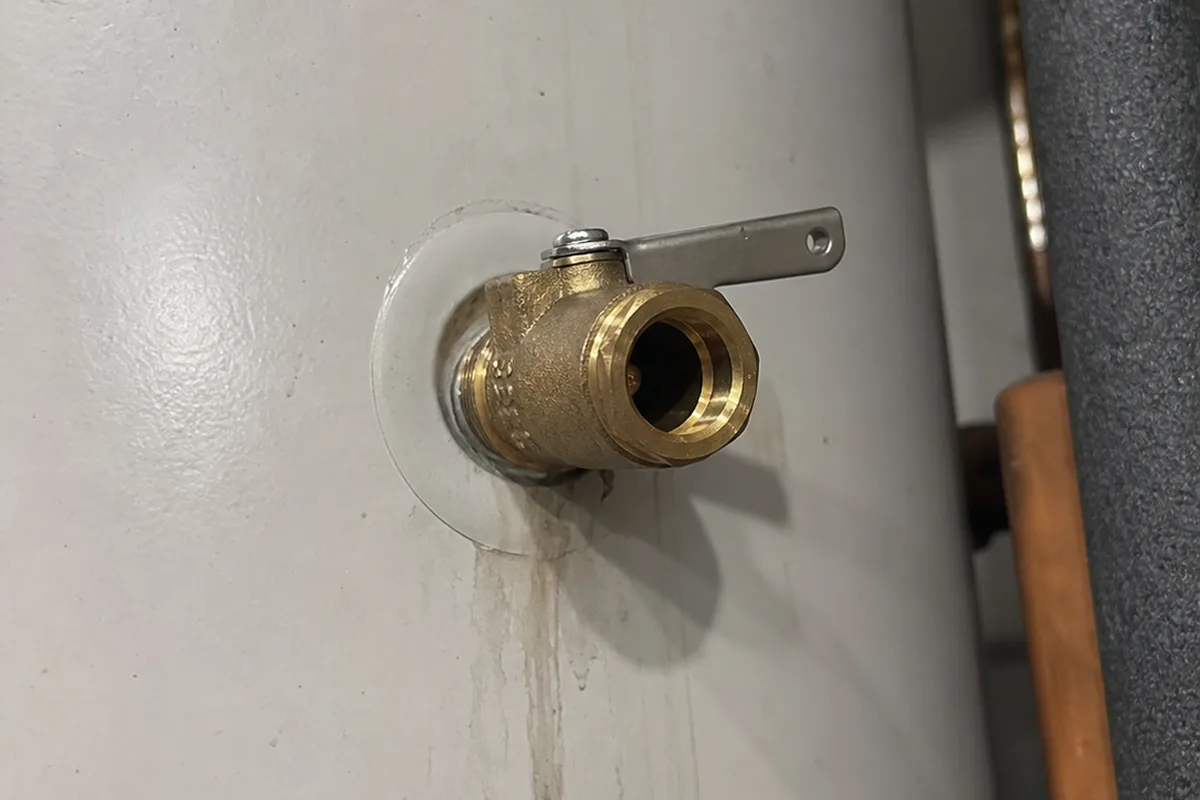
On a gas unit, the venting has to move combustion byproducts, including carbon monoxide, up and out reliably. And on a closed plumbing system, thermal expansion has to have somewhere to go, usually an expansion tank, so pressure does not build against the relief valve. That list is why the water heater carries weight out of proportion to its price. It is one appliance answering to the plumbing code, the mechanical code, and California-specific seismic law all at once. A tank can be brand new and still fail on installation, because the failures are almost never the tank itself. They are the straps, the discharge line, the vent, the pan, and the location. The inspection has to read the whole installation, not just confirm that hot water comes out.
Strapping, venting, and the garage, where it goes wrong
The most common water-heater findings in Thousand Oaks cluster in three places. The first is the seismic strapping. California requires two straps, one in the upper third of the tank and one in the lower third, anchored into the wall framing, with the lower strap kept above the controls. We routinely see one strap, straps that are loose or plumber’s-tape thin, or straps screwed into drywall with nothing behind them. In the Conejo Valley, sitting among the faults that run through Ventura County, a water heater that can topple in a quake is both a code miss and a real hazard, and California ties strapping certification to the sale of the home. Our seismic readiness guide covers the broader earthquake-preparedness picture this fits into.
The second is the TPR discharge pipe. The relief valve on top or side of the tank has to have a full-size pipe carrying any discharge down to within a short distance of the floor or to an approved exterior point, with no threads on the end, no upward slope, and no traps. We find valves with no pipe at all, pipes that dead-end in an attic, pipes reduced to a smaller size, and pipes that run uphill. A relief valve that cannot discharge safely defeats the one part that protects against a rupture.
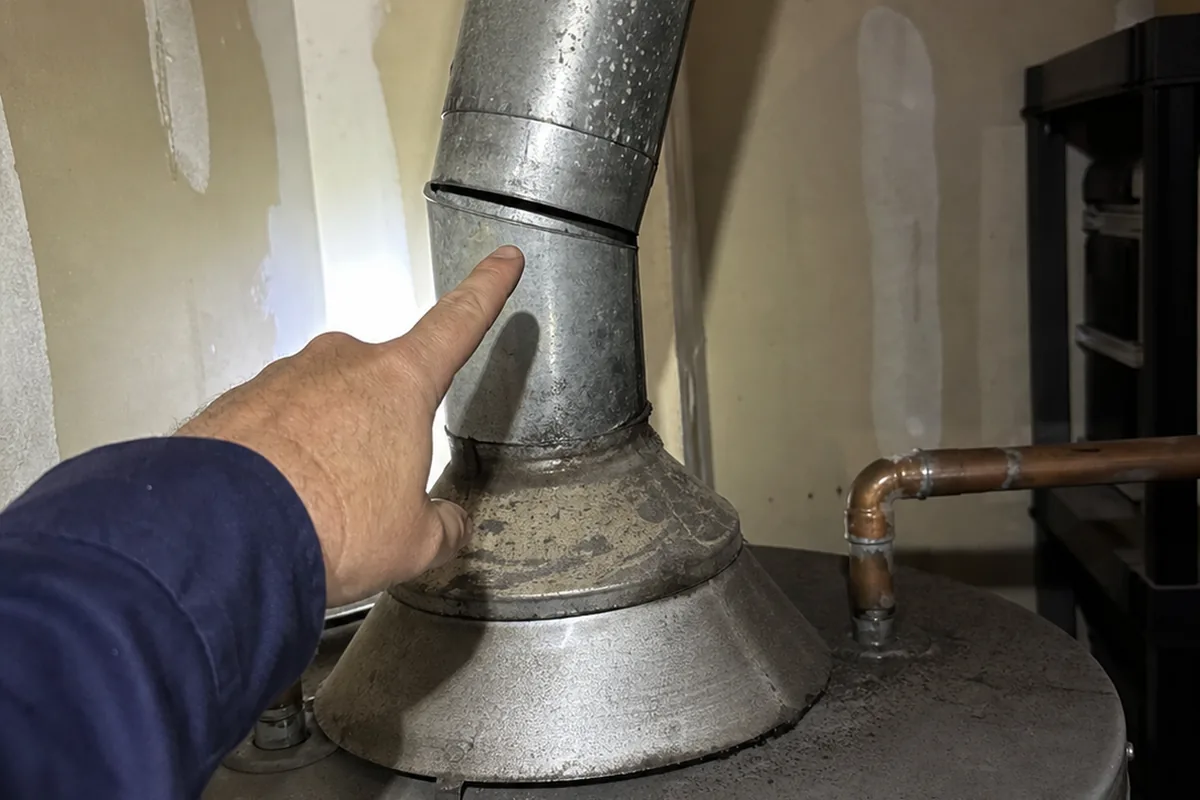
The third is the garage installation and the venting. Where a gas water heater sits in a garage, an older non-sealed unit needs its ignition source elevated well above the floor so it cannot ignite gasoline vapors, unless it is a newer flammable-vapor-resistant model, and it needs protection from vehicle impact. On the venting, we look for a vent connector that rises continuously to the flue, correct clearances from combustibles, and no signs of backdrafting or spillage at the draft hood. A vent that slopes down, is disconnected, or shows scorching is a carbon-monoxide concern that belongs at the top of the list.
What agents should tell every buyer
When a buyer is under contract on a Thousand Oaks home, give them these points before the inspection.
- Look at the water heater on your first walk-through. It is usually in the garage or a closet, and the safety items are visible.
- Expect the strapping to be checked. California requires two proper earthquake straps anchored to framing, and it is tied to the sale. One strap or a loose strap is a finding.
- Ask about the relief-valve discharge pipe. It should run down to near the floor, full size, with no threads on the end and no uphill run. A missing pipe is common and cheap to fix.
- On a gas unit, ask about venting and, in a garage, elevation and impact protection. Any sign of backdrafting is a carbon-monoxide item to take seriously.
- Check the age. Most tanks last eight to twelve years. If it is near the end and shows rust or sediment, budget for replacement even if it still runs.
- Confirm working carbon-monoxide alarms in the home. California requires them wherever there is a fuel-burning appliance.
A buyer who hears this from you sees the water heater as a short checklist, not a mystery, and the inspection holds no surprises.
Red flags during showings
You can spot most of these in two minutes in the garage. Watch for them on Thousand Oaks homes.
- One strap instead of two, straps that are loose, or straps anchored into drywall rather than framing.
- A relief valve with no discharge pipe, or a pipe that ends in the attic, runs uphill, or has been reduced in size.
- A gas water heater sitting flat on a garage floor with no elevation and no bollard or barrier in a spot a car could reach, on an older non-sealed unit.
- A vent connector that slopes down toward the tank, is loose at the joints, or shows soot or scorching at the draft hood.
- A water heater in an attic or interior closet with no drain pan, or a pan with no drain line.
- A rusty tank, a date code showing ten or more years, or moisture and sediment around the base.
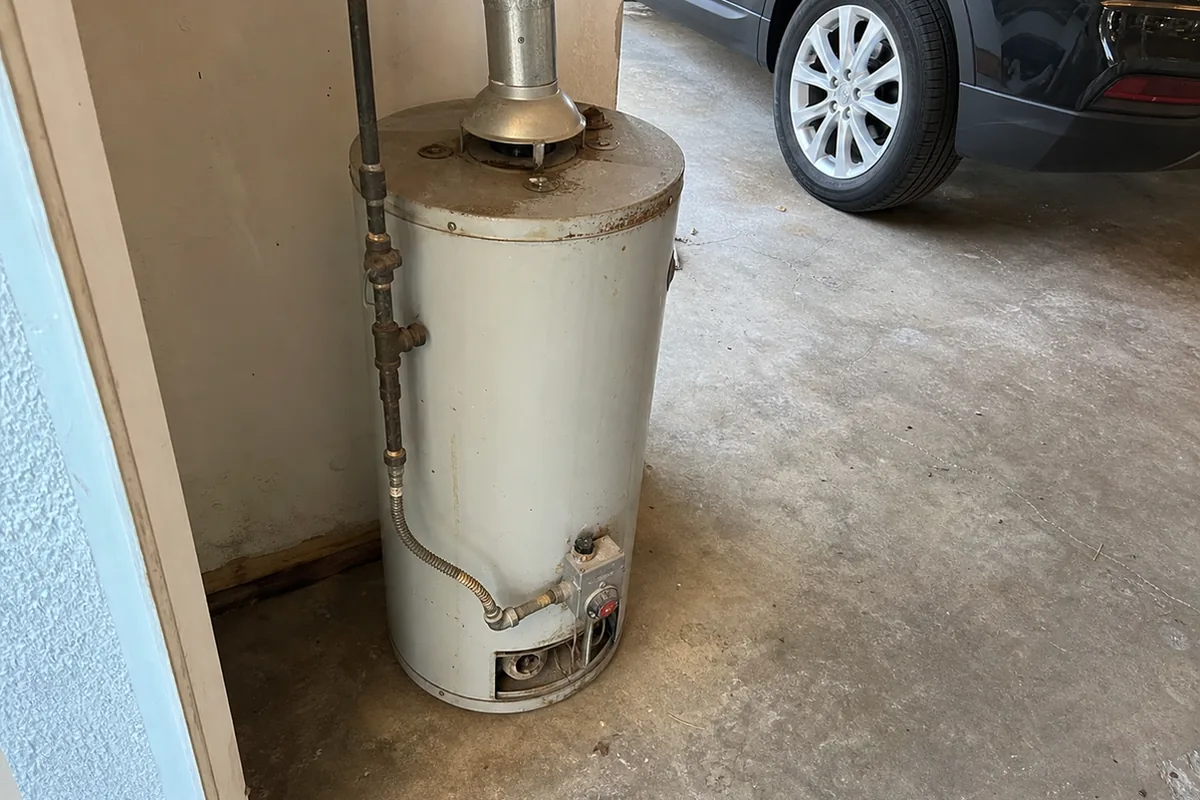
If we see these, we document them and point the buyer to a licensed plumber, and to the transaction’s disclosures for the strapping certification.
The negotiation playbook
When water-heater findings surface in Thousand Oaks, the deal usually moves one of a few ways.
The first path is seller-corrects-the-safety-items. Adding a second strap, installing a proper TPR discharge pipe, and fixing a venting connector are inexpensive and fast, and a cooperative seller often just handles them before closing. This is the cleanest route, and the strapping belongs here because it is tied to the sale.
The second path is a credit when replacement is due. If the tank is near end of life, rusted, or leaking, a repair-the-fittings approach is throwing money at an old unit. The buyer takes a credit sized to a plumber’s bid for a new water heater installed to current code, straps, pan, discharge, expansion tank and all, and replaces it after closing.
The third path is a plumber’s evaluation first. When the venting or the garage installation looks questionable and the fix is not obvious, the sensible move is a licensed plumber’s assessment, then a decision. Better to know whether it is a connector adjustment or a relocation before anyone commits a number.
The fourth path is walk-away, which almost never happens over a water heater alone. It only comes up when the water heater is one more item in a pattern of deferred maintenance that changes how the buyer sees the whole house. We document what we found and when, and the decision belongs to the buyer and their specialists.
How the inspection actually catches it
The water heater is a small part of the inspection that pays for itself, because the failures are specific and findable. We check for two straps in the right positions, anchored to framing, with the lower strap clear of the controls. We follow the TPR valve to its discharge pipe and confirm the size, the slope, the termination, and the material. On a gas unit we read the venting for continuous rise, clearances, and any sign of backdrafting or spillage at the draft hood, and in a garage we check elevation and impact protection on older units. We look for a drain pan and line where the location calls for one, and for an expansion tank on a closed system.
We use the tools where they help. Thermal imaging and a combustion read can show a backdrafting flue or a hot spot the eye misses, and we note the tank’s age from its data plate so the buyer knows where it sits in its service life. What we do not do is stand in for a licensed plumber. When a finding calls for correction or replacement, we say so plainly and route the buyer to the trade. Everything lands in the same-day report with photos, and our guide on how to read a home inspection report helps prioritize the list. We document the installation honestly, hand the buyer a clear priority list, and tell them who to call next. If we see something worth flagging, it goes in the report.
Schedule a Thousand Oaks inspection →
Quick FAQ
Does California really require water heater strapping to sell a home? Yes. California law requires water heaters to be braced, anchored, or strapped to resist falling in an earthquake, with the bracing in the upper and lower thirds of the tank, and it ties a strapping certification to the sale of the property. Two proper straps anchored to framing are the standard. One strap or a loose strap is a finding worth correcting before closing.
What is the TPR discharge pipe and why does it matter? The temperature and pressure relief valve releases if the tank overheats or overpressurizes, and its discharge pipe has to carry that release safely down to near the floor or an approved point outside. It must be full size, slope downward, and have no threads on the end. A missing or improper discharge pipe means a failing valve could scald someone or the tank could rupture. It is one of the cheapest fixes on the list.
Why does a garage water heater need to be elevated? An older gas water heater with an open flame or ignition source needs that source raised well above the garage floor so it cannot ignite heavier-than-air gasoline vapors, unless it is a newer flammable-vapor-ignition-resistant model designed to prevent that. Garage units also need protection from being hit by a vehicle. We flag both where they apply. Our inspection FAQ covers how findings like this show up in the report.
How long does a water heater last? Most tank water heaters last roughly eight to twelve years. Age from the data plate, rust, sediment, and moisture at the base all point toward the end of service life. A unit near that age that shows wear is worth budgeting to replace even if it still makes hot water.
Does the home inspection replace a plumber? No. We document the water heater and its installation and flag the strapping, the discharge, the venting, and the location items, but corrections and replacement are a licensed plumber’s work. We tell the buyer clearly which items need a plumber and which are simple fixes.
The honest summary
The water heater is the quietest appliance in a Thousand Oaks home and the one that carries the most safety requirements. Two earthquake straps that California ties to the sale, a relief valve with a proper discharge line, clean venting on a gas unit, and the right setup in a garage. Most of the failures are cheap to fix and easy to miss, and they only become a problem when they surface all at once in the final days of escrow.
We will read the whole installation, flag the strapping, the discharge, the venting, and the age, and point your buyer to a licensed plumber for the corrections. Catch it early and the water heater is a short punch list, not a deal delay. That is the job. We also inspect nearby Encino and the broader Conejo Valley.
See what every inspection includes → · Explore Thousand Oaks home inspections →
Related reading
- Murrieta and Lake Elsinore fault seismic readiness guide: the earthquake-preparedness picture that water heater strapping is one piece of.
- Encino prefab fireplace guide: another appliance-grade system in the home that ages and fails on its own schedule.
- Why infrared scanning matters in California homes: how thermal imaging and a combustion read catch a backdrafting flue.
- How to read a home inspection report in California: turn a page of red safety items into a short, calm punch list.
- Camarillo high water table guide: a neighboring Ventura County city with its own set of moisture and installation findings.
- Yorba Linda CSST gas-line bonding guide: the gas-side safety check on the flexible tubing that feeds this water heater and every other gas appliance on the property, separate from the strapping and venting covered here.
- Rancho Santa Fe tankless water heater guide: the tankless retrofit version of this appliance, a different gas-sizing, venting, and scale-maintenance story than the tank covered here.
- Solana Beach HVAC condensation guide: a different mechanical-moisture mechanism entirely, coastal humidity condensing on cold ductwork rather than an appliance installation defect.
- Porter Ranch water pressure and regulator guide: why the relief valve at this water heater weeps when house pressure runs too high, a system problem upstream of the tank.
- The 2025 California Building Standards Code: why a replacement pulls the current requirements forward even when the rest of the house stays grandfathered, and what heat pump water heaters change for new construction.