Iced Over in July: A Perris Central Air Conditioning Guide for Agents
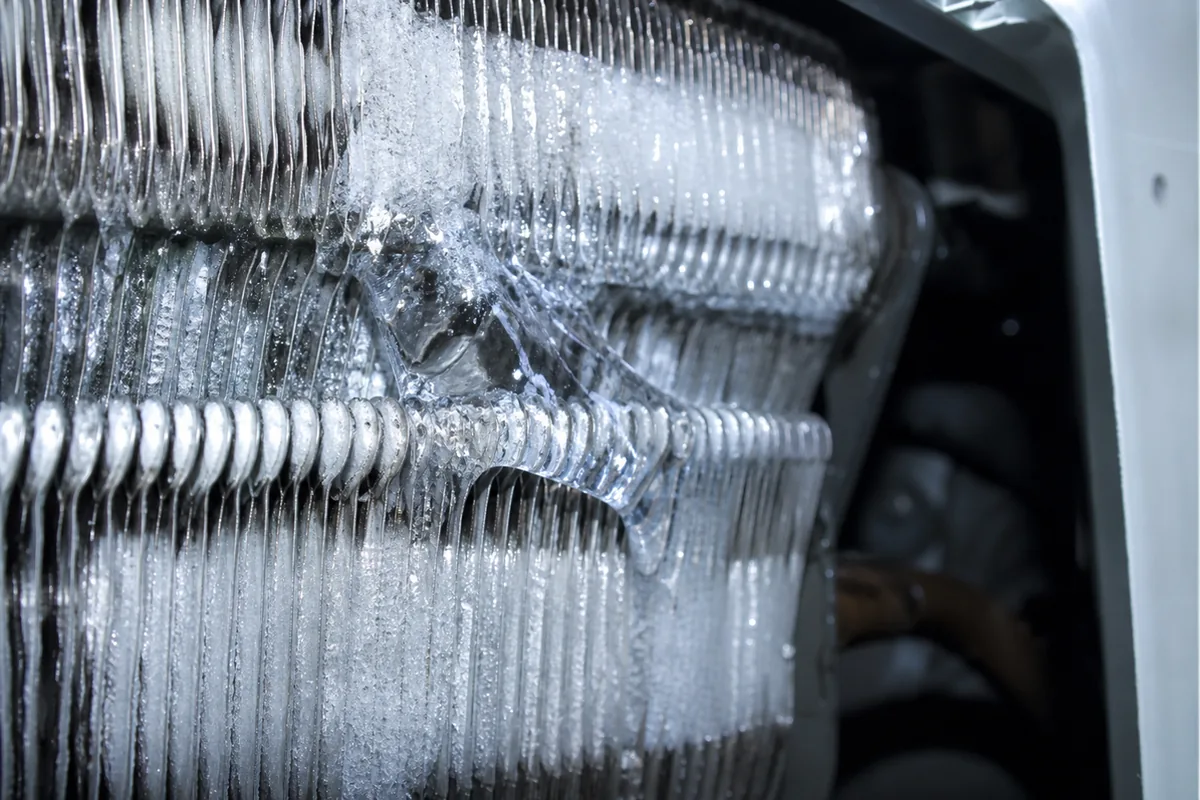
The home was a 2006 tract build in one of Perris’s newer neighborhoods, single owner, and the seller’s disclosure said the air conditioning worked fine. It did, for about twenty minutes at a time. Run it longer on a hot afternoon and the supply air went from cool to barely moving, because the evaporator coil in the attic air handler had iced over, a restricted-airflow problem hiding behind refrigerant that was never quite right to begin with. The condensate line draining that same air handler had no secondary pan and no float switch, just a single line pitched almost flat, one clog away from dripping straight through the ceiling below. None of this showed up by flipping the thermostat to cool and feeling for air at a register, which is exactly how a lot of walk-throughs check an air conditioner.
We are describing this as a composite of a pattern we see often across Perris, not one identified property or job. The city’s climate and its housing age make this a genuinely common, checkable finding here, and it is worth understanding before an escrow rather than during one.
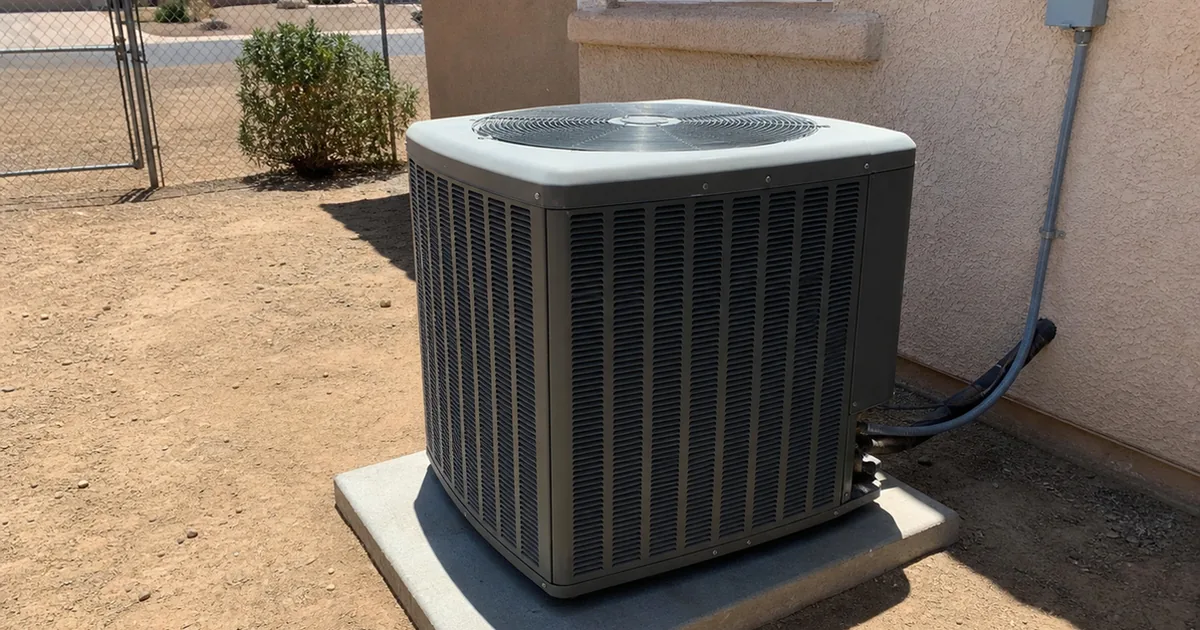
This guide is for the agent working Perris and the surrounding communities we also serve, including nearby Moreno Valley, Menifee, and Riverside, where the same inland heat and tract-era construction produce the same pattern of aging air conditioning systems. Here is what actually goes wrong with central air conditioning, what a home inspection can and cannot tell you about it, and how a finding usually plays out in escrow.
Why this matters for the agent
Most buyers judge air conditioning the same simple way: turn it on, feel for cold air, move on. That test catches a dead system, but it misses almost everything else on this list, because a system with low refrigerant charge, a restricted air filter, or a bad condensate line can still blow cold air for a short showing while failing badly under a real Perris summer afternoon.
Perris sits in the hot inland basin shared with the Moreno Valley and San Jacinto Valley, with real triple-digit heat for a long stretch of the year. That means two things for the housing stock here. First, systems run hard and long every season, which surfaces refrigerant, airflow, and installation defects that would stay hidden in a mild coastal climate. Second, a meaningful share of Perris’s tract housing was built in the 2000s and earlier, which puts a lot of original air conditioning equipment at or past the 10 to 15 year service life that is typical for a residential condenser and coil. Age plus heavy seasonal use is exactly the combination that turns a marginal system into a real finding.
What actually goes wrong
- Low refrigerant charge. An undercharged system from the original installation, or a slow leak that has developed over years at a flare fitting or a Schrader valve, reduces the system’s ability to remove heat and, if severe enough, can cause the evaporator coil itself to ice over, which then blocks airflow entirely and makes the problem worse.
- A dirty or collapsed air filter restricting airflow. The single most common, and most inexpensive, cause of poor cooling and coil icing. Airflow across the evaporator coil has to stay within a designed range; too little airflow drops the coil’s surface temperature below freezing and ice builds instead of the coil doing its job.
- Undersized or leaking ductwork. Ducts sized for a smaller system, crushed or disconnected sections in the attic, or leaky joints all reduce the volume of air actually reaching the living space, even when the equipment itself is working correctly.
- A blower that cannot move enough air. A weak or failing blower motor, a slipping belt on an older system, or a blower wheel caked with dust all starve the coil of the airflow it needs.
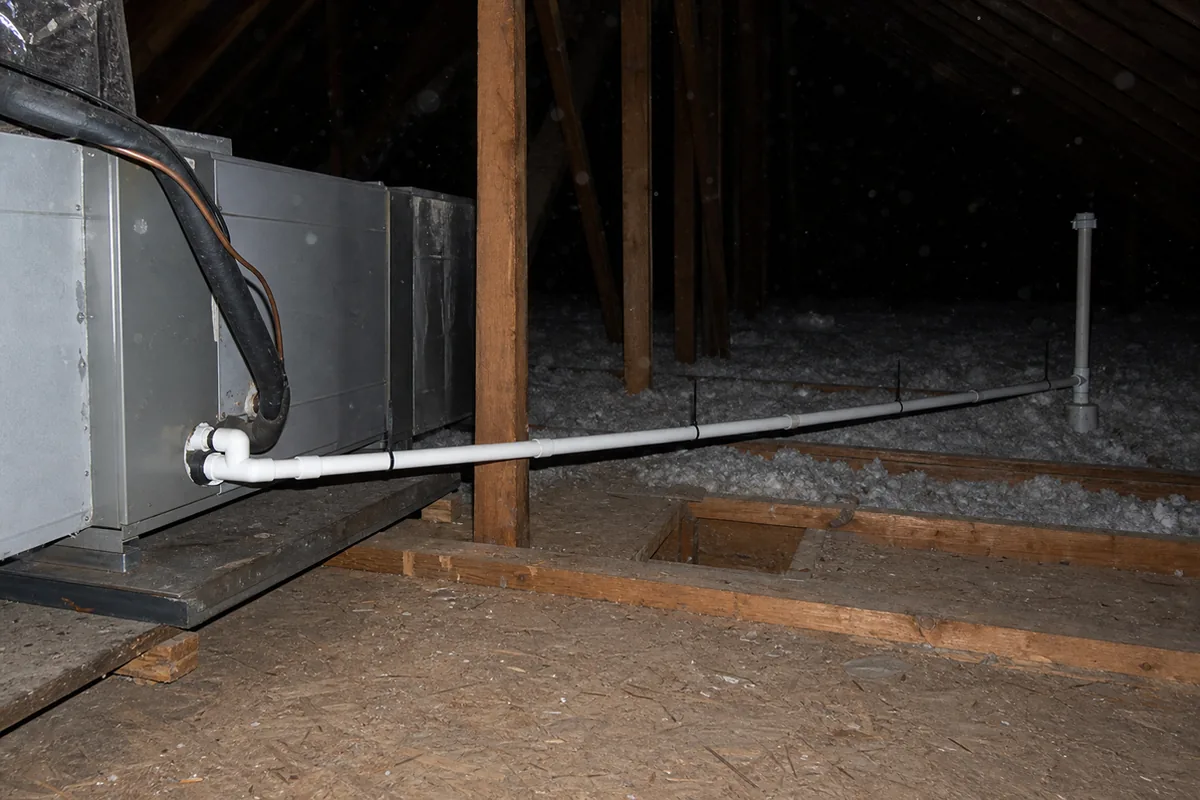
- A clogged, unsloped, or unprotected condensate drain line. The line carrying condensation away from an attic air handler needs a consistent downward slope to a proper termination. A clog, a flat or reverse-sloped run, or the absence of a secondary drain pan and float switch under an attic-mounted air handler is a real water-damage risk to the ceiling below, not a minor housekeeping item.
- Mismatched replacement equipment. A replacement condenser installed without replacing an incompatible original coil or matching the original furnace’s blower, a common cost-saving shortcut, that hurts both efficiency and can void the new equipment’s warranty.
- Ice forming on the evaporator coil or the outdoor line set. Whatever the underlying cause, low charge or restricted airflow, visible ice is always a stop-and-diagnose finding, not something to run through and hope clears on its own.
What a home inspector actually checks, and what requires a specialist
A home inspection is a visual and operational check, not a full refrigeration diagnosis. We check the temperature split between the supply and return air, confirm the system actually cools, look for visible icing on the coil or line set, inspect the condensate line’s slope, termination, and whether a secondary pan and float switch are present where the air handler sits in an attic, and note the condition and apparent age of the equipment from its data plate.
Schedule a Perris inspection →
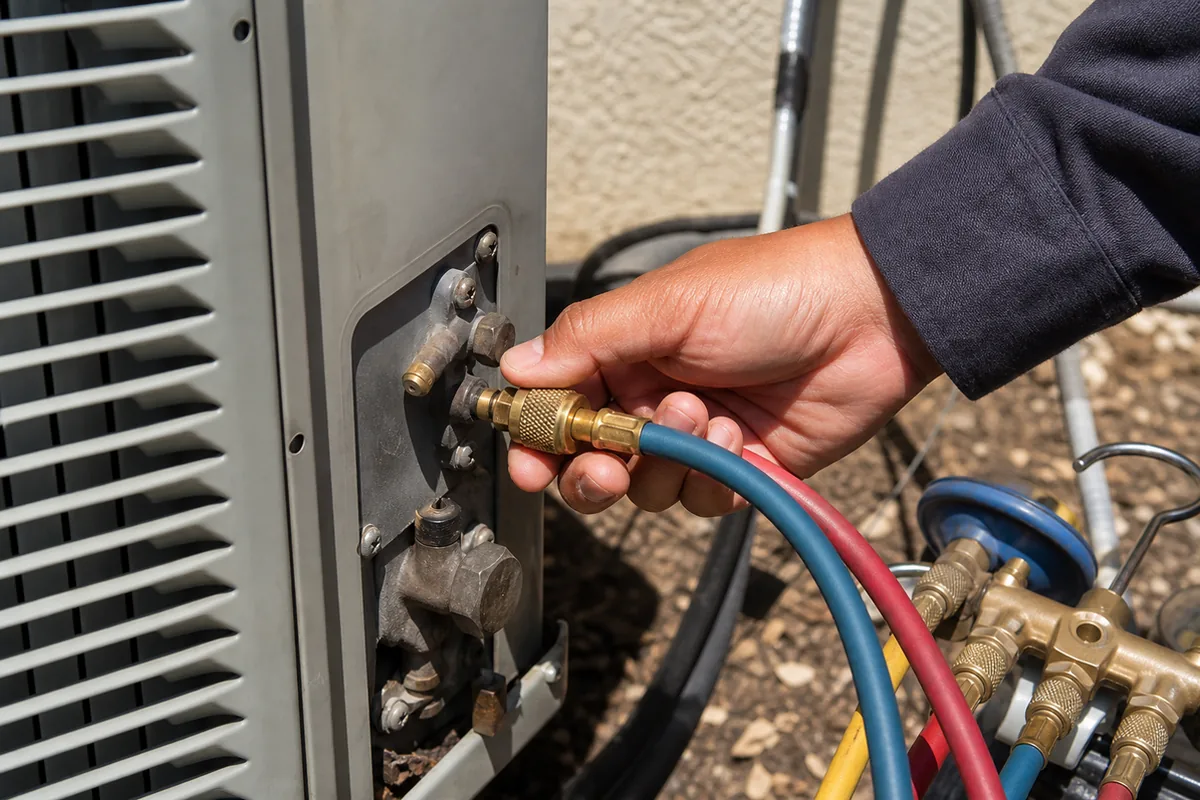
Refrigerant charge and pressure diagnosis require a licensed HVAC technician connecting gauges to the system, a scope beyond a home inspection. Where we see a temperature split that is too small, visible icing, or any of the airflow and condensate issues above, we document it plainly and recommend the appropriate specialist evaluation rather than guess at a cause we cannot verify without gauges.
What agents should tell every buyer
- A short showing with the air conditioner blowing cold air for a few minutes does not rule out low refrigerant charge, a restricted filter, or a bad condensate line. All three can still produce cold air briefly.
- Ask the seller for the age of the condenser and evaporator coil, and whether they are original to the house or matched replacements. A mismatched replacement condenser paired with an old coil is a real, checkable finding.
- A condensate line with no secondary pan or float switch under an attic air handler is a genuine water-damage risk to the ceiling below, not a minor item, and it is inexpensive to correct.
- Visible ice on the coil or the outdoor refrigerant lines during a showing is a stop-and-ask moment, not something to dismiss as the system “just needing to warm up.”
- Refrigerant charge and pressure can only be verified by a licensed HVAC technician with gauges. A home inspection documents the system’s operation and visible condition, not its refrigerant charge.
- In a market with Perris’s heat, a system nearing or past its 10 to 15 year service life deserves a real conversation about remaining life and replacement budgeting, independent of whether it is cooling adequately today.
Red flags during showings
- Visible frost or ice on the outdoor unit’s refrigerant lines or on an accessible evaporator coil.
- Supply air that starts cool and noticeably warms or weakens after the system has been running more than a few minutes.
- A stained or water-damaged ceiling directly below where an attic air handler is likely located.
- A condensate line with an obvious flat run, a visible clog, or no secondary pan and float switch on an attic-mounted air handler.
- A condenser and an indoor coil or furnace that look like they are from clearly different eras or brands, suggesting a partial rather than full replacement.
- A dirty, collapsed, or missing air filter at the return grille.
The negotiation playbook
When a central air conditioning finding surfaces in a Perris escrow, the deal usually moves down one of a few paths.
The first path is a filter replacement or basic airflow correction, appropriate when the finding is limited to a dirty filter or an obviously restricted return, an inexpensive fix that often resolves icing on its own once addressed.
The second path is a licensed HVAC diagnostic visit, appropriate when refrigerant charge is suspected, the temperature split is marginal, or the cause of an airflow problem is not visually obvious. This confirms whether the system needs a repair or is functioning within normal range.
The third path is a condensate-line correction, appropriate when the line lacks proper slope, termination, or a secondary pan and float switch under an attic air handler. This is typically a modest repair relative to the water-damage risk it prevents.
The fourth path is a replacement conversation, warranted when the system is clearly at or past its service life, mismatched equipment is confirmed, or repeated refrigerant leaks make ongoing patching impractical. In a market where the system runs hard every summer, this is often the more honest long-term path even when a stopgap repair is available.
How the inspection actually catches it
We run every Perris central air conditioning system through a full cooling cycle long enough to check the temperature split at the supply and return, not just confirm it turns on. We inspect the outdoor condenser and any accessible refrigerant lines for ice, corrosion, or oil staining that can indicate a leak, and we check the indoor coil access panel and condensate line’s slope, termination, and whether a secondary pan and float switch are present under an attic-mounted air handler.
We do not connect gauges or diagnose refrigerant charge and pressure ourselves. That is licensed HVAC technician work with calibrated equipment, the same specialist boundary we describe in our evaporative cooler guide for a different cooling system type. Where we find icing, a marginal temperature split, airflow restrictions, or condensate defects, we say so plainly in the report and recommend the appropriate specialist evaluation. Our what’s included page covers the full HVAC scope of every Perris inspection.
Quick FAQ
Is this the same issue as Carlsbad’s air conditioning corrosion problem? No. Our Carlsbad salt-air AC corrosion guide covers coastal salt-air corrosion attacking the cabinet and coil fins on the same type of equipment. This guide covers refrigerant, airflow, and condensate defects, an inland climate and service-life problem rather than a corrosive-environment one.
Does this cover the attic insulation or ventilation around the air handler? No, that is a separate topic covered in our Woodland Hills attic insulation and ventilation guide. This guide is about the air conditioning equipment itself, not the thermal envelope around it.
What about undersized return ducts? Return-air sizing and static pressure are a deeper topic covered in our Garden Grove ducted HVAC returns guide. We mention ductwork here only as one possible airflow-restriction cause; the detailed return-sizing diagnosis is routed to that guide.
Is a system blowing cold air during a showing good enough proof it works? Not on its own. A short run time can mask a marginal temperature split, an early-stage refrigerant leak, or an airflow problem that only shows up after the system has been running for a while, exactly as described above.
How much does a full HVAC diagnostic cost? We do not quote HVAC repair or diagnostic pricing, since it varies by contractor and by what is found. What we can tell you is what we found and what a licensed technician should evaluate.
The honest summary
Perris asks more of its air conditioning systems than a milder coastal city does, and a meaningful share of that equipment is now old enough that refrigerant, airflow, and condensate problems are a real, checkable finding rather than a hypothetical one. None of this means every air conditioning system in Perris is failing. It means cold air at a register during a showing is not proof of anything beyond that specific moment, and a real inspection has to run the system long enough, and look closely enough, to catch what a quick check misses.
We run every Perris air conditioning system through a full cooling cycle, check the temperature split, inspect for icing and condensate defects, and tell you plainly whether the system looks sound, marginal, or in need of a licensed HVAC technician’s evaluation before you close.
See what every inspection includes → · Read our FAQ → · Explore Perris home inspections →
Related reading
- Salt-Air AC Corrosion in Carlsbad. A coastal corrosion mechanism on the same equipment type, distinct from the refrigerant and airflow defects covered here.
- Ducted HVAC Returns in Garden Grove. The deeper return-air sizing and static-pressure discussion this guide routes to rather than duplicates.
- Evaporative Cooler Inspection in Palm Springs. A different cooling technology entirely, useful context on how climate shapes which cooling system actually makes sense.
- Water Pressure and the Pressure Reducing Valve in Porter Ranch. An unrelated plumbing system, useful context on how a home inspection separates equipment operation from a deeper specialist diagnosis.
- Generator and Transfer Switch Safety in Hemet. A backup-power electrical topic from a neighboring San Jacinto Valley city, unrelated to AC equipment but relevant to the same PSPS and extreme-heat market.
- HVAC Condensation in Solana Beach. A different HVAC-moisture mechanism, condensation from coastal humidity on cold ductwork rather than a clogged condensate drain line.