An industry update from Inspection.re, premium home inspections across California.
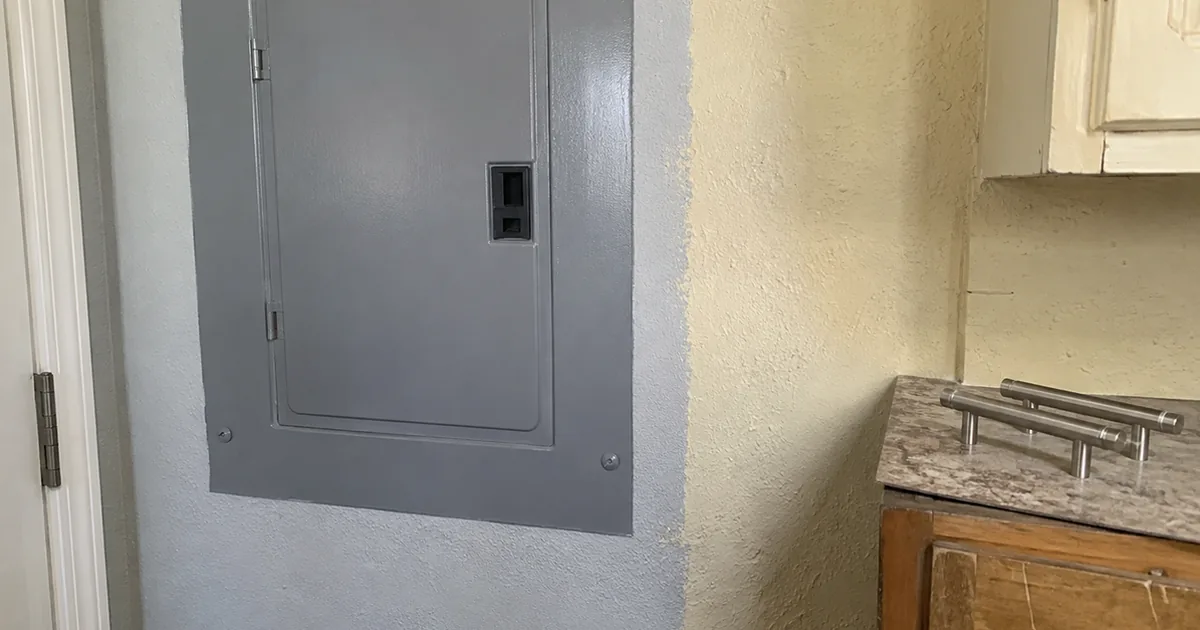
There is a particular kind of house that shows up in every California market. New luxury vinyl plank across the whole ground floor. Quartz counters and a white shaker kitchen. Fresh grey paint everywhere, including on the electrical panel cover. New pulls on cabinet boxes that are visibly older than the doors hanging on them. A bathroom that has clearly been rebuilt, and a hallway that has clearly not been touched since 1974.
Anyone can read that house. What nobody could reliably find out, until fairly recently, was who did the work, whether it was permitted, and whether the person selling it had ever held a contractor’s license. California changed that with Assembly Bill 968, which added Section 1102.6h to the Civil Code.
The law has been operative since July 1, 2024, so it is not new. It is, however, still widely misdescribed, including in the summary most agents have read. The most commonly repeated figure in that coverage is now wrong. Here is what the statute actually says.
What Civil Code 1102.6h actually requires
A seller of a single-family residential property who accepts an offer to purchase within 18 months of taking title has to disclose, in writing, the room additions, structural modifications, other alterations or repairs that were performed by contractors while they owned it. Along with that, the seller has to give the name of each contractor they contracted with for that work, subject to a dollar threshold covered further down.
The statute applies where the seller accepts an offer on or after July 1, 2024. It sits inside Article 1.5 of the Civil Code, the same article that governs the Transfer Disclosure Statement and the rest of California’s residential disclosure framework, which means it travels with the disclosure package rather than existing as a separate errand.
What it targets is straightforward. Somebody buys a house, renovates it quickly, and resells it. The buyer at the end of that chain gets a house full of recent work and, historically, almost no information about who performed it. AB 968 puts a name and a paper trail on that work.
The 18 month clock, and when it starts
It runs from the date title transferred to the seller, and it ends when the seller accepts an offer. Both ends matter and both get misread.
The trigger is not the close of the resale. It is acceptance of the offer. A seller who took title on March 1 of one year and accepts an offer on August 15 of the next year is inside the window at 17 and a half months, even if that transaction does not close until well past the 18 month mark. Conversely, a seller who accepts on the far side of 18 months is outside this particular requirement no matter how much work they did.
The window is also indifferent to intent. There is no requirement anywhere in the statute that the seller be a professional flipper, an investor, or in the business of anything. An inheritance that gets renovated and sold inside 18 months is covered. A relocation that goes wrong, a divorce sale, a job transfer nine months after purchase where the owners had the kitchen redone: all covered, if contractors did the work. Agents who describe this as “the flipper law” and then mentally file it under investor transactions only are going to miss ordinary sales that fall inside it.
The threshold nearly every summary gets wrong
Here is the part worth the read. The statute does not name a dollar figure. It cross-references one.
The exact language is that the obligation to provide the name of the contractor applies only to contracts where the aggregate contract price for labor, material and all other items for the project is in excess of the dollar amount specified in Section 7027.2 of the Business and Professions Code.
When AB 968 was written, that section specified $500, and essentially all of the law firm summaries, brokerage trainings and blog posts published around its rollout say $500. Then Assembly Bill 2622 amended Section 7027.2, raising the minor work exemption from $500 to $1,000. It was signed on September 14, 2024 and took effect January 1, 2025.
Because Section 1102.6h points at that section rather than at a number, the disclosure threshold moved with it. The figure to work from now is $1,000, not $500. If it moves again, the disclosure threshold moves again, without AB 968 being amended at all.
We are flagging this because it is a live example of something worth internalizing generally: a statute that cross-references another statute is a moving target, and a summary written the year it passed can go stale without anyone updating the summary. Verify against the current code text rather than the coverage. That habit is the same one behind our article on the 2025 California Building Standards Code, where the operative rule turns on permit application date rather than on anything a listing says.
“Single-family residential property,” and why the wording matters
The statute says single-family residential property. It says it repeatedly and it does not define the phrase to include two to four unit buildings.
A fair amount of secondary coverage describes AB 968 as applying to properties of one to four dwelling units, which is the scope language used elsewhere in California’s disclosure statutes and in most standards of practice. That is not the language in this section. Anyone advising on a duplex, triplex or fourplex resale inside the 18 month window should be reading the current statutory text directly rather than relying on a summary, and should be routing the question to a real estate attorney rather than to an inspector or an agent.
Our own position on questions like this is consistent and boring: we document condition, and we do not give legal advice about the scope of a disclosure obligation. But we will tell an agent when the summary they are working from does not match the statute, because that is a five minute conversation that prevents a much longer one later.
Permits: what actually has to change hands
If the seller obtained a permit for any of the disclosed work, the seller has to provide a copy of that permit to the buyer.
Read that conditionally, because the condition is the whole point. The duty is to hand over permits the seller obtained. It is not a duty to obtain permits retroactively, and it is not a duty to prove that work which needed a permit had one. A disclosure that lists a full bathroom remodel and a structural modification, and attaches no permit at all, is not necessarily a defective disclosure. It might be a completely accurate disclosure of unpermitted work.
That is exactly the scenario where a buyer should stop and ask the next question rather than relaxing because a form was filled out. Permit history is a records question answered by the local building department, not by the disclosure package and not by an inspection. Our guide to unpermitted additions and garage conversions covers how to actually run that down, and why square footage that never made it onto a permit becomes an appraisal and lending problem rather than only a safety one.
What the statute does not say
Four gaps, all of which matter in practice.
It does not require the work to have been done well, or to any standard. It is a disclosure statute, not a quality statute. A named contractor on a form is not a warranty.
It does not require the seller to disclose work they performed themselves. The obligation as written attaches to additions, modifications, alterations or repairs performed by contractors. An owner who did the tile, the fixtures and the paint personally has performed work that a buyer would very much want to know about, and the general duty to disclose known material facts still applies to it, but this particular section is aimed at contracted work.
It does not set a form. There is no state-published AB 968 form embedded in the statute, and the disclosure travels with the rest of the package.
And it does not create an inspection. Nothing about this law causes anyone to look behind the drywall. It causes a list to be produced. Which is where the rest of this article comes in.
Where a home inspection fits on a recently flipped house
A disclosure tells you what was claimed. An inspection tells you what is there. On a fast renovation those two things diverge more often than on any other kind of property, and the divergence is usually not malicious. It is schedule pressure.
We inspect a lot of recently renovated houses, and the pattern is consistent enough to describe. Finish work is good, because finish work is what sells the house. The systems behind the finish work are the part that got value engineered. New paint, new floors and new counters sit on top of the original 100 amp service, the original galvanized supply lines, the original single pane aluminum windows in the bedrooms nobody photographed, and a water heater that is older than the kitchen it sits next to.
None of that is illegal and none of it is hidden in any deliberate sense. It just means the house presents newer than it is, and a buyer who reads “fully renovated” in the listing needs the inspection to tell them which parts of the house that phrase covers.
What a fast renovation actually looks like at inspection
The specifics, since this is the part an agent can use at a showing.
Kitchen and bath work done without permits tends to show up in the plumbing rather than in the cabinetry. Undersized or missing traps, a disposal drain tied in above the trap weir, flexible supply lines run through a cabinet back without a grommet, a dishwasher discharge with no high loop or air gap. New fixtures on old branch piping, where the shiny valve is three months old and the galvanized nipple behind it is sixty years old.
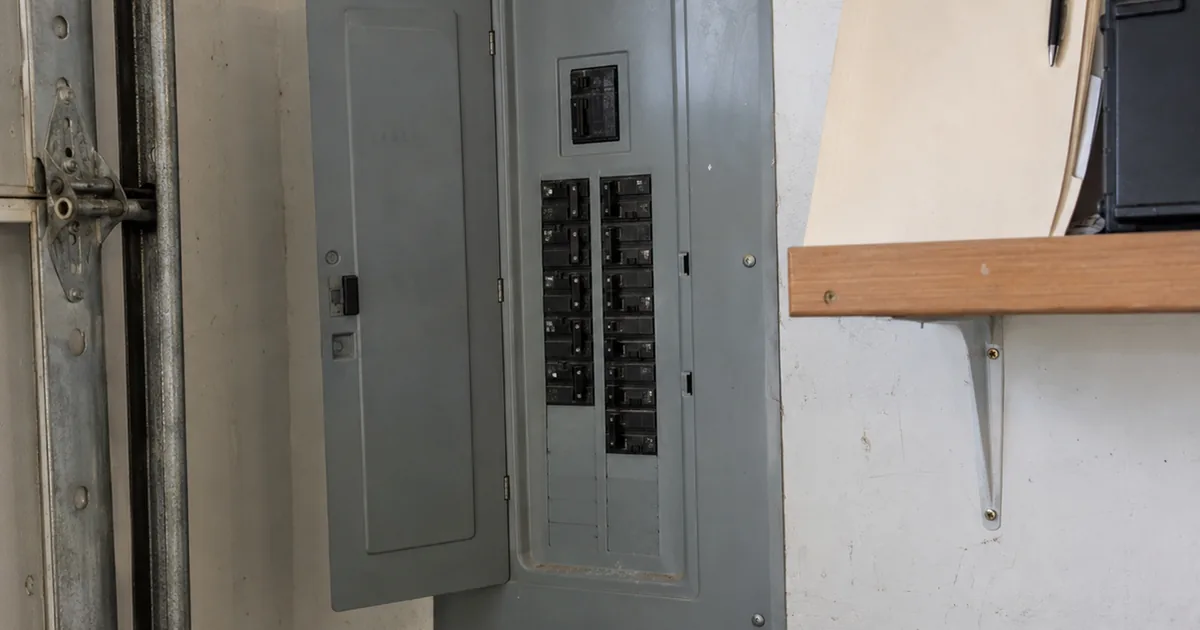
Electrical is the second cluster. New recessed lights and new receptacles fed from an old panel with no added capacity. A remodeled kitchen with the required countertop receptacles installed but no ground fault protection, or a GFCI installed at the wrong point in the circuit so half the counter is unprotected. Grounded three prong receptacles installed on ungrounded two wire branch circuits, which looks correct and tests as an open ground. A subpanel added for the new work with the neutrals and grounds bonded together where they should be separated.
Then there is the cosmetic layer sitting on unaddressed moisture. Fresh paint over a ceiling stain that was never traced to its source, new flooring laid over a subfloor that was wet at some point, a bathroom rebuilt with a new surround where the framing behind it never dried out. This is where an infrared scan earns its keep, because a repainted ceiling and an actively leaking one look identical to the eye, and our guide to what infrared scanning finds explains the temperature differential that gives it away.
We are careful about how we word these findings. An inspector who writes “this was done without a permit” is making a records claim they cannot support from a visual inspection. What we write instead is what we observed, why it does not match standard practice, and that the work appears recent and warrants a permit history check. The inspection report carries the observation and the reasoning, and the buyer takes the records question to the building department.
What agents should do on each side
Representing a seller inside the window, build the list early rather than at disclosure time. Contractor names, contract amounts against the current $1,000 cross-referenced threshold, and copies of any permits actually pulled. Sellers who assembled this while the work was happening produce a clean disclosure in an afternoon. Sellers reconstructing it from memory eighteen months later produce something vague, and vague is exactly what gets litigated.
Representing a buyer on a recently resold house, treat the disclosure as the beginning of diligence. Read the list, then check whether the permit copies match the scope described. A structural modification with no permit attached is a question, not a red flag by itself. Order the inspection with the renovation specifically in mind and tell the inspector what was claimed to have been done, because an inspector who knows the kitchen was redone eight months ago looks at that kitchen differently than one walking in cold.
On either side, keep the roles clean. The disclosure is a legal instrument, the permit history is a records request, and the inspection is a condition assessment. They answer three different questions and no one of them substitutes for the others. That separation is the same one we draw in our coverage of the disclosure duties that took effect in 2026, and it holds here.
We see this pattern across every market we work, from established Bay Area towns like San Anselmo and Sausalito, where older stock gets renovated hard before resale, to Tiburon and the rest of Marin County.
Frequently asked questions
Does AB 968 apply to every home sale? No. It applies where a seller of a single-family residential property accepts an offer within 18 months of the date title transferred to them, for offers accepted on or after July 1, 2024. Outside that window, this section does not apply, though the general duty to disclose known material facts always does.
Is the contractor disclosure threshold $500 or $1,000? Work from $1,000. The statute does not state a figure. It cross-references the amount in Business and Professions Code section 7027.2, and AB 2622 raised that from $500 to $1,000 effective January 1, 2025. Older summaries still say $500 because they were written before that change.
Does the seller have to disclose work they did themselves? The obligation as written covers additions, modifications, alterations or repairs performed by contractors. Owner performed work is not what this section targets, though the broader California duty to disclose known material facts is unaffected. Ask a real estate attorney about a specific situation rather than relying on a general article.
If no permits are attached, does that mean the work was unpermitted? Not necessarily, but it is worth asking. The statute requires the seller to provide copies of permits they obtained. No permit copy can mean none was obtained, which can mean none was required, or that one was required and not pulled. That question is answered by the local building department’s records, not by the disclosure or the inspection.
Can a home inspection tell me if the renovation was permitted? No. We document what we can observe and note where recent work does not match standard practice, which is often the signal that prompts a records check. The permit question itself is a records request to the building department.
The bottom line
AB 968 does something narrow and useful. On a single-family resale inside 18 months of purchase, the buyer gets a written list of the contracted work and the names behind it, plus copies of whatever permits the seller actually obtained. It has been operative since July 1, 2024.
The detail worth correcting is the threshold. It is not a fixed $500, it is whatever Business and Professions Code section 7027.2 currently specifies, and that figure became $1,000 on January 1, 2025.
The larger point is that the law produces a list, not an assurance. A named contractor is not a permit, a permit is not proof of quality, and none of the three is a substitute for opening the panel and looking behind the new tile. Our page on what our inspection includes sets out what we actually check on a renovated house, and our frequently asked questions covers how we scope one.
Schedule an inspection · See what’s included · Sample report · FAQ · Same-day report · Pay-at-closing available
Related reading
- ASHI’s 2026 Standard of Practice: What Actually Changed. What a general inspection is required to cover on a renovated house, and what it is not.
- New Luxury Spec-Build Defects in Arcadia. What fast, finish-first construction looks like when the systems behind it were value engineered.
- Unpermitted Additions and Garage Conversions in Van Nuys. How to actually run down a permit history, and why square footage matters to an appraiser.
- California’s Balcony Inspection Deadlines: SB 721 and SB 326. Another statute whose published summaries went stale, and another report that travels with the property at sale.
This update is provided for general information and is not legal advice. For questions about how AB 968 or Civil Code section 1102.6h applies to a specific transaction, consult a qualified real estate attorney or your broker’s compliance department. For inspection questions, our team is always glad to help.