An industry update from Inspection.re, premium home inspections across California.
The question comes up on maybe one inspection in four, usually in a hallway, usually phrased the same way. Is this house up to code?
It is a completely reasonable question and it has an unsatisfying answer, and the answer got slightly more complicated on January 1, 2026, when the 2025 California Building Standards Code took effect. A lot of coverage since then has treated that date as if a switch flipped and every older house in the state fell out of compliance. That is not how any of this works, and the confusion causes real problems in transactions: buyers asking for upgrades the law does not require, sellers agreeing to work nobody needed, and agents caught in the middle without a clear way to explain the difference.
Here is what actually changed, which buildings it reaches, and what an inspection report means when it says something does not meet current standards.
What actually took effect on January 1
The 2025 California Building Standards Code, which lives at Title 24 of the California Code of Regulations, became effective January 1, 2026 as the product of the 2024 Triennial Code Adoption Cycle. The Department of Housing and Community Development announced it in Information Bulletin 2025-03, issued September 22, 2025 by the Division of Codes and Standards under Health and Safety Code section 17913, which is the notice mechanism the state uses to tell local building officials a code edition is changing.
California does this on a three year rhythm. The state takes national model codes, most recently the 2024 International Building Code on the building side, and amends them for California conditions before adopting them. That is why the California Building Code is not the IBC with a different cover, and why a contractor who learned the code in another state still has to learn it again here.
The 2025 edition is also not one book. It is eleven parts, from the Administrative, Building and Residential Codes through the Electrical, Mechanical, Plumbing, Energy, Wildland-Urban Interface, Fire, Existing Building and Green Building Standards Codes, each approved by the California Building Standards Commission on its own schedule across December 2024 and February 2025. Different state agencies write different parts, which is why the approval dates are staggered.
The one rule that decides which code your house was built under
This is the sentence worth memorizing, and it comes straight from the state’s own bulletin: the 2025 code applies to all buildings and structures with a permit application date on or after January 1, 2026. The bulletin adds that the permit application date is generally established by the local government, and tells interested parties to check with the specific building department about how that jurisdiction sets it.
That is the whole test. Not the date construction started. Not the date of the certificate of occupancy. Not the date of sale. The permit application date.
The practical consequence is that homes finishing construction throughout 2026 and well into 2027 were permitted under the 2022 code and are correctly built to the 2022 code. A buyer touring a brand new house this fall is almost certainly looking at 2022 code construction, and that is not a defect, a shortcut, or anything to negotiate about. It is how code cycles have always worked in every state.
The same rule runs backward through the entire housing stock. A 1978 house was built to the code in effect when its permit was applied for. A 1998 addition was built to the code in effect when that addition was permitted. A single house can legitimately contain three or four code eras inside it, and frequently does.
Why your existing house did not become non-compliant
New code editions apply prospectively to new permit applications. They do not reach back and make existing legally permitted construction unlawful. A house built correctly under the code in effect at the time is what the trade calls legally nonconforming, or in ordinary conversation, grandfathered.
There is a specific reason California maintains a separate Part 10, the California Existing Building Code, inside Title 24. Existing buildings get their own rulebook because the standards for new construction are not the standards for a building that already exists. Alterations, repairs and additions are governed there, and the general shape of it is that the work you do has to meet current requirements while the parts you do not touch generally do not have to be brought forward.
The exceptions are the ones that catch people. Some retrofit requirements are triggered by a sale or by a permit rather than by the age of the building, and they vary by jurisdiction. Water conserving plumbing fixture requirements, smoke and carbon monoxide alarm requirements, and local ordinances are the usual examples, and a few cities layer point of sale requirements on top of state law. Our guide to smoke and carbon monoxide alarm compliance covers the alarm side of that in detail, because it is the one that actually shows up in nearly every California escrow.
What the 2025 edition changes for a house being built right now
The direction of the 2025 cycle matches the last several: lower energy use and more electrification. The Energy Code, Part 6 of Title 24, is written by the California Energy Commission rather than by HCD, and it continues to push new residential construction toward heat pump space heating and heat pump water heating as the assumed baseline while tightening envelope requirements including window performance. It also changes how heating and cooling systems have to be load calculated and sized rather than picked by rule of thumb, a quiet change with real consequences for comfort complaints later. The specific compliance numbers are the Energy Commission’s, they differ by climate zone, and secondhand summaries drift fast, so if a detail matters to a project the Commission’s own standards documents are the source rather than a blog post, including ours.
For a buyer, the visible result is straightforward. New California houses increasingly arrive with a heat pump instead of a furnace and air conditioner, and a heat pump water heater instead of a gas tank. Both are good equipment and both behave differently than what most buyers grew up with. A heat pump water heater recovers more slowly and draws heat from the space it sits in, which is why we look at where it was installed and whether that space can actually supply the air it needs. Our guide to water heater installation details covers the fundamentals that do not change with equipment type.
What “does not meet current standards” means in an inspection report
Here is the part that resolves most of the confusion in a transaction.
A home inspection is not a code inspection. It is a visual, non-invasive examination of the accessible systems and components of a house, performed against a professional standard of practice, and its output is a description of condition. The code compliance determination for a building belongs to the local building official who issued the permit, and that determination was made against the code in effect at the time.
So when a report says a condition does not meet current standards, it is not an assertion that the house is illegal or that anyone did anything wrong. It is a safety and function note. The most common ones on older California housing are worth listing, because they come up constantly and get misread constantly:
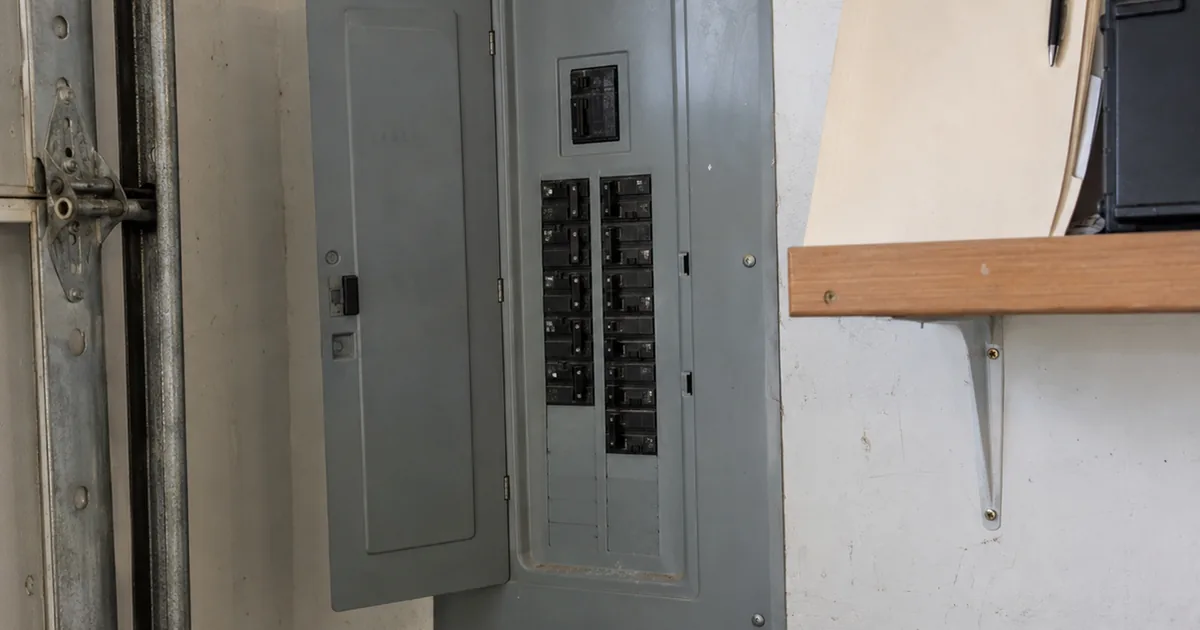
- No ground fault protection at kitchen, bathroom, garage, or exterior receptacles. Required for new work now, not required to be retrofitted into a 1965 house. Also one of the cheapest genuinely worthwhile upgrades a buyer can make, which is why we call it out anyway.
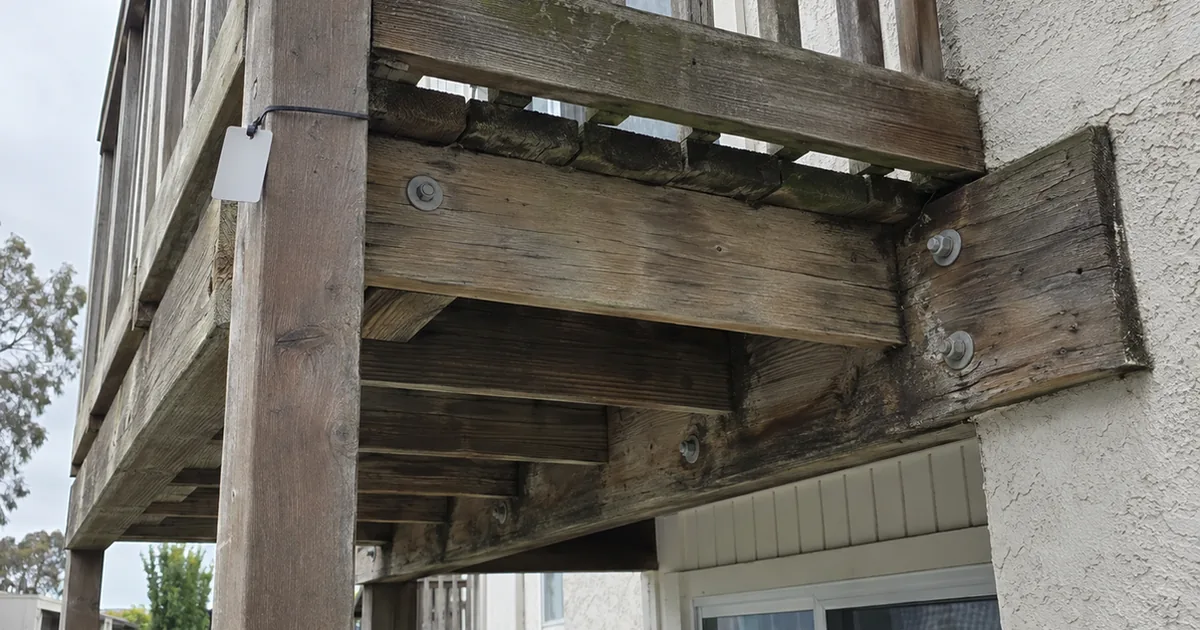
- Handrail and guardrail geometry. Baluster spacing, handrail graspability, and guard height on stairs and decks have all tightened over the decades. An older stair with 8 inch baluster spacing was correct when built. It is still a real fall hazard with a toddler in the house, and we say both things.
- Bedroom egress window size. Openable area requirements have changed. A small older bedroom window is not a code violation in an existing house, and it is still worth knowing about before someone sleeps behind it.
- Water heater seismic strapping and the absence of an expansion tank or a drain pan. Frequently missing on older installations and frequently required to be corrected the moment anyone pulls a permit to replace the unit.
- Ungrounded two prong receptacles, and the three prong receptacles somebody swapped in over them without a ground. The second one is genuinely worse than the first because it advertises protection that is not there.
Each of those is a legitimate finding. None of them means the house failed anything. The distinction between a defect, a safety improvement, and a code era difference is one we draw explicitly in every report, and it is covered further in our guide to how to read a California home inspection report.
Where a genuine code question actually belongs
If the real question is whether a specific piece of work was permitted and approved, no inspector can answer it and none should try. That answer is in the building department’s records.
Permit history research is a records request, usually to the city or county building division, sometimes available online and sometimes not. It is the correct tool for the most common version of this question, which is not really about code editions at all: somebody finished a garage, or added a bedroom, or enclosed a patio, and the buyer wants to know whether the county knows about it. That is a permits and legal square footage question, and it is a genuinely different question from whether the work is physically sound. Our guide to unpermitted additions and garage conversions walks through both halves and why they do not answer each other.
We document what we can see and describe the workmanship honestly. Whether the file has a signed final on it is a records question, and we say so rather than guessing.
If you are buying new construction in 2026
A new code edition is a good moment to repeat something the industry is bad at saying out loud: a municipal building inspection and a private home inspection are not the same product and do not have the same purpose. The municipal inspector verifies compliance with the adopted code at defined stages, on a schedule, across many houses, on behalf of the jurisdiction. A private inspector works for the buyer, looks at the finished house as a whole, and reports on quality and function. Both find things, and they find different things. The most common new construction findings we write up are not code failures at all: compressed attic insulation over a soffit, a bath fan ducted into the attic instead of through the roof, an incomplete grade slope at the foundation, a condensate line with no fall in it. Our full treatment of that, including the case for a pre-drywall walkthrough plus a final, is in do you need a home inspection on new construction in California.
What agents should say when a buyer asks “is it up to code”
Short version, and it holds up: every house was built to the code in effect when its permit was applied for, and California updates that code every three years, so an older house is legally fine and physically different from a new one. The inspection tells you what condition it is actually in. The building department tells you what is on file. Those are three separate questions and mixing them up is where deals get stuck.
The same January 1 date brought several unrelated disclosure changes, including the new duty to disclose smoking residue covered in our guide to AB 455 and thirdhand smoke, and the wider set collected in our 2026 California laws roundup. None of those are code requirements, and conflating them with the code cycle is a common source of confusion this year.
That framing does real work in a negotiation. It moves the conversation off compliance, which is not negotiable and not the seller’s fault, and onto condition and safety, which is what both sides actually care about and where reasonable people can make a deal.
We inspect under this code across every market we serve, from San Francisco and the East Bay through San Jose and down to San Diego, and the answer is the same in all of them. It comes up most often in places where the eras sit side by side: Novato, where a 1930s air base building and a 1990s house share a neighborhood, and Fairfield, where most of the city was permitted across three different decades of code.
Frequently asked questions
Does the 2025 code mean I have to upgrade anything in the house I already own? No, not by virtue of the new edition alone. New code editions apply to permit applications filed on or after January 1, 2026. Existing legally permitted construction is not made non-compliant by a later edition. Separate requirements tied to a sale, a permit, or a local ordinance can still apply, and those are worth checking with your city.
My house is being built right now. Which code is it under? Whichever edition was in effect on the permit application date, which for most houses currently under construction means the 2022 code. The state’s own bulletin says the permit application date is generally set by the local government, so the building department that issued the permit is who can confirm it.
Does a home inspector check code compliance? No. A home inspection is a visual examination of condition against a professional standard of practice. Code compliance determinations belong to the building official. A good report will still flag conditions that differ from current safety practice, and will say plainly that it is doing so as a safety note rather than a compliance finding.
Why does my report say something is not to current standards if the house is legal? Because both things are true at once, and you want to know both. The item was correct when built and it is not how it would be done today. Ground fault protection and stair guard spacing are the classic examples. Knowing that lets you decide whether to upgrade it, rather than finding out after you move in.
Will the new code make new houses more expensive? Code cycles generally do add cost per square foot, and the electrification and envelope requirements in recent cycles have been part of that. How much depends on climate zone, design, and market conditions, and anyone quoting you a precise statewide figure is guessing.
The bottom line
The 2025 California Building Standards Code is a real change and a narrow one. It applies to buildings permitted on or after January 1, 2026, it moves new residential construction further toward electrification and tighter envelopes, and it leaves every existing house exactly as legal as it was on December 31.
What it does not do is answer the question a buyer is actually asking. When someone says is this house up to code, what they usually mean is: is this house safe, is it going to cost me money soon, and is there anything here that somebody hid. No code edition answers that. That is what the inspection is for.
Schedule an inspection · See what’s included · Sample report · FAQ · Same-day report · Pay-at-closing available
Related reading
- ASHI’s 2026 Standard of Practice: What Actually Changed. What a home inspection is required to cover, what it never was, and the tools the standard treats as optional.
- California’s Flipper Disclosure Law: What AB 968 Requires. The 18 month resale disclosure, the contractor threshold that moved, and what a fast renovation looks like at inspection.
- California Froze Residential Building Standards Until 2031. Why this edition will stay operative for an unusually long run, and what AB 130 does not actually stop.
This update is provided for general information and is not legal advice or a code interpretation. For questions about how a specific code requirement applies to a specific property or project, contact the local building department or a licensed design professional. For inspection questions, our team is always glad to help.