An industry update from Inspection.re, premium home inspections across California.
The federal hazard trigger for lead in dust is no longer a number. It is any reportable level, and that standard became enforceable on January 12, 2026.
That does not mean zero. It does not mean every laboratory detection requires remediation. It means the reporting threshold now depends on what a recognized laboratory can measure and report.
The clearance numbers changed too. Floors dropped from 10 micrograms per square foot to 5. Window sills dropped from 100 to 40. Window troughs dropped from 400 to 100.
Any reportable level replaced fixed numbers for identifying dust-lead
The dust-lead reportable level now identifies lead whenever a recognized laboratory can report it. EPA removed the old numeric floor rather than replacing it with a smaller fixed number.
The old Dust-Lead Hazard Standards were abbreviated DLHS. They used 10 micrograms per square foot on floors and 100 micrograms per square foot on window sills.
EPA renamed those standards the dust-lead reportable level, abbreviated DLRL. The agency made the terminology change in response to public comment, because the new name describes what the level actually does. It reports that dust-lead is present.
The laboratory matters. The analysis must come from a laboratory recognized under EPA’s National Lead Laboratory Accreditation Program. The reportable level is therefore tied to what a recognized laboratory can actually measure and report.
That makes it a moving floor based on laboratory capability. It is not a fixed threshold selected by EPA.
Do not translate any reportable level into the surface must test at zero. That is not the rule. Do not translate it into any detection means the work failed. That is not the rule either.
The reportable level answers one question. Is dust-lead present at a level the recognized laboratory can report? A different standard decides whether post-abatement work passes.
January 12, 2026 is the date governing work now
January 12, 2026 is the compliance date for the revised standards and the required abatement report language. That is when the new levels started governing work.
Three dates circulate, because the rule passed through three separate stages.
EPA published its final rule, titled Reconsideration of the Dust-Lead Hazard Standards and Dust-Lead Post-Abatement Clearance Levels, in the Federal Register on November 12, 2024. The rule became effective on January 13, 2025. The revised standards did not become enforceable until January 12, 2026.
Those dates are not interchangeable. Publication announced the final rule. The effective date placed the rule into effect. The compliance date is the operative date for people doing or clearing work now.
If you are reviewing paperwork for current work, January 12, 2026 is the date that matters. A contractor, agent, buyer, or seller who stops at the 2024 publication date or the 2025 effective date can apply the wrong standard to the job.
The rule amends EPA’s lead program regulations under sections 402 and 403 of the Toxic Substances Control Act. It changes both the terminology and the levels used for dust-lead reporting and post-abatement clearance. It also changes the language used in abatement reports, and that report language shares the January 12, 2026 compliance date with the revised standards.
The two levels perform two different jobs
The reportable level identifies dust-lead. The action level determines whether abatement work has to be redone.
Take the reportable level first. The old hazard standards set 10 micrograms per square foot on floors and 100 micrograms per square foot on window sills. The new reportable level replaces both of those with any reportable level, analyzed by a recognized laboratory. There is no numeric floor left to quote.
Now the action level. EPA also renamed the former Dust-Lead Clearance Levels, abbreviated DLCL. They are now the dust-lead action level, abbreviated DLAL, and unlike the reportable level they are still numbers. Floors moved from 10 micrograms per square foot to 5. Window sills moved from 100 to 40. Window troughs moved from 400 to 100.
Again, the name explains the job. The action level is the point at which failed post-abatement clearance requires the work to be redone.
The new action levels are lower on all three sampled surfaces. The reportable level and the action level should not be treated as competing versions of the same standard. One records presence. The other controls action after abatement.
A sample can detect lead and still pass clearance
Lead can be reported as present on a surface that passes post-abatement clearance. That result is coherent under the new structure.
EPA explains the relationship directly. If a dust-lead loading falls below the action level but remains above the reportable level, dust-lead is still present. The reportable level identifies it. The action level determines whether the abatement work must be redone.
There is now a band between detectable and requires action.
Consider the structure without inventing a sample result. A recognized laboratory can report dust-lead on a floor. If that loading is still below the 5 micrograms per square foot floor action level, the surface can pass clearance. The laboratory report and the clearance result are not contradicting each other.
The same distinction applies to window sills and window troughs. The relevant action levels are 40 micrograms per square foot for sills and 100 for troughs.
This is the sentence agents need to remember. Detected does not automatically mean failed clearance.
The reverse reading is just as bad. Passing clearance does not mean the laboratory found no dust-lead. It means the reported loading stayed below the action level that would require the work to be redone.
A client can become alarmed when a report says lead is present after abatement. That reaction is understandable. The correct response is not to erase the detection or call the clearance invalid. Read which level the result exceeded and which level it remained below.
The rule changed dust measurements, not the definition of lead-based paint
This rule is about dust wipe sampling and post-abatement clearance. It did not change the definition of lead-based paint.
It also did not create a new seller disclosure obligation. The federal lead disclosure regime for pre-1978 housing is a separate, older matter, and this rule did not change it.
Keep the component question separate from the measurement question.
The component question asks about lead-based paint in an older house. Inspection.re’s guide to lead paint in older homes addresses identifying and living with lead paint at that level.
The measurement question asks what a laboratory reported in a dust wipe, and whether post-abatement clearance passed under the current federal action levels. That is the subject here.
The distinction matters in California because the state has a large inventory of pre-1978 housing. An older painted window, door, stair tread, or cabinet does not become a laboratory result merely because someone recognizes its age. The material and the dust sample remain separate questions.
That same discipline applies when reading about Old Towne historic homes in Orange. Historic housing can raise many component-level questions. None of those questions changes the specific laboratory mechanism EPA adopted for dust-lead reporting.
Do not tell a seller that this rule created a new disclosure. Do not tell a buyer that every old painted component fails because the dust reporting threshold changed. Neither statement follows from the rule.
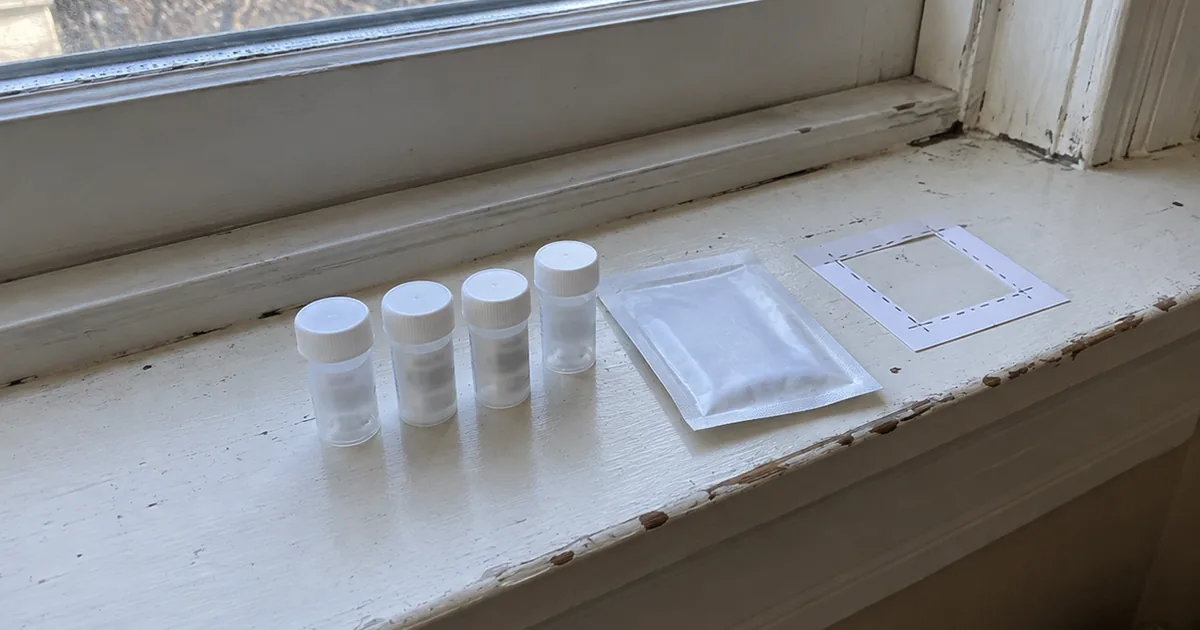
Sashes, door edges, and stair treads are where paint becomes dust
Friction and impact surfaces are the places where intact paint commonly becomes dust. Window sashes move inside painted jambs. Door edges rub. Painted stair treads take repeated impact. Cabinet doors contact painted frames and surrounding surfaces.
That is why window sills and troughs have their own action levels.
The window trough is the channel where the sash sits when closed. It accumulates the heaviest loading of the three sampled surfaces. Its old clearance number was 400 micrograms per square foot. The new action level is 100.
A repaint does not remove lead-based paint beneath it. It covers the older paint. The covering tends to fail first at the friction points where parts move against one another.
A white sash can look freshly painted from across the room. The channel can still be worn. A door face can look intact while its edge shows repeated contact. A cabinet exterior can look clean while the hinge side rubs each time the door opens.
Renovation disturbance is the fastest way to turn a stable painted surface into airborne and settled dust. Cutting, removing, or working around a painted component changes the condition that existed before the work.
Not every window issue is a lead issue. Inspection.re’s separate article on dual-pane window seal failure addresses a different window condition. A failed seal does not answer the dust-lead question, and a worn painted sash channel does not establish laboratory lead content.
That last line matters. Visual condition can identify a reason for referral. It cannot replace analysis.
A general home inspection cannot clear lead work
A home inspection is not a lead inspection, lead risk assessment, or clearance examination. Those are separate disciplines performed by separately certified people, with laboratory analysis behind them.
Inspection.re does not perform those services and does not claim to.
A general inspector can observe deteriorated or chalking paint on a pre-1978 house. The inspector can note a visibly worn sash channel or paint failing along a door edge. The report can state plainly that the condition warrants a risk assessment by a certified professional.
The inspector cannot determine lead content by looking at the paint. Any inspector who says otherwise is guessing.
This boundary applies across Inspection.re’s work, including San Francisco home inspections, Oakland inspections, Corte Madera inspection services, and Pasadena home inspections. The age, style, and location of the house do not turn a general inspection into a laboratory-backed lead evaluation.
It also affects how you read the document. The guide to reading a California home inspection report can help keep observations, recommendations, and specialist follow-up in their proper places.
Scope language is not a technicality. Inspection.re’s separate discussion of mold assessment scope in National City addresses another issue where the type of assessment matters. The same basic discipline applies here. Do not assign a home inspection the authority of a different professional service.
Pre-1978 renovation can take longer to clear after January 12, 2026
Post-work verification is harder to pass because the action levels are lower. That can affect a renovation schedule.
Contractors performing renovation, repair, or painting on pre-1978 housing work under EPA’s lead program. A buyer planning to renovate that housing should budget for the tighter clearance levels. An agent should not be surprised if post-work verification becomes a schedule issue.
The numbers explain why. Floors moved from 10 micrograms per square foot to 5. Sills moved from 100 to 40. Troughs moved from 400 to 100. Work that has to meet those levels faces a lower clearance ceiling than it did before January 12, 2026.
This is a practical transaction issue in markets with older housing, whether you are arranging a Suisun City inspection, discussing Vacaville inspection services, or reviewing a pre-1978 property elsewhere in California.
Do not collapse other renovation materials into the lead-dust analysis. Inspection.re’s guides to asbestos materials in Anaheim homes and asbestos-cement siding in Panorama City concern separate materials and separate questions.
The same goes for legal updates. The article on 2026 California laws affecting home inspections and Realtors is a separate resource. The federal dust-lead compliance date, laboratory recognition requirement, and new action levels should be read on their own terms.
For the current transaction, ask whether renovation is planned, whether the house is pre-1978, and whether clearance could affect the schedule. Do that before your client assumes the work ends when the visible construction ends.
Change these five things on the next pre-1978 transaction
Treat January 12, 2026 as the operative date for current dust-lead and post-abatement clearance work.
First, expect clearance to be harder to pass. The floor, sill, and trough action levels are all lower than the old clearance levels. Build the possibility of repeated work and verification into renovation discussions.
Second, read lead detected and passed clearance as compatible findings when the reported loading falls below the applicable action level. Do not call the report contradictory without checking which standard each statement addresses.
Third, never use a general home inspection as a substitute for a lead risk assessment or clearance examination. Refer deteriorated paint, worn friction surfaces, and similar conditions on a pre-1978 house to a certified professional.
Fourth, ask whether the analyzing laboratory is recognized under EPA’s National Lead Laboratory Accreditation Program. The new reportable level is defined by reference to what a recognized laboratory can measure and report.
Fifth, keep paint and dust separate when you speak with clients. Paint is the component-level issue. Dust sampling and clearance are the measurement-level issues. One does not answer the other.
Before the next inspection, review what Inspection.re includes, read the inspection FAQ, and see the Inspection.re report format. Then set the boundary plainly. The home inspection documents visible conditions, and certified lead professionals perform the risk assessment, sampling, laboratory-backed analysis, and clearance work.